News
Barbados: Mottley administration to implement fresh tax incentives for jump-start economy
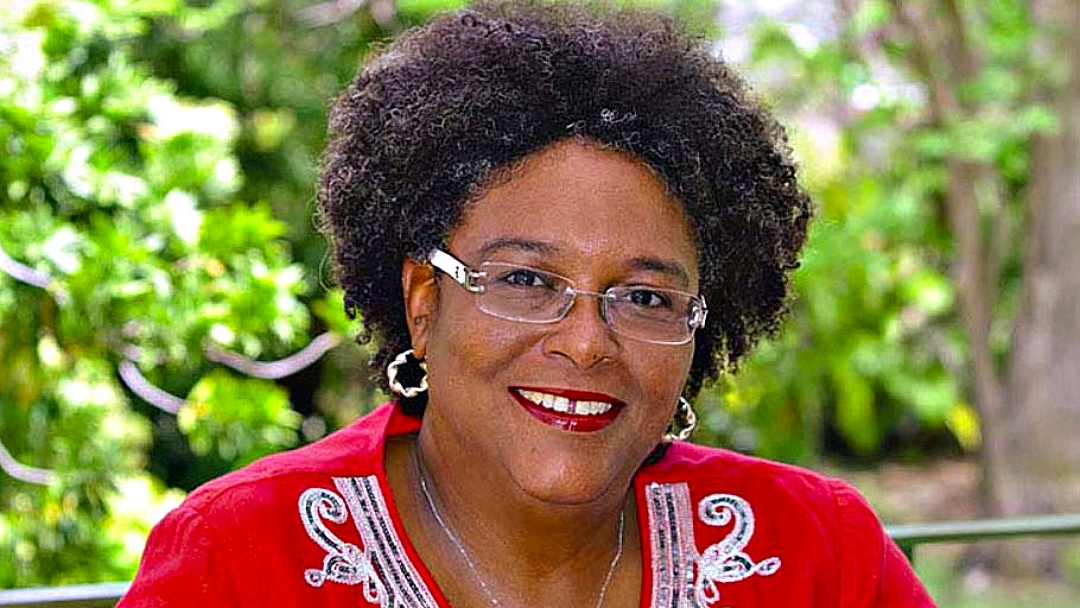
The Mia Mottley administration in Barbados has outlined a series of new fiscal measures aimed at turning around the ailing economy.
In delivering the 2019-20 budget presentation, Prime Minister Mottley told Barbadians that the island-nation is “preparing to depart stabilization and moving on to the paths of growth and transformation.”
Mottley said that the taxation policies of her administration would strike a balance between direct versus indirect taxation; taxing income versus taxing wealth and consumption while sharing the burden of taxation across businesses, households, locals, foreigners and tourists.
“We have to balance a set of tax tools that includes the rates, the treatment of allowances and the use of credits. Ultimately, the aim is to protect the most vulnerable groups, using the ability to pay criterion while allowing for more disposable income to fuel growth,” she argued.
For the income year 2018, the administration said it will add BDS$9 million dollars (US$4.5 millions) to the existing allocation of BDS$11.3 million (US$5.65 million) for Barbadians who earn BDS$18,000 (US$9,000) or less annually. The reverse tax credit is expected to place just over BDS$20 million (US$10 million) back into the hands of low-income Barbadian workers.
According to Mottley, once an individual within this income bracket submits the income tax form for the income year 2018, he/she qualifies for Reverse Tax Credit by September. Additionally, Mottley said that the administration would continue to provide a BDS$25,000 (US$12,500) personal allowance for all taxpayers and that individuals earning above BDS$25,000 (US$12,500) but below BDS$35,000 (US$17,500) per year, would benefit from the new Compensatory Income Credit (CIC).
It means that no one earning less than BDS$35,000 (US$17,500) will pay income tax in Barbados.
The administration will also reduce the taxable income rate and will extend the first tax band, while applying income credit in a phased manner.
“The universal personal allowance of BDS$25,000 (US$12,500) that is tax-free is retained. Effective July 1, 2019, we are getting rid of both the first tax band on which a rate of 16 percent is applied and the 2nd tax band on which a rate of 33.5 percent is applied,” Mottley said, adding that the rate on the 3rd tax band of 40 percent will also be abolished.
Effective July 1, 2019 the first tax band will be BDS$50,000 (US$25,000) and a rate of 12.5 percent will be applied. The 2nd tax band is on taxable income over BDS$50,000 (US$25,000) which is charged a rate of 33.5 percent.
“In the area of services, the export of certain services is not quite as easy to measure. In the circumstances, we are moving the export of certain services as scheduled from zero-rated to exempt. This will broaden the base of the value added tax (VAT),” Mottley said.
“In the area of water, we are reverting to the original classification for VAT. Water will once again be an exempt supply rather than zero-rated. This change starts from April 1, 2019. This will save about BDS$10 million (US$5 million) in refunds in a full year,” she continued.
Meanwhile, the administration will seek revenue from increases in VAT from the tourism sector from 7.5 percent to 10 percent, effective January 1, 2020. The increase is, however, lower than the proposed rate announced last year of 15 percent.
“After persistent representation from the tourism sector, it was recognized that the doubling of the rate would have adversely affected the competitiveness of the sector and its packages in the international market. As a consequence…we conceded and backed off the suggested rate of 15 percent.,” she said.
Tax generated by this measure will be BDS$27 million (US$13.5 million) in a full calendar year but only BDS$4.5 million (US$2.25 million) in this fiscal year.
The Mottley administration also announced increases in the room rate levy going up by 75 percent effective April 1, 2019. Adjustments will also be made to property taxes for the Government to gain revenue of BDS$61.9 million (US$30.95 million). Of this amount, non-residential properties will account for an estimated BDS$39 million (US$19.5 million).
“In the face of a lowering of the corporate tax rate for domestic companies, the shift in the burden is part of the change in our tax philosophy. In a similar vein, the high-end of the residential market is being called upon to put some of the benefits from the reduction in income tax rates to the payment of property tax.”
Effective May 1, 2019, there will be a 20 percent withholding tax on gambling winnings and a 17.5 percent gambling tax on the net-drop of all gaming establishments.
“Gaming establishments have until January 1, 2021 to change out slot machines to auditable new machines,” she said, adding government will collect 3 percent of the monies owed for the period 2011 and 2018, over a 4-year period.
The administration believes that the gaming sector will be improved under a public-private arrangement and as such, will submit requests for proposals regionally and internationally for such a partnership over the medium term.
Mottley also announced an increase in bus fares in the face of state-owned transport board receiving revenue of BDS$20 million (US$10 million) while spending BDS$65 million (US$32.5 million). She argued that the situation demands an increase in bus fare given that a fare hike occurred once in the last 30 years of BDS$0.50 (US$0.25).
The Mottley administration has eliminated withholding tax on payments made to non-residents, other than dividends, including interest; management fees and royalties.
“In the case of management fees there will no longer be a deduction for payments to non-residents,” she said, adding that on the other hand, withholding tax on residents will increase on interest from 12.5 percent to 15 percent, on dividends from local sources from 12.5 to 15 percent and that withholding taxes on pensioners will not be touched. -(CMC)