Opinion
As modern China turns 70, let’s celebrate its involvement in Africa and not fear it
By Oscar Van Heerden
- China has been South Africa’s largest trading partner for 10 consecutive years while South Africa has now been China’s largest trading partner in Africa for 9 years.
On October 1, 2019, the People’s Republic of China celebrated its 70th anniversary. The Chinese nation boasts more than 5,000 years of history and has contributed to the world’s 4 great inventions, namely, gunpowder, the compass, printing and paper making. No small feat in each respect.
Unfortunately, according to ambassador Lin Songtian, who addressed us, the complacency and arrogance of the Qing dynasty meant the closure of relations with the outside world and China became poor and weak. This meant suffering from the aggression and bullying of Western powers. But through arduous struggles, in 1949 under the leadership of the Communist Party of China (CPC), an end was put to the century of aggression and oppression and the CPC united Chinese people of all ethnic groups to stay committed to the path of socialism with Chinese characteristics.
This is what China did post the aggressive and oppressive strategies of the West. It begs the question: what have we as Africa and more specifically South Africa done post our own colonial and apartheid histories?
We are again reminded by the ambassador that over the past 40-plus years, China’s gross domestic product (GDP) has achieved an average annual growth rate of 9.5 percent, with the per capita GDP growing from US$35 in 1949 and US$156 in 1978 to more than US$10,000 in 2019. This is impressive whichever way one cuts it. He went further and informed us that foreign trade has increased from US$20.6 billion in 1978 to US$4.62 trillion, registering an average annual growth rate of about 14.5 percent. The foreign direct investment (FDI) in China has exceeded US$2 trillion.
In 2000, China’s outbound investment was less than US$10 billion, now, it has surpassed US$1.9 trillion.
It is the world’s 2nd-largest economy, the largest manufacturer, the largest trader in goods and the largest holder of foreign exchange reserves in the world. In addition, China has become the largest trading partner of more than 100 major economies in the world, importing more than US$2 trillion annually.
These are important milestones to mention since most commentators and political pundits want to remind us of only the bad China. These are extraordinary achievements for any country.
There will always be challenges and negatives in the development of any country. The Tibet and Taiwan (One-China Policy), as well as the South China Sea territorial disputes, will no doubt preoccupy the Chinese Communist Party for many years to come. But these are hardly so definitive as to impinge on relations with a country that occupies such an important standing in the international system, both economically (manufacturing and R&D plus resources) and from a security point of view.
After all, if we want to linger on bad history, one must ask: how did the United States become prosperous? And the answer must be: on the back of the almost complete extinction of the native population of that country and in no small measure on the back of the enslavement of Africans over an extended period. No one is proud of such histories, so we shall not cast the first stone when we too live in glass houses.
Domestically, President Xi Jinping has made sweeping efforts to see that the party self-governance is exercised fully and with vigor, and governs the state by rule of law in a comprehensive manner, having realized that all party members and government officials now do not dare to, are unable to and have no desire to engage in any form of corruption, having successfully tackled the 3 tough issues in the world today: poverty alleviation, ecological conservation and combating corruption.
There will always be some corruption in any country and as we have observed through our own Zondo Commission on State Capture, the state must be willing to do something about it when it gets out of control. In China, more often than not, stealing from the state, or from the people, is met with very harsh consequences including the death penalty. Similarly, South Africans want to see corrective measures and/or consequence management for the culprits found guilty.
On the international front, Xi put forward that only when the world is good can China become better, and called on its foreign service to build not only a better China but also a better world. To this end, the ambassador intimated that Xi put forward the great vision that the international community will jointly stay committed to building a community with a shared future for mankind and proposed two pathways to realize such a vision.
First, China will build a new type of international relations featuring mutual respect, fairness, justice and win-win co-operation.
Second, China will advance the Belt and Road (OBOR) Initiative that will continue to follow the principles of planning together, building together and sharing together. This initiative is underscored by policy, infrastructure, trade, finance and people-to-people exchanges so as to achieve a win-win situation for both parties.
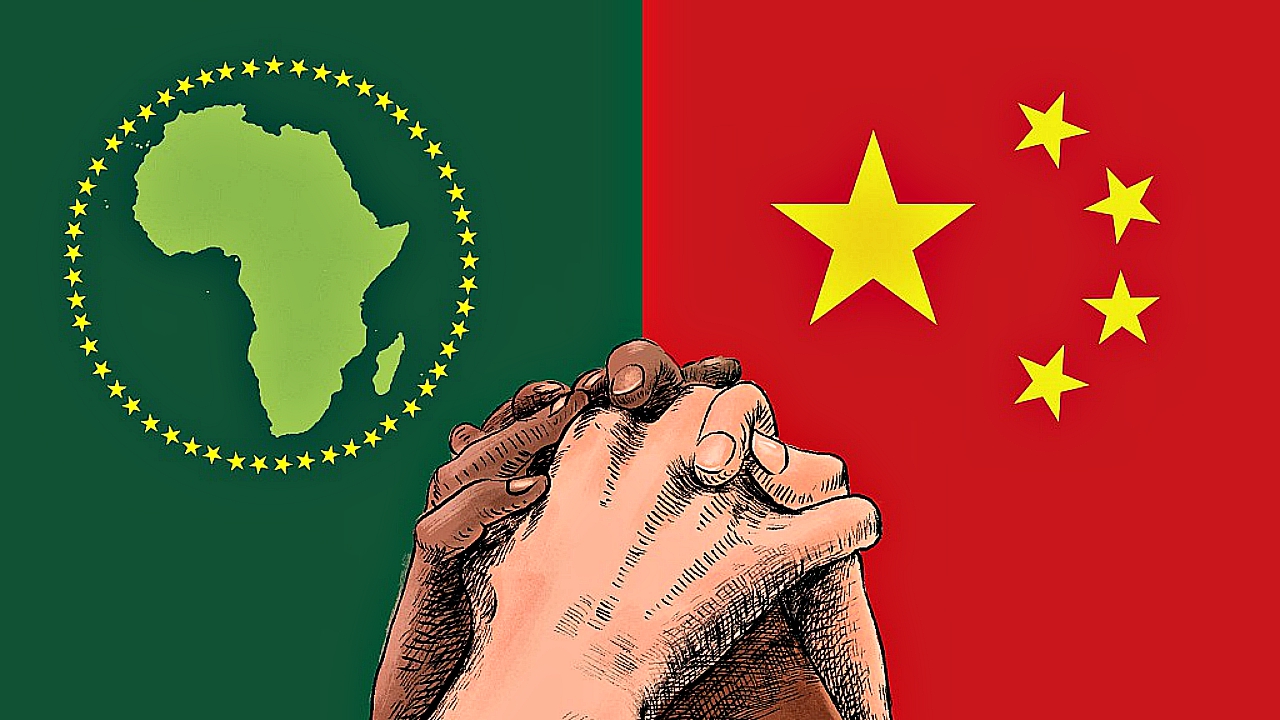
This is a critical philosophical approach as far as I am concerned, since the West over the centuries has in the main been concerned with and motivated by greed and exploitation with very little development, especially in Africa. In this regard, in 2018, China-Africa trade grew, registering a year on year increase of 20 percent, and Africa’s exports to China increased by 30 percent. China has been Africa’s largest trading partner for the last 10 years and 30 percent of the infrastructure in Africa was financed and built by China. This relationship can only grow in leaps and bounds.
As comprehensive strategic partners, China and South Africa always regard each other as a strategic pivot and priority in our respective foreign policies. China has been South Africa’s largest trading partner for 10 consecutive years while South Africa has been China’s largest trading partner in Africa for 9 years now.
The Ambassador reminded us that 2-way trade between our countries has reached US$43.55 billion, up by 11.18 percent year-on-year. Chinese companies have invested more than US$25 billion in South Africa, creating more than 400,000 local jobs.
I do, however, suggest a different “out of the box” approach if indeed China wants to see some nations truly succeed, a different economic model from that of the West perhaps. With the West, we saw that certain strategic countries were simply given lots of money – investments – in order to stimulate the local economy and eventually grew into very formidable economies. Here I am referring to Japan, South Korea, Taiwan, and let’s not forget about the reconstruction plan for the whole of Western Europe post World War II.
I propose a similar strategy from China, where you identify a few strategic countries and simply invest on a large scale in those countries’ economies and at times give them money for them to be able to grow their foreign reserves. This I suggest, will be the greatest intervention in modern times to alleviate poverty, inequality and unemployment throughout the world.
As China celebrates its 70th anniversary, what we should do is to engage China on all these important issues, instead of advocating to disengage – which is disingenuous – from the West as it opens most headquarterss of its listed companies in Beijing and Shanghai.
I salute your tremendous progress, China, here’s to another 70 years of prosperity as the People’s Republic of China. May the future for China-South Africa and China-Africa relations grow ever stronger.
Oscar van Heerden, PhD, is a scholar of International Relations, where he focuses on International Political Economy, with an emphasis on Africa, and the Southern African Development Community. He is an active fellow of the Mapungubwe Institute for Strategic Reflections (MISTRA) and is a trustee for the Kgalema Motlanthe Foundation.
Daily Maverick © Copyright 2019