Business
Angola’s Automotive Revolution: A Blueprint for African Industrial Independence


By Des H Rikhotso
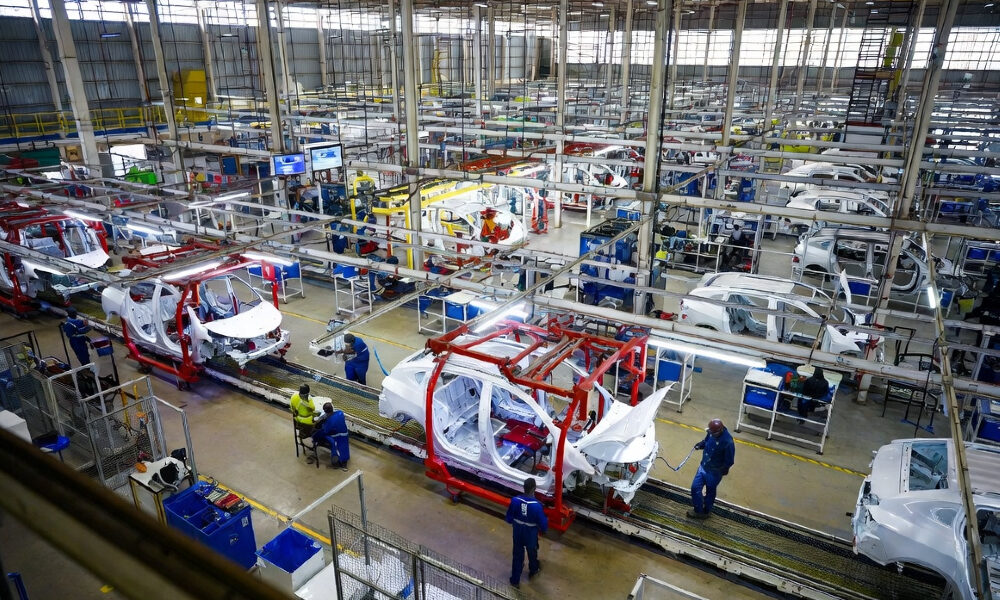
While global attention fixates on Tesla’s latest quarterly earnings and Toyota’s hydrogen ambitions, a quieter but potentially more consequential automotive story is unfolding in Luanda. Angola has inaugurated its first operational vehicle assembly plant, and the driving force behind this industrial milestone is not a multinational conglomerate but Angolan entrepreneur Agostinho Kapaia, whose Opaia Motors now stands as the country’s sole active vehicle manufacturing facility.
This development represents far more than the ceremonial ribbon-cutting that typically accompanies such projects across the developing world. With an annual production capacity of 22,000 light vehicles and 1,000 buses, Opaia Motors signals a genuine revival of domestic manufacturing in a nation long dependent on resource extraction and vehicle imports.
The facility will assemble passenger vehicles sourced from China and buses from Sweden’s Volvo, establishing Angola as a potential hub for transportation manufacturing in Southern Africa.
The Economic Calculus Behind Local Assembly
The strategic logic underpinning this venture is straightforward yet profound. Angola, like most African nations, has hemorrhaged foreign exchange through vehicle imports for decades.
By establishing domestic assembly capacity, even with imported components, the country begins to capture value that previously flowed entirely offshore. The multiplier effects extend beyond the factory floor: local logistics, warehousing, after-sales service, and eventually component manufacturing create economic ripples that imports never generate.
Opaia Motors has already employed more than 1,500 young Angolans, with plans to expand to 3,500 positions as production scales. In a country where youth unemployment remains stubbornly high and oil price volatility continues to destabilize government revenues, these jobs represent more than statistics.
They constitute the foundation of a skilled manufacturing workforce, the kind of human capital base that successful industrialization requires.
Strategic Partnerships and Global Validation
The involvement of established players like Volvo, Chinese automaker Chery, South Korea’s Dongyang, and the African Export-Import Bank (Afreximbank) lends credibility to what might otherwise be dismissed as aspirational planning. These partnerships suggest that international manufacturers see viability in Angola’s automotive ambitions, recognizing both the domestic market potential and possible export opportunities to neighboring markets.
Particularly noteworthy is Opaia Motors’ stated intention to introduce electric vehicles to its production lineup. While Angola’s infrastructure for EV adoption remains nascent, planning for this transition now positions the facility to capitalize on the global automotive industry’s inevitable electrification.
It’s a forward-looking approach that sidesteps the trap of building obsolete capacity, a mistake that has plagued industrial policy across the developing world.
The Broader Question: A Template for African Industrialization?
The significance of Opaia Motors extends well beyond Angola’s borders. For decades, African industrialization has been envisioned as something that would arrive through foreign direct investment, multinational corporations establishing operations to access cheap labor and growing consumer markets.
That model has delivered mixed results at best, often creating enclave economies with limited local integration.
Opaia Motors represents an alternative pathway: African capital, African leadership, and strategic international partnerships focused on building productive capacity rather than merely extracting resources or serving as an assembly point for complete knock-down kits with minimal local value addition.
The challenges, of course, are substantial. Automotive manufacturing requires extensive supply chains, technical expertise, quality control systems, and economies of scale that typically take years to develop.
Angola’s business environment, while improving, still faces obstacles related to bureaucracy, infrastructure gaps, and access to capital. The success of Opaia Motors will depend not only on factory efficiency but on policy consistency, market development, and the gradual deepening of local content.
The Road Ahead
Yet dismissing this venture as merely symbolic would be shortsighted. Every major automotive market began somewhere.
South Korea’s automotive industry, now globally dominant, emerged from technology transfers and protected domestic markets in the 1970s. China’s automotive sector, which now produces more vehicles than any other nation, was built on similar foundations of initial assembly operations that gradually deepened their technological capabilities.
Angola possesses several advantages: a domestic market of over 35 million people with growing purchasing power, proximity to additional markets in Southern Africa, government commitment to economic diversification, and access to the African Continental Free Trade Area’s emerging framework for intra-African commerce.
The fundamental question is not whether Opaia Motors can immediately compete with established global manufacturers. Rather, it’s whether this represents the beginning of a learning curve that, given time and sustained commitment, could position Angola and potentially other African nations to capture meaningful shares of their own transportation needs while building the industrial capabilities that drive long-term prosperity.
The automotive revolution may not be televised from Luanda, but it may prove more durable than the headline-grabbing announcements from Silicon Valley and Detroit. Sometimes the most important transformations are the ones that happen when the world isn’t watching.
Des H Rikhotso (PgDip-BA, MBL) is a seasoned C-suite Multi-Industry business executive with 25+ years of Business Leadership Experience across the South, East and Western Sub-Sahara Africa Region. Based in Kampala, Uganda he serves as East Africa Region Business Executive, driving Business Strategic Growth and Operational Excellence – contributing his Leadership Voice and Clarity to the Region. Des has held Business Leadership roles at BMW Group Africa, Volkswagen Group Africa, Peugeot Motors South Africa, Toyota/Lexus South Africa, Nissan Group of Africa, G.U.D Holdings (Africa Exports Operations Division) and The HDR Group of Companies. He holds Under-Graduate and Post-Graduate business degrees from the University of the Western Cape, Wits University (Wits Business School) and the University of South Africa.