Owusu on Africa
Angola: From Civil War to a Key Geopolitical Broker


By Fidel Amakye Owusu
When Portugal finally relinquished control of Angola in 1975, the nation was thrust into a devastating civil war that spanned nearly three decades. Unlike other European powers, Portugal was particularly resistant to decolonization, refusing to engage in the type of “arranged independence” that France orchestrated in the 1950s.
As a result, local political actors in Portuguese colonies had little choice but to resort to prolonged armed struggle to achieve self-rule.
The Cold War further complicated Angola’s fight for independence. The ideological divide of the era found its way into the conflict, with external powers backing different factions.
After a military coup in Lisbon in the mid-1970s, Portugal hastily granted independence to its African colonies – including Angola, Mozambique, Guinea-Bissau, and São Tomé and Príncipe – leading to widespread instability, particularly in Angola and Mozambique.
Foreign Involvement and the Prolonged Civil War
In Angola, the Soviet-backed Cuban forces supported the ruling MPLA party (People’s Movement for the Liberation of Angola), while Apartheid South Africa, with Western backing, aligned itself with the FNLA (National Front for the Liberation of Angola) and later UNITA (National Union for the Total Independence of Angola). The civil war raged on for decades, claiming countless lives.
Namibia’s independence in 1990 was deeply tied to the Angolan Civil War and the extensive negotiations that ensued in the late 1980s.
Even after the Cold War ended and a series of negotiated settlements sought to restore peace to the region, Angola’s conflict persisted. UNITA continued to receive backing from regional actors, such as Cote d’Ivoire’s President Houphouët-Boigny. However, it was only after the death of UNITA leader Jonas Savimbi in 2002 that the war truly came to an end.
Angola’s Rise as a Regional Mediator
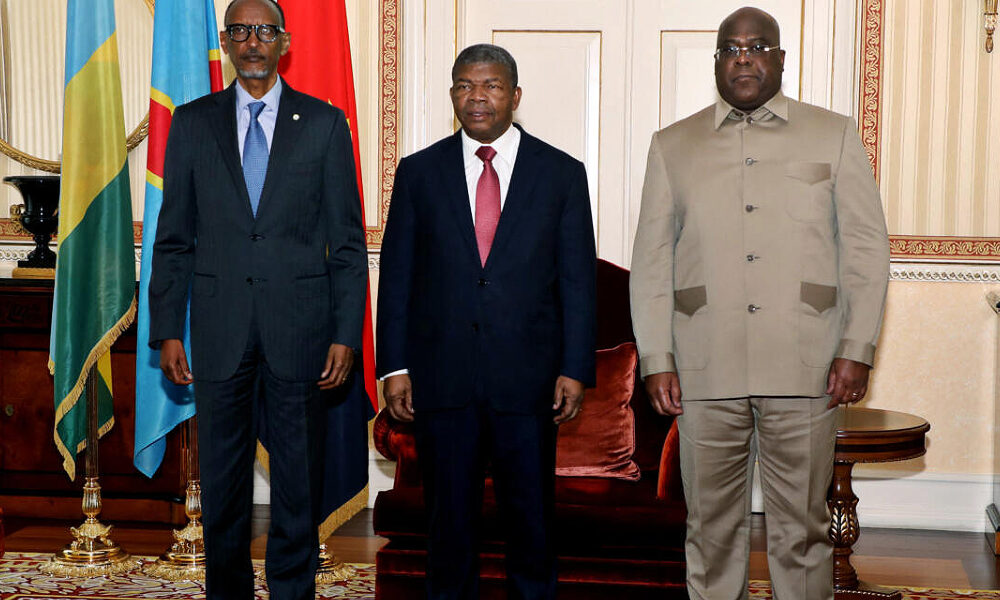
Today, Angola stands as one of the more stable nations in the region and has emerged as a critical player in regional peace efforts – most notably in the Democratic Republic of Congo (DR Congo). In recent years, Luanda has positioned itself as a key mediator between Kinshasa and Kigali, hosting crucial diplomatic negotiations to ease tensions.
Despite the MPLA’s historical alignment with Cold War-era socialist ideologies, Angola has successfully diversified its strategic partnerships, engaging with global players such as the United States, China, Russia, and Germany. This balanced diplomatic approach has strengthened its credibility as a neutral mediator.
Economic Leverage and Resource Diplomacy
Further cementing its regional influence, Angola has resolved long-standing resource disputes with the DR Congo. Earlier this year, the two nations agreed to jointly exploit a lucrative offshore oil reserve in previously disputed waters.
Angola, which is the second-largest oil producer in Africa after Nigeria, continues to leverage its energy resources to bolster economic and geopolitical stability.
Domestic Challenges and Future Prospects
Despite these diplomatic strides, Angola faces pressing domestic challenges that must be addressed to solidify its role as a regional power. A significant infrastructure deficit and underinvestment in essential services such as education and healthcare pose hurdles to long-term stability and development.
A nation seeking to extend its influence abroad must first strengthen its foundations at home.
Additionally, the longstanding separatist movement in Cabinda remains an unresolved issue. Any missteps in handling this delicate matter could undermine Luanda’s reputation as an emerging diplomatic heavyweight.
Angola’s Role in the African Union and Beyond
As Angola assumes the chairmanship of the African Union (AU), its mediation in the DR Congo will be a litmus test for its growing regional leadership. By balancing domestic development with its expanding diplomatic role, Angola has the potential to solidify its place as a formidable geopolitical player in Africa.
The coming years will determine whether Luanda can maintain its momentum and translate its diplomatic ambitions into lasting regional stability.
Fidel Amakye Owusu is an International Relations and Security Analyst. He is an Associate at the Conflict Research Consortium for Africa and has previously hosted an International Affairs program with the Ghana Broadcasting Corporation (GBC). He is passionate about Diplomacy and realizing Africa’s global potential and how the continent should be viewed as part of the global collective.