Opinion
An African idea about to go global
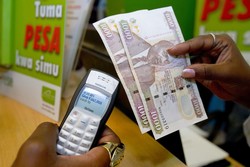

Give Africans a piece of technology and watch them invent a thousand uses for it. This idea was of course exaggerated for laughs in the 1980 hit movie The Gods Must Be Crazy where a single Coca Cola bottle thrown from a plane changed the lives of Khoisans living in the Kalahari Desert, using the unexpected “gift” from the gods for different purposes in the community.
In any event, it was not surprising that the mobile phone became one of the most transformative technologies in Africa in the Twenty-First century, more so when it was used in many African countries as a mobile bank.
What’s more, belatedly, big banks and telecommunication giants in North America have taken note of the utter potential of the mobile phone as a cashless wallet. This week, for example, Canadian banks and telecommunication giant Rogers released guidelines for business and money transactions using mobile phones.
The move prompted the Globe and Mail, Canada’s leading newspaper to declare in a blazing headline “Banks plot mobile payment future”. The article went on to say about the new innovation, “It marks the start of a race to replace the traditional wallet with cashless digital payments through smartphones offering different payment options chosen by the consumer.”
But what the Globe and Mail and many news media editors across Canada failed to mention was that while the mobile phone continued its ascent in the USA and Canada as a communication tool using interfaces such as Facebook, Twitter, Google and so forth, on the African continent it quickly became a cash cow. In Kenya, Safaricom launched the first money transfer capability using the mobile phone in March 2007.
Christened M-PESA (a play on the Kiswahili word pesa meaning money), the sms-based system enables individuals to deposit, send, receive small amounts of money literally in seconds across vast distances where the phone company offers services through small retailers.
The South African WIZZIT system operates on a similar premise as M-PESA. Other mobile phone money transfer systems are in Tanzania, Sudan, Ghana and, to a limited extent elsewhere on the continent.
In the case of M-PESA, money transfer that used to take days through the bank, or even weeks through person-to-person courier was now completed with the simple touch of a button on the mobile phone. The simplicity of the system did not require the sender or receiver of the funds to be particularly adept in using technology or even literate.
It was so simple that anyone could use it with little risk of messing up. Today, as much as US $340 million is transferred every month through the M-PESA system, making it one of the most successful money transfer systems on the African continent.
Taking the M-PESA concept of the cashless wallet on step further, banks see more smartphones being equipped with what is known as Near Field Communications (NFC) chips. A person wielding an NFC-enabled Smartphone waves it in front of special readers at the cashier, instantly transferring the correct amount from the chip into the account of the merchant, no cash, no sweat.
Already such technology is used in some fast-food outlets as well as gas stations in North America. But now the potential exist for millions of Smartphone users to make daily transactions worth billions to businesses, banks and, of course, telecommunication companies. It is a win-win for everyone.
The only disappointing part in all of this is that the originators of mobile phones as mobile banks did not register a patent to ensure huge profits from the invention well beyond the original investment that went into it. As it is, the idea of using mobile phones as mobile banks will expand to the global market to the point when, one day, it will replace paper and coin money.
Still, the invention of the mobile phone banking system on continental Africa, where the vast majority of the population must continually evolve with the times in order to survive, speaks to the insatiable appetite of Africans to use technology to improve their lives.
Toiling long hours in the workshops to invent new uses for just about everything is a necessity that is cultivated at all levels of the African economy. The mantra is simple enough: If it does not exist, the innovative African mind knows that it must be invented.
The success of M-PESA and other innovative ways of money transfer have already helped accelerate rural development in a very tangible ways. Now, it is about to start a global revolution. That is reward enough for its own sake.
By Opiyo Oloya
Opiyo Oloya is a Ugandan Canadian educator, journalist, and African music enthusiast living in the Greater Toronto Area, Canada.