Business
Akinwumi Adesina, the man behind the reviving and mordernizing of Nigeria’s agriculture and breaking the “oil curse”
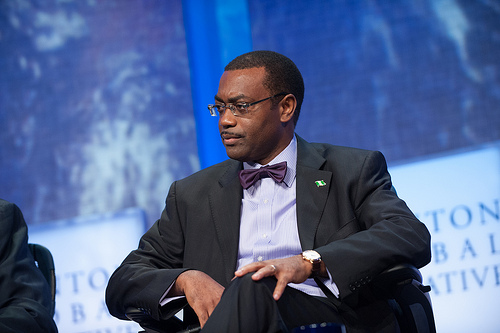
Akinwumi Adesina – Nigeria’s minister for Agriculture. PHOTO/Getty Images
When President Goodluck Jonathan was elected two years ago, he pledged reforms that would transform the lives of tens of millions of farmers who make a meager living despite occupying some of Africa’s most fertile land.
Oil remains the main source of foreign currency and state revenues, but agriculture is by far the biggest contributor to gross domestic product (GDP), making up 40 percent of Africa’s second largest economy.
With 170 million mouths to feed and a growing food import bill thanks to the disarray in the farming sector, agriculture ministry officials say there’s no time to lose.
If productivity does not improve Nigeria could face a food crisis within a decade, its current account surplus would be wiped out and the credit worthiness of Africa’s second biggest debt issuer would be under threat.
“If we did nothing, it would be a disaster,” Agriculture Minister Akinwumi Adesina told reporters in the capital, Abuja.
“We don’t eat oil, we don’t drink it … We cannot sustain the amount of money we use to import food,” Adesina said.
In some cases, the imports substitute for things Nigerians are growing but can’t get to market or lack the means to process.
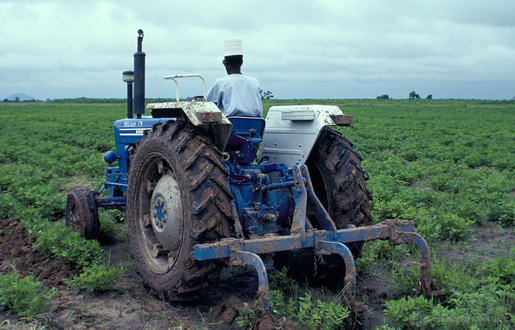
Farmer tends to his crops in South Western Nigeria
Nigeria is the second largest grower of citrus fruit in the world after China and yet it spends US$200 million a year on imported fruit juice while its own produce rots, Adesina revealed.
It also produces 1.5 million tonnes of tomatoes annually of which 45 percent perish, while consumers spend US$360 million on tomato paste imported from countries such as Italy and China.
To succeed, Adesina’s reforms will need to reverse the inadvertent damage done to the sector by Africa’s earliest and biggest oil and gas boom, which crowded out other commodities.
In the 1960s, Nigeria was the biggest exporter of peanuts in the world and had 27 percent of the palm oil trade. It remains one of the world’s top cocoa growers, but production and bean quality have declined since their heyday in the 1970s.
While sections of the economy grew rapidly as a result of the booming energy sector, millions of mostly subsistence farmers were given little or no help at all. The result: Nigeria is now the world’s second largest importer of rice and the biggest buyer of U.S. wheat, while much of its own fertile land lies fallow.
A booming population has sent its food import bill rocketing to around US$11 billion a year – equivalent to more than a third of the federal budget.
Agriculture also offers the best chance to cut national unemployment, which stands at 23 percent – youth unemployment double that.
“Poverty is the source of a lot of the insecurity problems we have. A hungry man is an angry man,” Adesina said.
The minister plans to create 3.5 million new jobs in agriculture and boost food production by 20 million tonnes by 2015, the year of the next federal election.
To achieve this, he wants to boost access to microfinance for farmers and draw in US$10 billion of foreign investment into farming and food processing.
He has received tentative praise for early successes from bankers and implementing partners, but big agro-business projects have yet to take off.
Adesina took a corrupt fertilizer subsidy out of politicians’ hands and now farmers are texted subsidy vouchers directly to their mobile phones so they can recoup from fertilizer sellers, a policy used in Kenya’s farming reforms.
Seventy percent of farmers now receive subsidized fertilizer and seeds, compared with 11 percent under the inefficient program previously run by state governments, Adesina said.
Production of rice, cassava, wheat, sorghum, and corn are rising and cocoa, Nigeria’s most important export crop, looks set to go up by more than a third this season. In 2012, agriculture exports rose by 128 billion naira (US$788 million) and food imports fell by 850 billion naira (US$5.23 billion), Adesina says.
Investors both local and foreign such as food giant Cargill, seed company Syngenta, brewer SABMiller and Africa’s richest man Aliko Dangote are planning to build everything from fertilizer plants to food processing factories.
Nigerian billionaire Dangote has pledged to spend US$35 million on a tomato paste plant in the northern city of Kano and $45 million in Cross River state to process pineapple juice.
Adesina says he has received US$8 billion in commitments but such promises are often not kept in Nigeria. Cargill and SABMiller told reporters they are only “considering” investing.
“I would estimate that no more than one dollar of investment actually occurs for every US$100 of announced commitments,” said Fola Fagbule, an Africa-focused investment banker in Lagos.
A central bank initiative has issued guarantees on around 25 billion naira (US$154 million) of agriculture loans since it began in July last year, lifting lending to the sector to around 4 percent of total loans, from 1.5 percent at end-2009, the bank says.
This barely scratches the US$10 billion Adesina says the sector needs by 2015. Smallholders say banks still don’t lend to them, while the scheme doles out cheap money to big firms.
A few success stories nonetheless give cause for optimism.
Farmer Mustapha says he made US$1,350 per hectare from his harvest after paying back private firm Doreo Partners, which runs the Babban Gona project, compared to previous years where he might earn US$200 per hectare.
The Babban Gona or “Great Farm” project, in northern Kaduna state, is one of the projects where public-private investment is helping former subsistence farmers like Mustapha make profits for themselves and the companies backing them.
“Now I want to grow my farm, I have so much space I never used. Now I will send my children to school,” he said, while behind him mostly unused farmland stretched to the horizon.
“It’s early days but I’m more optimistic than I’ve ever been,” said Adesina. – (Reuters)