Opinion
AGOA’s Quiet Demise – and Africa’s Unexpected Rebirth


By JP Følsgaard Bak
Last week, I attended what felt like the funeral of the African Growth and Opportunity Act (AGOA) – not in a chapel, but in the hollow silence of a policy whose time has passed. The turnout was sparse: a delegate from South Africa, a grieving representative from Kenya, perhaps one each from Nigeria and Madagascar.
The United States sent two officials – eager, it seemed, to catch the next flight back to Washington.
I was there on behalf of Ethiopia. True to our national ethos of respect, even in disappointment, I brought flowers – for the program that once promised partnership but ultimately chose exclusion.
That was it. A quiet, almost unnoticed farewell to what was once hailed as the cornerstone of U.S.-Africa trade relations.
As I stood there, I couldn’t help but reflect: what does AGOA’s decline mean for the continent? Certainly, its end will sting – especially for countries still clinging to its benefits and for American firms that built supply chains around its preferences.
But my own experience suggests a more complex truth: sometimes, losing a crutch forces you to walk – and eventually, to run.
The Cost of Conditional Partnership
I have long been skeptical – not of AGOA’s intent, but of how the U.S. State Department wielded it. Too often, it functioned less as a trade incentive and more as a geopolitical cudgel: entire nations punished, millions of livelihoods disrupted, because their governments failed an opaque and inconsistently applied “behavior test.”
Yet paradoxically, this heavy-handed “schoolmaster” approach may have catalyzed something profound.
Take Ethiopia.
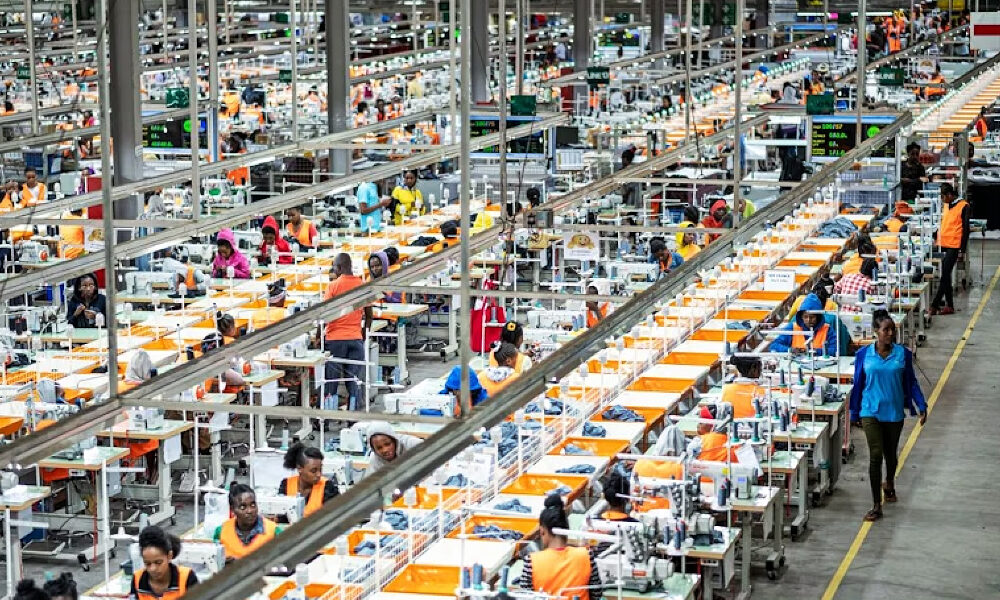
I witnessed firsthand the devastation when the U.S. suspended Ethiopia’s AGOA eligibility in 2022 amid the conflict in Tigray. Textile factories in industrial parks – once humming with promise – fell silent.
Warehouses stood empty. Grass grew through cracked pavement in zones built for a booming export economy. Thousands lost jobs overnight.
The continent’s next chapter won’t be written in Washington policy memos, but in Addis Ababa assembly lines, Kigali tech hubs, and Lagos innovation labs.
From Crisis to Catalyst
But from that crisis emerged transformation.
Denied preferential access to the U.S. market, Ethiopia was forced to look inward – and beyond. No longer could it rely on low-value garment exports under AGOA’s umbrella.
The shock became a catalyst. Investment shifted toward value-added manufacturing, domestic consumption, and strategic industrial diversification.
Today, Ethiopia is among Africa’s fastest-growing economies, with ambitious moves into electronics assembly, agro-processing, and light manufacturing. Addis Ababa’s skyline is changing – not just with new buildings, but with the infrastructure of a self-reliant industrial future.
I now work in Ethiopia’s emerging consumer electronics sector – a field that likely wouldn’t exist at scale had AGOA’s safety net remained. The irony is striking: exclusion, however unjust, lit a fire under a nation long dependent on external validation and conditional trade favors.
This isn’t to dismiss AGOA’s past contributions. For two decades, it provided vital market access and supported millions of African jobs.
But its legacy is also one of dependency, unpredictability, and conditional partnership – hardly the foundation for true economic sovereignty.
So let AGOA rest in peace.
And let Africa rise – not in mourning, but in momentum. The continent’s next chapter won’t be written in Washington policy memos, but in Addis Ababa assembly lines, Kigali tech hubs, and Lagos innovation labs.
Sometimes, you must lose a lifeline to discover your own strength.
JP Følsgaard Bak, Esq., a former lawyer, is a dedicated international social entrepreneur and serial entrepreneur. He co-founded several technology companies, including EMX Group (a biomedical microchip manufacturer in California), Sûrtab S.A. (a tablet PC manufacturer in Haiti), and Bak USA. Currently, he serves as Chairman of Industry Five Group, with operations in the USA, Denmark, Uganda, Nigeria, Gabon, and Ethiopia.