A Diaspora View of Africa
AGOA Renewal Still a Priority in the New Congress
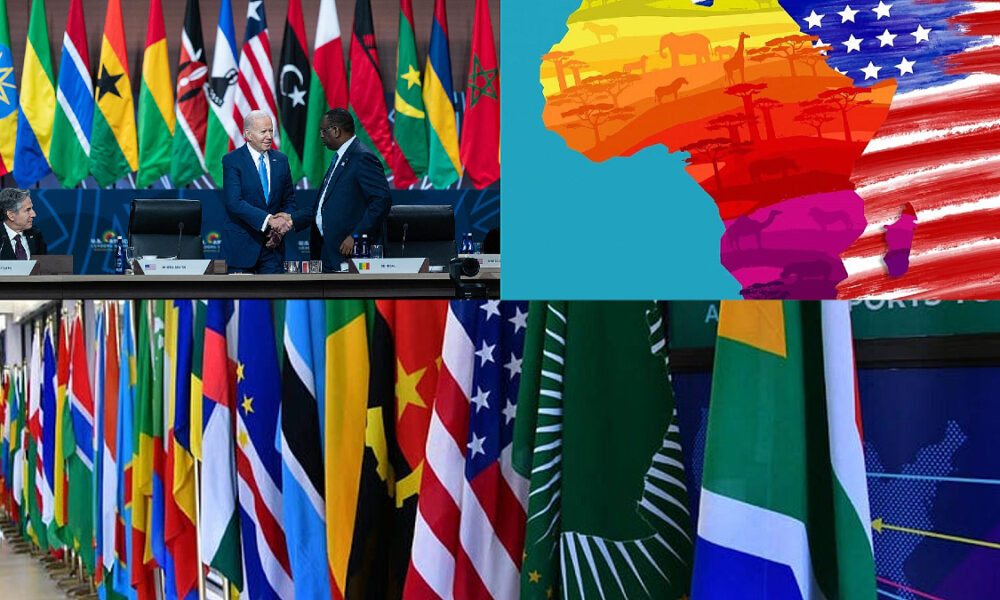


The African Growth and Opportunity Act (AGOA) has long enjoyed bipartisan support, but partisan squabbles appear to have doomed its long-term extension during the last Congress in December.
Democrats on the Ways and Means Committee, led by Richard Neal of Massachusetts, weren’t overly enthusiastic about a rushed reauthorization that didn’t include stronger labor and environmental standards. Meanwhile, Republicans lost patience after Democrats pushed for other trade priorities, including a trade scheme with Haiti and trade adjustment assistance for displaced American workers.
The partisan divergence of opinion on how the next iteration of AGOA operates is partly fueled by differing ideological interests, but also due to the entreaties from trade associations and consultants. The textile manufacturers are in favor of continuing AGOA as is because, after several reforms over the past 25 years, they have the concessions they sought for textile imports from Africa.
In 2023, the United States imported approximately 27 million US dollars’ worth of textile and fabric products from Africa. In 2013, this figure amounted to around 24.75 million US dollars. China, Vietnam, India, Bangladesh, and Indonesia are the top five textile exporters to the US. No African exporter is even in the top 12. Textile positions among African producers represent thousands of African jobs. The purpose of AGOA was to provide benefits solely to African producers of goods and services to enable them to be competitive with more established international economies.
Unfortunately, from the beginning of AGOA in 2000, African officials allowed Chinese and other foreign interests to enter their markets and set up operations as though they were African companies – this despite warnings that it would disadvantage African companies, investors, and workers.
For example, Nigeria’s textile industry – a leader on the continent – has become largely owned and managed by the Chinese, who enjoy trade benefits created solely to help Africans. Other pro-AGOA interests promote changes to broaden the impact of AGOA.
In April 2024, US senators introduced a bill to extend the nation’s trade program with about 40 sub-Saharan African nations until 2041, helping them maintain duty-free access to the world’s biggest economy. Jim Risch, a Republican from Idaho, and Delaware Democrat Chris Coons introduced the legislation to extend AGOA, which was first enacted in 2000. The current iteration of AGOA is due to expire in June of this year.
The extension “would offer businesses the certainty they need to increase investment in sub-Saharan Africa at a time when many firms are looking to diversify their supply chains away from China,” the Senate Foreign Relations Committee said in a statement.
The statement went on to add that “sub-Saharan Africa is home to the world’s youngest population and many fast-growing economies, and AGOA has played a critical role in advancing economic development and strengthening US economic engagement in the region.”
AGOA could be more broadly successful if certain adjustments are made. The status quo would help some beneficiaries, but not as many as could be served.
Seeing AGOA for What It Really is
However, the US government officials responsible for AGOA cling to the notion of AGOA as a government-focused program rather than the business-to-business process it was designed to be. Testimony by Daniel Runde, Senior Vice President, and Schreyer Chair in Global Analysis at the Center for Strategic and International Studies during a 12 June 2024 House Trade Subcommittee highlighted this misconception.
“AGOA is a trade mechanism, not a political mechanism. When the United States experiences tensions or disagreements with certain African countries, it is tempting to treat AGOA as a “stick” we can use for leverage. If there is a coup, that understandably ends eligibility, but when looking at case studies like South Africa, we should employ a variety of political tools to address political disputes,” he testified.
As I wrote in an earlier blog post, allowing companies not guilty of human rights violations to remain in AGOA would of course lessen the negative impact of US suspension of AGOA country benefits. Surely, such moves will be necessary when elected governments are overthrown as the African Union also agrees should be taken. Yet if you punish businesses for the sins of government, you create greater support for the view that the United States is behaving as a bully, which has been a main driver of the de-dollarization campaign by the BRICS coalition and its supporters.
Another reform I strongly support, as I wrote earlier, would be a preferential section for women. In Africa, more than two-thirds of most economies are informal, and of that, an estimated two-thirds are composed of businesses run by women. Now this would involve market women but has to include the elite African businesswomen who create jobs. In addition to job creation and a better chance to expand their operations, these women not only create family wealth; but they also build their communities. So, in addition to having a purely economic benefit, these businesses have a broader developmental impact.
A further reform I have supported would be to find a way to incorporate the input of civil society organizations in analyzing the economic activity in African countries. African think tanks from Ghana to Nigeria to Kenya to South Africa provide excellent analysis, not only on the economic issues but also the societal concerns that reveal the likelihood of developmental success. This should mean greater US government support for the AGOA Civil Society Forum and regular consultations with civil society groups involving US and African government officials and African and American businesses and trade associations as well.
Also at the June House hearing, Marggie Peters Muhika, Deputy Regional Program Director at the Africa Solidarity Center, pointed out the necessity of support for labor movements in Africa to create more conducive environments for businesses.
“Jobs in the informal economy have the potential to provide productive economic activity for a growing demographic, but the sector remains highly unregulated, with insufficient legal protections for informal economy workers and notable violations of their rights,” Muhika testified.
“In many cases, these jobs are characterized by wages below the minimum living wage (7 of the 20 countries in the world with the lowest minimum wage are African), long hours, and lack of access to social protection. Gaps in legal coverage of informal economy workers leave them vulnerable to worker rights violations, including wage theft, unlawful termination, denial of leave and/or health coverage, and exposure to sexual harassment and other forms of gender-based violence at the workplace.”
Laws regarding labor rights are directly involved with trade, but suspensions based on social policies undertaken by the government that don’t reflect how businesses operate harm both African and American commercial interests in the name of punishing government violations, e.g. the suspension of Uganda for its government’s passage of anti-LGBTQ legislation.
Runde’s 2024 testimony showed that at least to some extent, AGOA has been successful despite erroneous complaints about the process’s failures. From 2010 to 2020, textile and apparel exports under AGOA grew by approximately 64 percent.
Textile and apparel exports grew to more than US$1.4 billion in 2021 – double the amount pre-2000. AGOA non-oil imports were US$5.7 billion in 2022—a record amount and quadruple that of 2001. Several non-oil sectors experienced sizable increases during this period beyond textiles and apparel, including transportation equipment, agricultural products, minerals and metals, and jewelry and precious stones.
AGOA could be more broadly successful if certain adjustments are made. The status quo would help some beneficiaries, but not as many as could be served. Let us hope that pro-AGOA interests in the private sector can come to some consensus on how the next AGOA should operate or at least secure promises of reforms under future reviews.
Gregory Simpkins, a longtime specialist in African policy development, is the Principal of 21st Century Solutions. He consults with organizations on African policy issues generally, especially in relation to the U.S. Government. He further acts as a consultant to the African Merchants Association, where he advises the Association in its efforts to stimulate an increase in trade between several hundred African Diaspora small and medium enterprises and their African partners.