Opinion
Africa’s Two Big Bets: Lifelong Learners and Well-Run State Companies
From Nairobi’s graduation stages to Arusha’s boardrooms, the blueprint for African prosperity requires perpetual learning and ruthless institutional reform.


By Kingsley Moghalu
In the space of a few days, I addressed two very different audiences in two East African capitals of commerce and ideas. In Nairobi, I spoke to 1,600 graduates at the 48th Commencement Ceremony of United States International University-Africa (USIU-Africa). In Arusha, I addressed the chairpersons and chief executives of Tanzania’s state-owned enterprises.
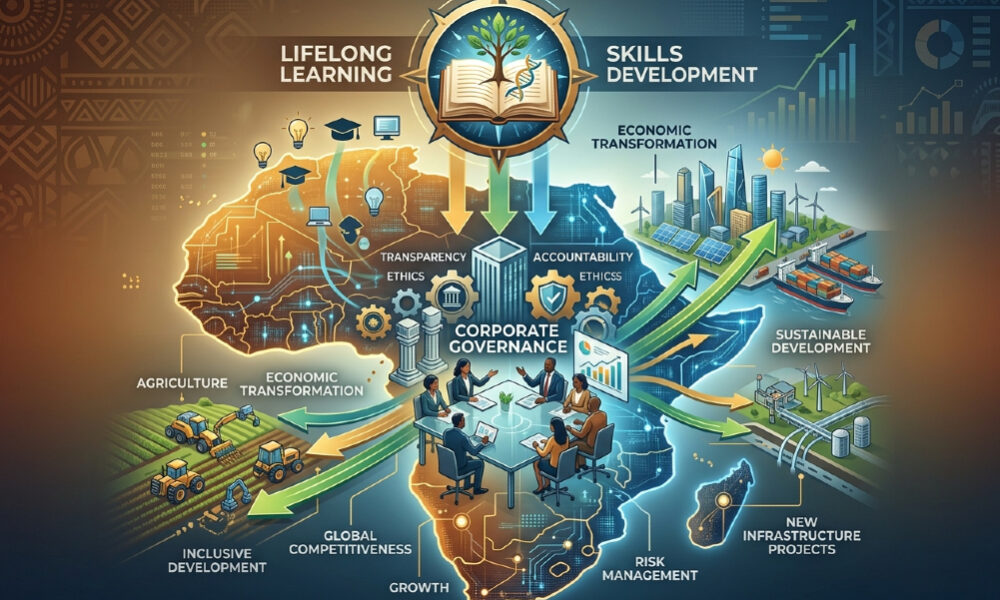
One audience was starting careers, the other running some of the continent’s most consequential institutions. Yet my message to both was the same: Africa’s transformation will not deliver itself. It has to be learned, governed, and led.
From Graduate to Perpetual Student
For generations, we have treated a university degree as a gate. Pass through it, collect the key, and consider yourself finished. That model is obsolete. Education is no longer a destination; it is a utility, something you draw on continuously, like electricity.
So I told the graduating class in Nairobi to stop calling themselves graduates, a word that implies a finished state, and to think of themselves as perpetual students. A university was never meant to be a factory stamping out finished products. It is a greenhouse, supplying the soil and the light. Once you are transplanted into the world, the growing must continue.
The implication is uncomfortable for anyone who has spent four years chasing a grade point average. The most successful people of this generation will not be those with the highest GPA. They will be those with the highest “learning quotient”: the ability to unlearn a dying skill and pick up a new one without losing momentum.
AI Is an Exoskeleton, Not an Oracle
The elephant in the graduation hall was technology. Many young Africans wonder whether AI, automation, and algorithms will make their hard-won expertise redundant. The fear is valid, but it rests on a misunderstanding of what these tools are.
An oracle hands down answers. A tool helps you build. Treat AI as an oracle and you will stop thinking; treat it as a tool and, used well, it can deepen learning rather than replace it.
AI can optimize a supply chain, draft functional code, and summarize a legal brief in seconds. It cannot feel the weight of a moral dilemma. It cannot imagine a future that does not already exist in its training data. It cannot sit with a grieving patient or rally a discouraged team. Technology is an exoskeleton for the mind: it makes you faster, stronger, and more efficient, but it does not supply a destination. On a continent with the world’s youngest population, that destination-setting, human judgment is the scarcest and most valuable asset there is.
Tanzania’s Compass Needs a Steady Hand
In Arusha, the subject changed but the argument did not. The Office of the Treasury Registrar had invited me to speak at its Forum of Chairpersons and CEOs of State-Owned Enterprises on a blunt proposition: “Dira 2050 Will Not Deliver Itself.”
Dira is Swahili for “compass,” and Tanzania’s Dira 2050 is an ambitious one. It aims to lift the economy from roughly US$80-95 billion today to US$1 trillion, raise GDP per capita to US$7,000, and sustain growth of 10 percent. Those are bold numbers. Plans of this kind often fail not for lack of vision but for lack of institutions capable of executing it.
My advice to the Tanzanian government was to govern its public corporations so that they become engines of wealth creation, and that means investing seriously in corporate governance and risk management.
Why the Privatization Playbook is Not Enough
This runs against a prevailing trend. Across much of Africa, governments have increasingly turned away from public enterprises in favor of privatization, a path that, in my view, has not delivered the transformation it promised. Tanzania’s approach reflects two points I have made consistently:
- The private sector cannot transform African countries if public-sector governance remains weak. Markets are not designed to supply public goods. That is the job of the state, and a weak state leaves the private sector operating on a fragile foundation.
- For state enterprises to become wealth engines, they must be governed like the best private companies: with disciplined strategy, rigorous risk management, and boards that hold management to account.
The debate, then, should not be public versus private. It should be well-governed versus poorly governed.
One Lesson, Two Rooms
The graduate and the state-owned enterprise chairperson face the same test. Both must resist the comfort of being “done.” Both must treat new tools as instruments and not oracles, and both must supply the one thing no algorithm can: the courage to choose a direction and steer toward it.
Africa has no shortage of compasses. What it needs are people, and institutions, willing to read them and keep moving.
Kingsley Moghalu is a Nigerian political economist, lawyer, and academic with broad expertise in international affairs, finance, and governance. A former Deputy Governor of the Central Bank of Nigeria and founding President of the African School of Governance, he is recognized globally for his leadership in economic policy, international development, and public sector reform. Moghalu has advised governments, corporations, and international organizations on strategy, finance, and global competitiveness. A respected thought leader, speaker, and author, he brings intellectual rigor and executive experience to debates shaping Africa’s economic transformation and global governance.