Opinion
Africa’s Sovereignty Problem Isn’t Geopolitical. It’s Logistical.
Before celebrating economic independence, the continent must confront the border crossings, informal payments, and systemic delays that make intra-African trade harder than it needs to be.


By Ziad Hamoui
In less than two weeks, the African Export-Import Bank (Afreximbank) convenes its 33rd Annual Meetings in El Alamein, Egypt, under the theme “Intra-African Trade and Industrialization: Pathway to Economic Sovereignty.” It is the right theme. But before anyone raises a toast to economic sovereignty, a more grounded question deserves an answer: Can African goods actually move across African borders efficiently enough to make that sovereignty real?
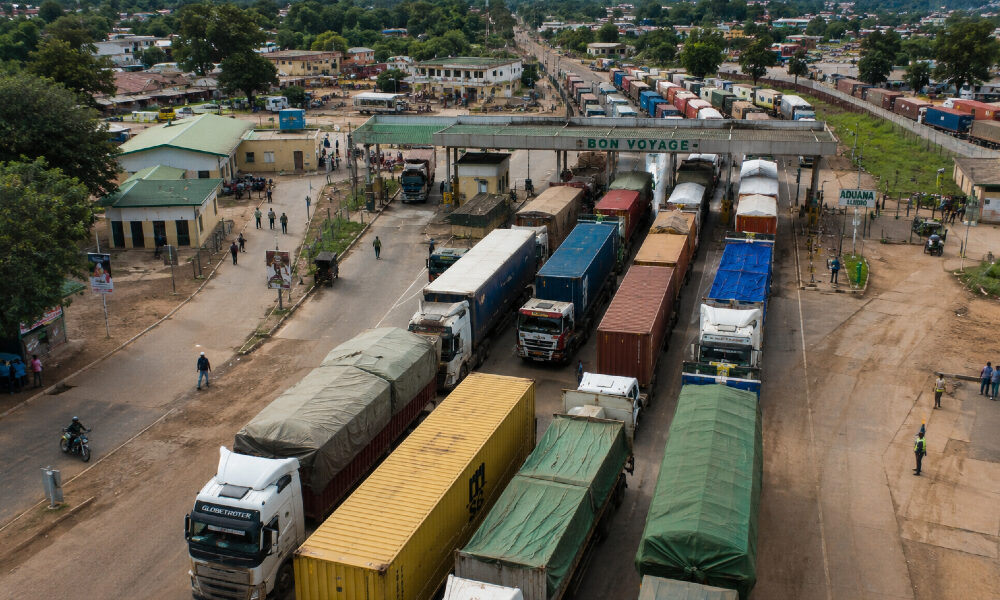
For the traders who sustain cross-border commerce day to day, sovereignty is not measured in summit declarations. It is measured in the 24 to 72 hours lost at border crossings, in the informal payments extracted along well-worn trade routes, and in the pervasive uncertainty that makes regional commerce more costly than any tariff schedule alone could explain.
That matters because industrialization and trade facilitation are not separate ambitions – they are the same ambition, expressed differently. A factory can produce competitively. A development bank can provide financing. Investors can commit capital. But none of it delivers its full value if goods cannot move predictably across borders. The real test of economic sovereignty is therefore operational, not rhetorical.
Three Questions That Cannot Wait
As participants prepare for El Alamein, three questions deserve particular attention – and specific, measurable answers.
The first concerns financial commitments. How will the announcements made at AAM2026 translate into concrete, quantifiable reductions in non-tariff barriers? Grand pledges have a long history of fading between the closing ceremony and the follow-up report. The gap between commitment and implementation has become one of Africa’s most persistent development challenges, and this meeting should be no exception to scrutiny.
The second concerns accountability. Which specific trade facilitation indicators – border crossing times, cargo dwell times, customs clearance efficiency, adoption rates for the Pan-African Payment and Settlement System (PAPSS) – should stakeholders commit to tracking in the six months following the meetings? Without agreed benchmarks established before participants leave El Alamein, there is no meaningful basis for holding anyone to account afterward.
The third concerns inclusion. Women traders account for a significant share of cross-border commerce across the continent, yet they consistently bear a disproportionate burden of informal taxation, procedural harassment, and exclusion from formal financial services. How do organizers and participants ensure that these traders experience tangible improvements in their operating environment, rather than simply hearing another round of policy commitments directed at someone else?
The Gap Between Ambition and Execution
AAM2026 brings together an unusually capable group: policymakers, development financiers, institutional lenders, and private sector leaders who collectively possess the authority and resources to move these issues from discussion to implementation.
The opportunity is not theoretical. The African Continental Free Trade Area (AfCFTA) has created the architecture; PAPSS has provided a payment mechanism; regional blocs have established the frameworks. What remains is the harder, less glamorous work of making them function at the level of the individual trader, the single truck, the lone customs official at a remote crossing.
That work does not happen at summits. It happens in the months that follow them.
Economic sovereignty, properly understood, will ultimately be measured not by the announcements made in El Alamein, but by the ease – or continued difficulty – with which African businesses trade with one another once the delegates have gone home. If that standard sounds unforgiving, it is meant to. The continent has had no shortage of ambitious themes. What it needs now is an equally ambitious commitment to the unglamorous infrastructure of execution.
The meetings in El Alamein are an opportunity. Whether they become a turning point depends on what happens next.
Ziad Hamoui is the Co-Founder and Past President of the Borderless Alliance, a leading private-sector advocacy group promoting economic integration and removing trade and transport barriers in West Africa. With extensive experience in Ghana’s road transport, logistics, and shipping sectors, he currently serves as Executive Director of Tarzan Enterprise Ltd., a long-established family business. He is a former Co-Chair of the Africa Food Trade Coalition, Co-Founder of the Trade Facilitation Coalition for Ghana, and serves on multiple high-level advisory committees on trade, transport, agriculture, and security. A Chartered Fellow of the Chartered Institute of Logistics and Transport (CILT) Ghana, he is also a former member of its Governing Council.