Opinion
Africa’s Roads: Lifelines of Trade, Trust, and Transformation


By Dishant Shah
Africa’s roads are far more than ribbons of asphalt and gravel – they are arteries of commerce, conduits of community, and catalysts for continental transformation. Yet their story is one of paradox: born from exploitation, burdened by neglect, and now poised for redemption.
Let’s rewind.
Africa’s earliest modern road networks were not conceived in the spirit of public service or national unity. They were engineered by colonial powers – not to connect people, but to extract resources.
Rail lines and dirt tracks radiated from mines and plantations to coastal ports, designed to ship raw materials out, not to weave societies together. Independence brought sovereignty, but not infrastructure coherence.
Newly formed nations inherited skeletal systems: robust arteries along the coast, but vast rural hinterlands left stranded in logistical isolation.
For decades, road development failed to keep pace with demographic and economic realities. Africa is home to the world’s fastest-growing population – and some of its slowest supply chains.
The consequences are stark: delayed goods, inflated food prices, missed medical appointments, and children walking hours to school.
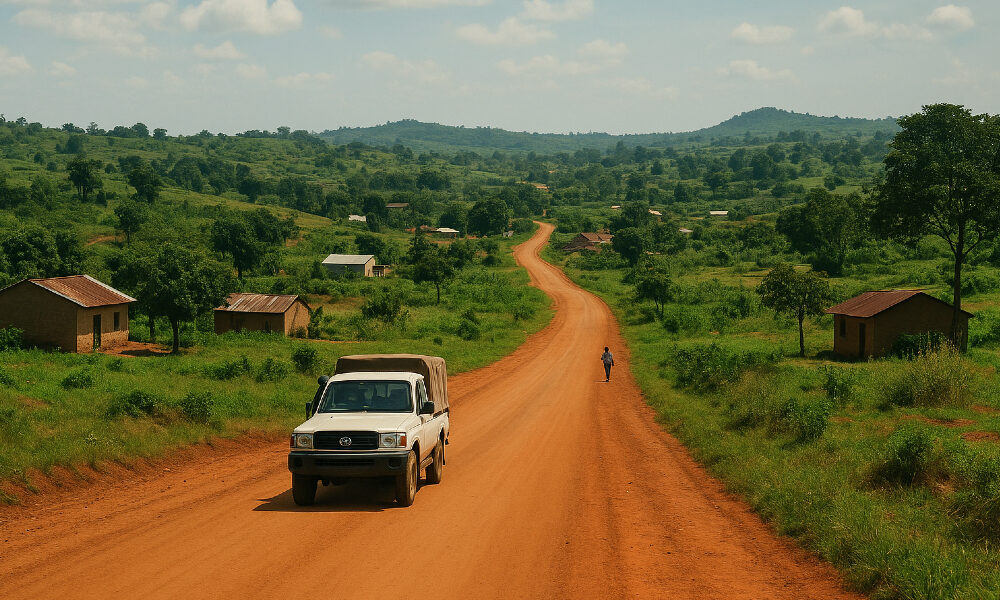
What Africa needs now isn’t just more roads, but better roads: resilient, climate-adapted, equitably distributed, and consistently maintained. Roads that serve not only capital cities but remote villages.
A Continent on the Move – But Still Stuck in the Mud
But the narrative is shifting.
Today, Africa boasts over 2.8 million kilometers (1.74 million miles) of roads – though fewer than 25 percent are paved. South Africa leads with more than 750,000 kilometers (466,000 miles) of roadways, the continent’s most integrated and maintained network.
Nigeria follows with over 200,000 kilometers (124,000 miles), though much of its rural infrastructure remains seasonal at best. Meanwhile, Kenya, Ethiopia, and Egypt are accelerating progress through ambitious national visions – Kenya’s Vision 2030, Ethiopia’s Growth and Transformation Plan, and Egypt’s National Roads Project – all aligning domestic priorities with continental ambitions.
From National Highways to Continental Corridors
The real game-changer? Pan-African connectivity.
Initiatives like the Trans-African Highway Network, the Abidjan – Lagos Mega Highway, and the Maputo Development Corridor are stitching together economies once divided by poor infrastructure. These corridors aren’t just about smoother rides – they are the physical backbone of the African Continental Free Trade Area (AfCFTA).
Without reliable roads, AfCFTA remains a promise on paper; with them, it becomes a marketplace of 1.3 billion people.
Yet the scale of need remains immense. Africa requires over US$200 billion in road infrastructure investment to close its transport gap. Today, only 43 percent of rural Africans live within two kilometers (1.24 miles) of an all-season road – compared to 68 percent globally.
This isn’t just a development metric; it’s a barrier to human potential. Every unpaved kilometer is a child kept from school, a farmer cut off from markets, a clinic unreachable in an emergency.
The socio-economic payoff of fixing this is profound. Studies show that improved rural road access can boost agricultural productivity by up to 30 percent, reduce post-harvest losses, and increase household incomes.
It enables mobile banking, telemedicine, and digital education to reach the last mile. In short: paved roads don’t just move vehicles – they move people out of poverty.
The Execution Gap: Announcements vs. Asphalt
And yet, here lies the irony: Africa excels at launching billion-dollar infrastructure announcements. Completion, however, remains stubbornly elusive.
Grand ribbon-cuttings often precede years of delays, cost overruns, or outright abandonment. The challenge isn’t vision – it’s execution, maintenance, and inclusion.
What Africa needs now isn’t just more roads, but better roads: resilient, climate-adapted, equitably distributed, and consistently maintained. Roads that serve not only capital cities but remote villages.
Roads that reflect not just engineering prowess, but social contract.
Because in a continent as vast and vibrant as Africa, every kilometer built right is more than concrete – it’s a covenant with the future. And that future is one of shared prosperity, powered by connectivity that finally serves the people, not just the port.
Dishant Shah is a partner at Legion Exim, a company specializing in facilitating the export of high-quality engineering products directly sourced from manufacturers in India to Africa. His areas of expertise include new business development and business management.