Owusu on Africa
Africa’s Resource Reckoning: Why Western Retreat Is Fueling Mining Nationalism


By Fidel Amakye Owusu
When Washington announced its withdrawal from United Nations agencies providing critical development assistance and humanitarian support to Africa last week, the move signaled more than a shift in American foreign policy. It heralded a fundamental recalibration of the post-colonial compact that has governed resource extraction on the continent for generations.
Ghana Fires the Opening Salvo
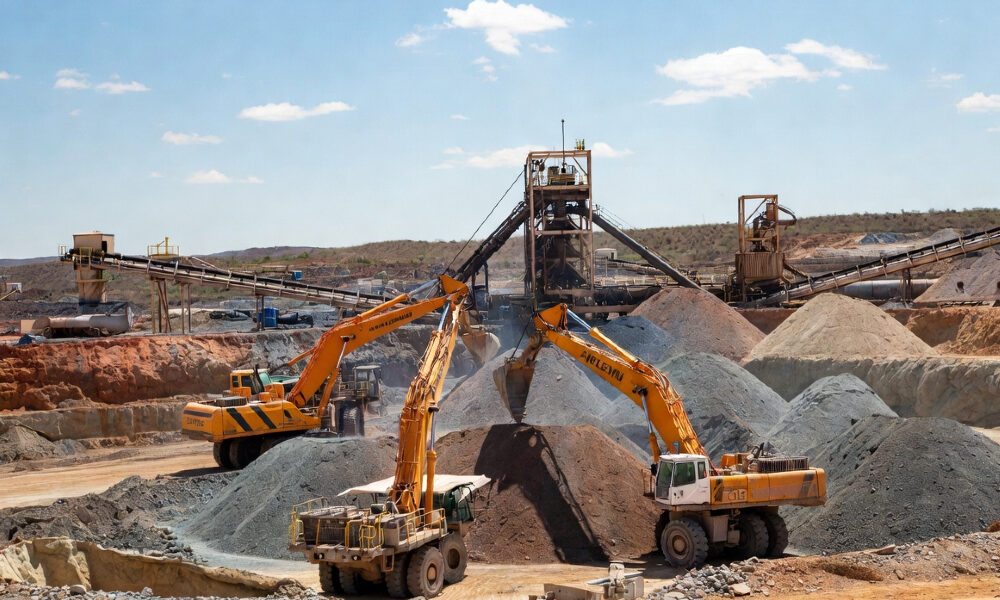
The response was swift and predictable. Within days, Ghana – Africa’s premier gold producer and a significant source of bauxite and other strategic minerals – moved to dismantle decades-old mining stability agreements while proposing to double royalties on extraction operations.
The timing was no coincidence.
The Grievance That Won’t Go Away
For generations, African populations have harbored deep-seated grievances about resource exploitation. The narrative is consistent across the continent: foreign companies extract immense wealth from African soil while local communities bear the environmental costs and see minimal economic benefit.
This perception, whether entirely accurate or not, has become political bedrock. Policies designed to maximize state interests in the extractive sector now command overwhelming public support, cutting across traditional ideological divides.
When Exceptionalism Breeds Retaliation
What makes the current moment particularly combustible is the broader geopolitical context. When major global powers increasingly prioritize unilateral exceptionalism over dialogue and compromise, African governments face diminishing incentives for restraint.
Why honor stability agreements with foreign mining conglomerates when the world’s most powerful nation abandons its commitments to multilateral institutions?
The logic of resource nationalism becomes irresistible under these conditions. Even constituencies traditionally inclined toward economic liberalism – the business classes, urban professionals, and Western-educated technocrats who once championed foreign investment – are reconsidering their positions.
If the international order no longer operates on principles of mutual obligation and good faith, then safeguarding national resources through assertive state control appears less like economic populism and more like rational self-interest.
Ghana’s proposal represents a canary in the coalmine. Other African nations watching this unfold will draw their own conclusions about the viability of existing arrangements with foreign extractors.
The Democratic Republic of Congo, which controls vast cobalt reserves essential for electric vehicle batteries, has already renegotiated contracts with international mining firms. Zambia, Tanzania, and Mali have similarly moved to increase state participation in their mining sectors.
The Crumbling Framework
The extractive industries face a strategic dilemma. Stability agreements were designed to provide long-term certainty for capital-intensive mining operations requiring decades to recoup initial investments.
But these arrangements assumed a stable international framework where Western powers maintained consistent engagement with African states through development assistance, diplomatic support, and multilateral institutions. That framework is crumbling.
Mining companies can protest these changes as violations of contractual sanctity, but such arguments ring hollow when the broader architecture of international cooperation is being dismantled by their home governments. African leaders are simply adapting to the new rules of engagement – or rather, the absence of rules.
The irony is profound. Western nations seeking to secure supply chains for critical minerals essential to the green energy transition may find themselves locked out of African resources precisely because their governments abandoned the diplomatic and institutional mechanisms that fostered cooperation.
China, which has maintained consistent engagement with African states through infrastructure investment and institutional support, stands to benefit from Western withdrawal.
A Gamble With High Stakes
The question now is whether this trend toward resource nationalism will serve African populations better than the previous arrangement. History offers sobering lessons.
State control of extractive industries can generate significant revenues when managed competently and transparently, as Norway’s experience with North Sea oil demonstrates. But it can also become a vehicle for corruption and economic mismanagement, as Venezuela’s collapse illustrates.
What seems certain is that the era of stability agreements and concessionary terms for foreign mining companies is ending. African states, emboldened by shifting geopolitical dynamics and domestic political pressure, are reasserting sovereignty over their natural resources.
Whether this produces prosperity or merely substitutes one form of exploitation for another remains to be seen.
For now, the message from Accra to the boardrooms of international mining conglomerates is unmistakable: the old arrangement is finished. A new bargain must be struck, and this time, African governments intend to negotiate from a position of strength.
Fidel Amakye Owusu is an International Relations and Security Analyst. He is an Associate at the Conflict Research Consortium for Africa and has previously hosted an International Affairs program with the Ghana Broadcasting Corporation (GBC). He is passionate about Diplomacy and realizing Africa’s global potential and how the continent should be viewed as part of the global collective.