Business
Africa’s Real-Time Payment Revolution Is a Global Business Imperative


By John Kourkoutas
When most global executives think of payments in Africa, they picture underdeveloped banking systems, cash-dominated economies, and infrastructure gaps. But a closer look at the data reveals a radically different – and far more dynamic -reality.
Consider this:
- Nigeria processed 5.1 billion real-time transactions in a single year.
- Kenya recorded a staggering 12 billion real-time payments – more than Germany (4.1 billion), the U.K. (4 billion), and even Japan (1.8 million) combined.
- South Africa, often perceived as more traditional in its financial systems, logged 200 million real-time transactions.
These aren’t projections or pilot programs. They are actual, live transaction volumes – proof that Africa has not just adopted digital payments but has become a global leader in real-time transaction infrastructure.
The Myth of “Underbanked” Africa
For years, foreign companies have operated under a persistent myth: that African consumers lack access to reliable payment systems. The truth? Africans have leapfrogged legacy banking entirely.
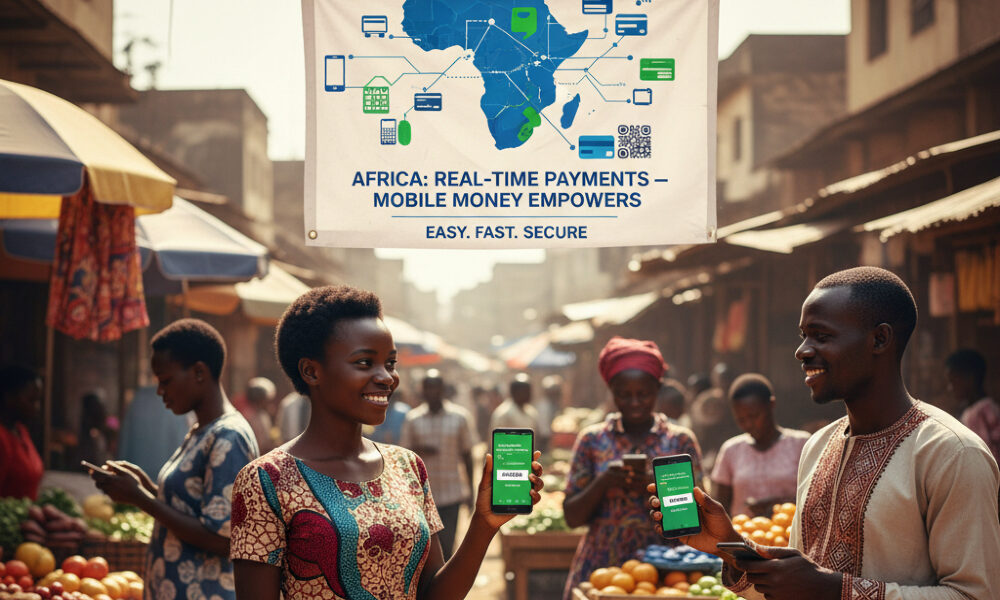
Across the continent, mobile money penetration now surpasses traditional bank account ownership. In countries like Kenya, Uganda, and Ghana, consumers don’t just use mobile wallets – they live in them.
From buying groceries to paying school fees, splitting dinner bills to sending remittances across borders, real-time digital payments are the norm, not the exception.
This isn’t a “developing market” playing catch-up. It’s a digital-first ecosystem that in many ways outpaces parts of Europe and North America.
What This Means for Global Businesses
The implications for international companies eyeing African markets are profound – and urgent:
- Instant payments are table stakes. Consumers expect transactions to clear in seconds, not days.
- Cash is no longer king. Assuming a market is “cash-only” could mean missing 60 percent or more of your potential customer base.
- Cross-border digital flows are live and growing. Regional payment rails like the Pan-African Payment and Settlement System (PAPSS) are enabling seamless transactions across 55 African nations.
- Mobile money integration isn’t optional – it’s your entry ticket. Platforms like M-Pesa, MTN Mobile Money, and Airtel Money aren’t just payment methods; they’re full-fledged financial ecosystems.
Real-World Lessons: Missed Opportunities vs. Strategic Wins
The gap between perception and reality is costing companies dearly.
One European retailer launched in Nairobi insisting on cash-only operations – only to discover that 60 percent of local consumers hadn’t carried physical cash in over a year. The result? A stalled launch and lost market share.
Conversely, an Asian e-commerce platform entered the same market with mobile money as its primary payment method from day one. By aligning with local behavior – not legacy assumptions – it achieved 300 percent faster user adoption than competitors clinging to outdated payment models.
The Strategic Imperative
The critical question for any company planning African expansion is no longer “Can we accept digital payments here?” It’s: “Are we designing our strategy around our customers’ payment reality – or our own outdated assumptions?”
Africa isn’t waiting for the world to build its financial infrastructure. Africa is building it – and using it at scale.
Businesses that recognize this shift don’t just enter markets faster; they capture mindshare, loyalty, and market share from competitors still stuck in a cash-based mindset.
The Bottom Line
The data is unequivocal: Africa’s real-time payment revolution is already here. With over 100 projects across 24 African countries, I have seen firsthand how companies that embrace this reality outperform those that don’t – often by orders of magnitude.
Africa isn’t a frontier to be “solved.” It’s a laboratory of financial innovation – and a US$3 trillion consumer market that rewards agility, local insight, and digital fluency.
John Kourkoutas is business development expert that specializes in helping companies, export teams, and business leaders succeed in Africa’s dynamic and emerging markets.