Opinion
Africa’s Real Investment Deficit Is Confidence, Not Resources
Governments chasing foreign investment often reach for the wrong tools. The real currency of capital markets is trust – and it is built, not bought.

By Gregory September
Governments love a good incentive package. Tax holidays, subsidized land, glossy investment summits, ribbon-cuttings for new “special economic zones.” These tools dominate the playbook for attracting foreign direct investment, and they are not without merit. But they consistently fail to solve the one problem that actually keeps capital away: a lack of confidence.
Here is the uncomfortable truth policymakers rarely say out loud. Countries do not usually lose investment because they lack opportunity. They lose it because investors believe uncertainty is lower somewhere else. A tax break cannot fix that. Neither can a slogan.
Confidence Is Engineered, Not Announced
Investor confidence is not a marketing outcome. It is the product of systems that function predictably over time:
- Institutions that outlast the politicians who lead them
- Rule of law applied consistently, not selectively
- Infrastructure that moves goods, people, and data without friction
- State capacity to deliver on what government actually promises
- Policy consistency that survives election cycles and leadership changes
Each of these lowers uncertainty. And uncertainty, more than almost any other factor, is what capital prices in. A mine, a port, or a fertile stretch of farmland is worth little to an investor who cannot predict what the rules will look like in five years. Reduce that uncertainty, and risk-adjusted returns improve – without a single new incentive on the table.
This is also why confidence is so hard to reverse once lost. It compounds. Every well-enforced contract, every peaceful transfer of power, every infrastructure project delivered on budget adds a small deposit to a long-term account. Every expropriation, every broken promise, every abrupt policy reversal withdraws from it – often at a far steeper rate. Trust accumulates slowly and evaporates quickly. So does its opposite.
The Geography Problem No One Talks About
Nowhere is this dynamic more visible – and more structurally unfair – than in Africa’s sixteen landlocked countries. Fourteen of them rank near the bottom of the Human Development Index. That is not a coincidence; it is a design flaw baked into the map.
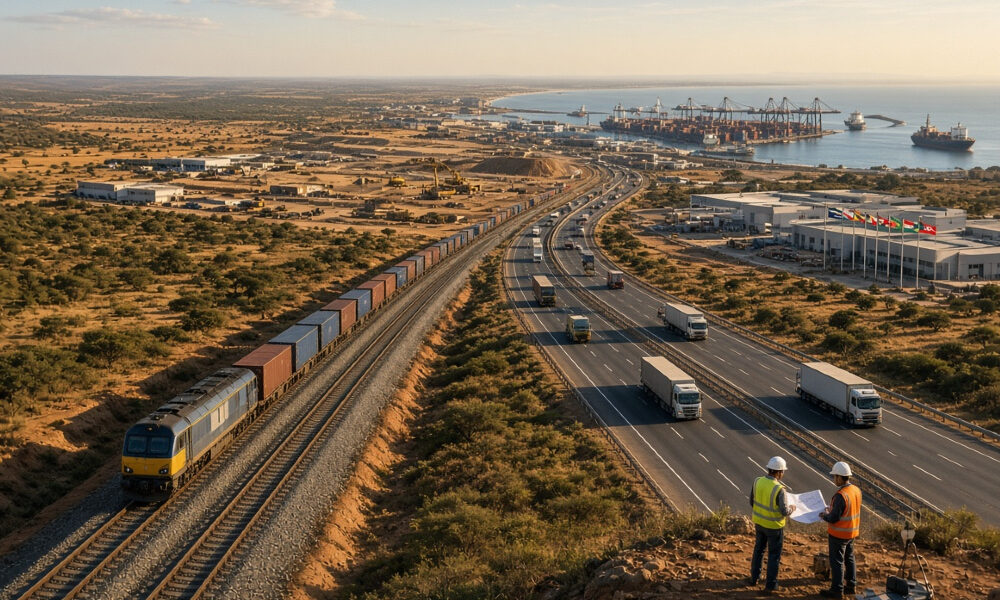
A landlocked nation does not control its own gateway to the world. Every port it relies on, every transit road, every cross-border rail line belongs to a neighbor. That single fact shapes the cost of doing business before a single domestic policy is even written. Transport costs eat into margins that coastal competitors never have to absorb. Delays at a foreign border can undo years of careful economic reform. Sovereignty, in an important economic sense, stops at a border these countries do not control.
And yet the standard scorecards we use to judge economic performance – GDP growth, ease-of-doing-business rankings, reform pace – rarely account for this. We compare a landlocked economy to a coastal one as though they are running the same race. They are not.
The Question Worth Asking
If confidence is what ultimately attracts capital, and geography is one of confidence’s most stubborn obstacles, then the policy conversation needs to shift. Less energy spent on the next incentive package. More on the infrastructure that actually closes the gap: regional rail corridors, harmonized customs regimes, cross-border power grids, and transit agreements that treat a landlocked neighbor’s access to the sea as a shared regional asset rather than a bargaining chip.
Which regional infrastructure investment would do the most to close this gap? That is the question governments, investors, and development institutions should be asking – because the answer will matter far more than the next tax break ever could.
Gregory September is a South African academic, author, and geopolitical analyst with extensive experience in government and Parliament. He is the founder and CEO of SAUP (Sustainability Awareness and Upliftment Projects NPC), which focuses on sustainability education and community development. He previously served as Head of Research and Development for the Parliament of South Africa. His work centers on sustainability, African geopolitics, and economic development, and he regularly contributes to analysis of global political and economic affairs.