Opinion
Africa’s Rail Renaissance: How Iron Arteries Are Redrawing the Economic Map
From Zimbabwe’s localized revival to the sprawling Lobito Corridor, Southern Africa is transforming aging tracks into strategic engines of regional growth.


By Martin Mpukani
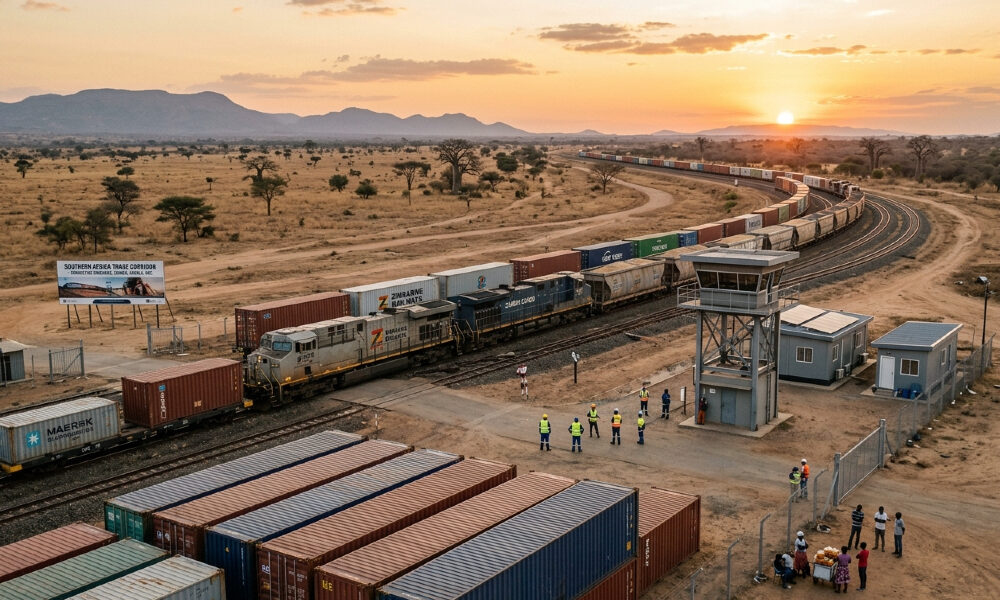
For decades, the railways of Southern Africa were little more than rusting monuments to a bygone era. Today, a quiet but profound transformation is underway. Rail is being reimagined not as a crumbling relic of the past, but as the strategic backbone of a modernizing economy.
Nowhere is this shift more evident than in Zimbabwe’s railway revival. Through a cleverly structured public-private partnership, a US$2.5 million private-sector injection from Zimasco has breathed life into the National Railways of Zimbabwe, restoring three locomotives and 100 wagons to the tracks. Recognizing the bottleneck of road transport, the government in Harare is now weighing policies to pry heavy, bulk freight off the continent’s congested highways and back onto the rails.
A Regional Awakening: TAZARA and the Lobito Corridor
Zimbabwe’s localized success is merely a single note in a much broader regional symphony. Further north, a similar awakening is taking place along the Tanzania-Zambia Railway Authority (TAZARA). The historic line is currently undergoing a massive US$1.4 billion revitalization. This is not mere patchwork; it involves new rolling stock, comprehensive infrastructure rehabilitation, and a deliberate mandate to transform the railway into a highly competitive regional freight corridor.
Meanwhile, the Lobito Corridor is rapidly materializing into a geopolitical and economic powerhouse. By linking Angola, the Democratic Republic of Congo, and Zambia, it is forging a vital new artery for minerals, agricultural goods, and industrial trade to reach global markets with unprecedented efficiency.
Beyond the Tracks: Building Economies, Not Just Railways
It would be a mistake to view these developments as isolated civil-engineering projects. Together, they signal a fundamental paradigm shift in how the continent approaches development. Africa is finally rebuilding the physical infrastructure required to move commodities, capital, and people across borders with frictionless efficiency. The era of fragmented, road-dependent supply chains is giving way to integrated, rail-led logistics.
Yet the true dividend of this rail renaissance lies beyond the steel itself. These corridors are catalyzing a secondary boom in the real economy. They are drawing massive investment into logistics hubs, inland ports, and warehousing. They are creating fertile ground for agro-processing, manufacturing clusters, mining services, and energy grids.
The next great African infrastructure story will not simply be about laying track. It will be about building thriving, interconnected economies along the way.
Martin Mpukani is a serial entrepreneur and the Founder & CEO of The Business Place Network, as well as the founder of AfriLeap Capital, a hybrid early-stage venture pipeline builder and impact finance partner focused on informal and climate ventures across Africa. He is dedicated to supporting entrepreneurs in low-income communities, empowering young people with limited opportunities, and driving scalable ventures that foster economic growth and social impact.