Opinion
Africa’s Quiet Revolution: The Digital Payment Shift Ending the ‘Dollar Tax’


By Dr. Princess C. Mutisya
Every time a Kenyan exporter ships goods to Uganda and pays US$20 in foreign-exchange fees to settle the transaction, it’s not just a cost – it’s a tax. Not one levied by any government, but an invisible “dollar tax” imposed by a payment system still tethered to colonial-era financial plumbing.
This hidden levy chips away at margins, stifles competitiveness, and undermines Africa’s ambition for genuine economic integration.
But that may finally be changing.
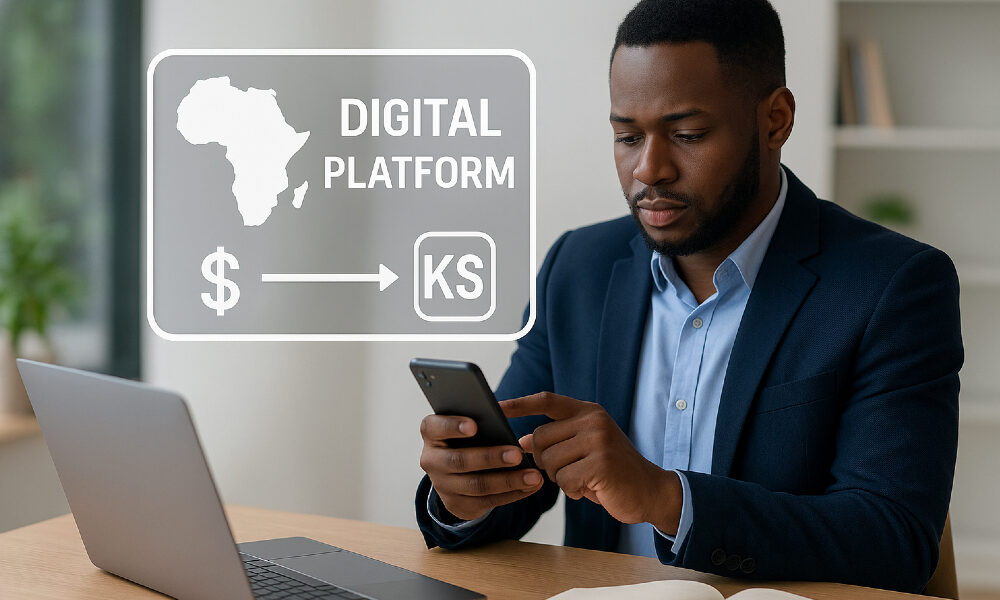
The Common Market for Eastern and Southern Africa (COMESA) – a 21-nation bloc representing over 600 million people – has launched the Digital Retail Payments Platform (DRPP), a groundbreaking initiative that enables cross-border trade to be settled directly in local currencies. For the first time, Kenyan shillings can pay for Ugandan goods without first being converted into U.S. dollars.
No intermediary banks in New York or London. No hidden spreads. No unnecessary foreign-exchange drains.
Kenya, currently chairing COMESA, is championing the platform’s rapid scale-up – a move that could reshape intra-African commerce.
The Hidden Cost of Dollar Dependence
Africa is home to more than 40 distinct currencies, yet the vast majority of its cross-border trade still routes through the U.S. dollar or euro. Why? Because liquidity between African currency pairs remains thin, and trust in domestic financial infrastructure has historically been low.
The result? Every transaction incurs conversion fees, settlement delays, and exposure to global currency volatility – costs that fall disproportionately on small and medium-sized enterprises (SMEs), the backbone of the continent’s economy.
This isn’t merely inefficient; it’s economically self-defeating. While African policymakers speak of regional integration and the African Continental Free Trade Area (AfCFTA), the reality on the ground remains fragmented.
Trade may be local, but payments are still colonial in design.
A New Architecture for African Trade
The DRPP aims to fix this structural flaw at its root. By linking commercial banks and central banks across COMESA, the platform facilitates real-time, peer-to-peer settlement in local currencies.
A successful pilot between Malawi and Zambia is already live, with plans to expand across all 21 member states. The target? Transaction costs below 3 percent – a fraction of today’s average.
This is not fintech theater. It’s foundational financial infrastructure reform.
If implemented effectively, the DRPP could:
- Preserve scarce foreign-exchange reserves, which many African nations desperately need for essential imports and debt servicing.
- Shield traders from U.S. dollar volatility, which often has little to do with local economic fundamentals.
- Accelerate the practical realization of AfCFTA, turning policy vision into daily commercial reality.
In short, seamless payments could finally make African trade truly African.
The Real Challenge Isn’t Technology – It’s Trust
Yet technology alone won’t guarantee success. History shows that payment integration falters when governance lags. Capital controls, inconsistent liquidity management, opaque settlement rules, or political interference could quickly erode confidence in the system.
The lesson from Europe’s TARGET2 or ASEAN’s regional payment linkages is clear: interoperability requires more than code – it demands credible institutions, transparent rules, and political will.
For the DRPP to succeed, COMESA must ensure that:
- Central banks maintain adequate liquidity in key currency pairs.
- Settlement is final and irrevocable.
- The system remains insulated from short-term political pressures.
Get this right, and the platform could do more for African economic sovereignty than a decade of summits and declarations.
Sovereignty in the Digital Age
True sovereignty in the 21st century isn’t just about flags or borders – it’s about who controls the movement of value. If African businesses must route every payment through Western financial hubs to trade with their neighbors, then integration remains a mirage.
The DRPP offers a path toward financial self-determination. It promises faster, cheaper, and more resilient trade – on African terms.
For policymakers and investors alike, the message is unequivocal: Build payment rails that are transparent, interoperable, and apolitical, and markets will follow. Africa’s economic future won’t be drafted in ministerial communiqués.
It will be coded in secure protocols, enforced by sound regulation, and validated by the confidence of millions of traders moving goods – and money – across borders without friction.
The era of the “dollar tax” need not last forever. With the DRPP, Africa has taken its most concrete step yet toward ending it.
Dr. Princess C. Mutisya is a Strategic Legal Architect, author, and international business leader with more than 14 years of cross-border experience across Africa and the UAE. She is the Founder & CEO of CR Advocates LLP (Kenya) and CR Advocates Consultants LLC (UAE)among other leadership Roles. A recipient of Doctor of Laws (LLD) in International Legal Strategy and Doctor of Business Administration (DBA) in International Business & Global Transformation, Dr. Mutisya is an expert in international trade and investment law, advising governments, DFIs, and multinationals on investment law, sovereign frameworks, PPP structuring, Corporate Governance, trade facilitation, energy and infrastructure projects, real estate ventures, and private wealth structuring across Africa-GCC corridors. Beyond her legal and business enterprises, she is a global speaker and thought leader on economic diplomacy, policy innovation, and Africa’s emerging investment architecture.