Opinion
Africa’s Population Boom: Can Our Food Systems Rise to the Challenge?


By Jean Claude Niyomugabo
Sub-Saharan Africa is home to one of the fastest-growing populations on Earth. By 2050, the region’s population is projected to surpass 2.1 billion – a staggering 94 percent increase from current levels.
This unprecedented demographic shift presents both extraordinary opportunities and urgent challenges. At its core lies a critical question: How do we ensure food security for a rapidly growing continent?
As the population expands, so too will the number of people without reliable access to nutritious food. According to the Food and Agriculture Organization (FAO), global undernourishment could rise by between 7.5 and 13 million people in the coming years – with Sub-Saharan Africa bearing the brunt of this crisis.
This isn’t a distant threat; it’s already happening – unfolding daily in communities across the continent.
From Struggle to Purpose: A Personal Journey
My journey into agriculture began not in a boardroom or research lab, but in rural Rwanda – where farming was often a matter of survival rather than opportunity. Like many families, mine relied on small plots of land to grow maize, beans, and potatoes.
There was no irrigation, limited access to modern tools, and little formal training.
I saw crops fail due to erratic rainfall. I witnessed post-harvest losses that erased months of hard work.
And I watched young people leave farming behind, disillusioned by a system that failed to support them.
The barriers were real: weak infrastructure, scarce extension services, and youth excluded from financing and value chain participation. But something changed in me during the height of the pandemic in 2020.
As lockdowns disrupted traditional ways of working, I began exploring how digital tools could connect farmers, amplify their voices, and transform agricultural communication.
That realization became my mission: to harness the power of digital storytelling to drive agricultural transformation across Africa.
The Present: Resilience, Action, and Hope
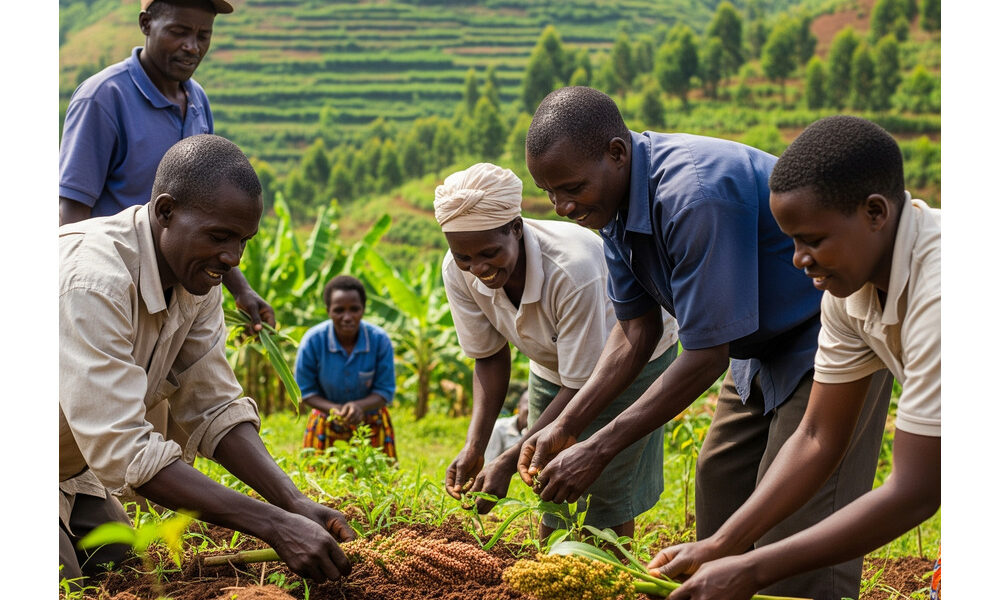
Over the past several years, I have worked across multiple agricultural value chains – from maize and horticulture to livestock, fruits, and cassava. Through partnerships with local and international organizations, I have collaborated with hundreds of smallholder farmers and youth-led agri-businesses in Rwanda and beyond.
What I have seen has been deeply inspiring. Cooperatives redefining governance models.
Young entrepreneurs launching processing hubs. Women building sustainable agribusinesses that not only support their families but also uplift entire communities.
From these experiences, I have learned what works – and what doesn’t.
What Works:
- Training and mentorship programs tailored to real-world needs.
- Access to local and international markets.
- Strong cooperatives with transparent leadership.
- Digital platforms that provide pricing, weather, and financial information.
- Inclusive value chains that empower women and youth at every stage
What Doesn’t Work:
- Projects that lack follow-through.
- One-size-fits-all solutions.
- Excluding farmers from decision-making processes.
- Overlooking the power of storytelling and community engagement.
These lessons have reinforced a simple truth: Africa is not lacking in ideas or talent. What we need are systems that truly support those who grow our food – not ones that exploit them.
We must begin to see agriculture not as a last resort, but as a professional, innovative, and impactful career path for young Africans.
The Future: Feeding Africa – And the World
Africa holds 60 percent of the world’s uncultivated arable land. We have a vibrant, youthful population ready to innovate.
Our biodiversity and agricultural heritage are rich. Now is the time to turn potential into production – and production into prosperity.
My vision for the future is clear:
A continent where Africa feeds itself and becomes a global food supplier. A continent where rural youth view farming as a path to dignity, income, and influence.
A continent where smallholder farmers are respected, resourced, and prepared for tomorrow.
To make this vision a reality, we must take bold, coordinated action:
- Reimagine Agricultural Education
Integrate agribusiness, digital skills, and sustainability into school curricula. Promote peer learning and mentorship among rural youth. Shift outdated perceptions of agriculture into a modern, dynamic profession. - Invest Across the Entire Value Chain
Support innovation from seed to sale — including inputs, production, processing, storage, packaging, and export. Empower youth in all segments, not just on the farm. Establish local processing centers to reduce waste and add value. - Promote Climate-Smart Agriculture
Scale up irrigation technologies and drought-resistant crops. Educate farmers on soil health, composting, and regenerative practices. Equip communities to adapt to increasingly unpredictable weather patterns. - Empower Women and Girls in Agriculture
Break down legal and cultural barriers to land ownership. Expand access to financing and training for women-led agribusinesses. Ensure gender equity in cooperatives and leadership roles. - Leverage Digital Storytelling and Media
Use videos, blogs, and social media to showcase success stories. Give farmers a platform to share their innovations and insights. Shift public perception – from seeing agriculture as a symbol of poverty to a symbol of power.
This is the future I am committed to helping build.
As I conclude my work with Agriterra this June, I carry with me immense pride and gratitude for the farmers, youth leaders, and changemakers I have had the privilege to work alongside. Their resilience, creativity, and determination continue to inspire me every single day.
Africa’s food future is not written yet – and together, we can write a story of abundance, dignity, and hope.
Jean Claude Niyomugabo is an entrepreneur and digital communication specialist with a strong passion for Africa’s development. He is dedicated to harnessing the power of social media to drive positive change and enhance livelihoods. With diverse interests and a strategic approach to digital engagement, he strives to create meaningful impact through innovation and connectivity.