Business
Africa’s Next Billion-Dollar Frontier Isn’t Tech or Banking – It’s Agribusiness


By Agnes Chikukwa Hove
When people think of Africa’s corporate powerhouses, they often picture telecom giants, sprawling banks, or resource-rich mining conglomerates. But here is a fact that deserves far more attention: Africa already has 345 companies with annual revenues exceeding US$1 billion – and 40 percent of them are headquartered in South Africa.
This isn’t just a statistic. It is proof that scale is not only possible in Africa – it is already happening.
Yet, one sector remains dramatically underrepresented among these titans: agribusiness.
Despite holding 60 percent of the world’s uncultivated arable land and being home to the fastest-growing population on Earth, Africa still punches below its weight in high-value agricultural enterprise. While farming remains central to livelihoods across the continent, too much potential lies dormant beyond the farm gate – in processing, logistics, nutrition innovation, and global exports.
The Gap Between Potential and Performance
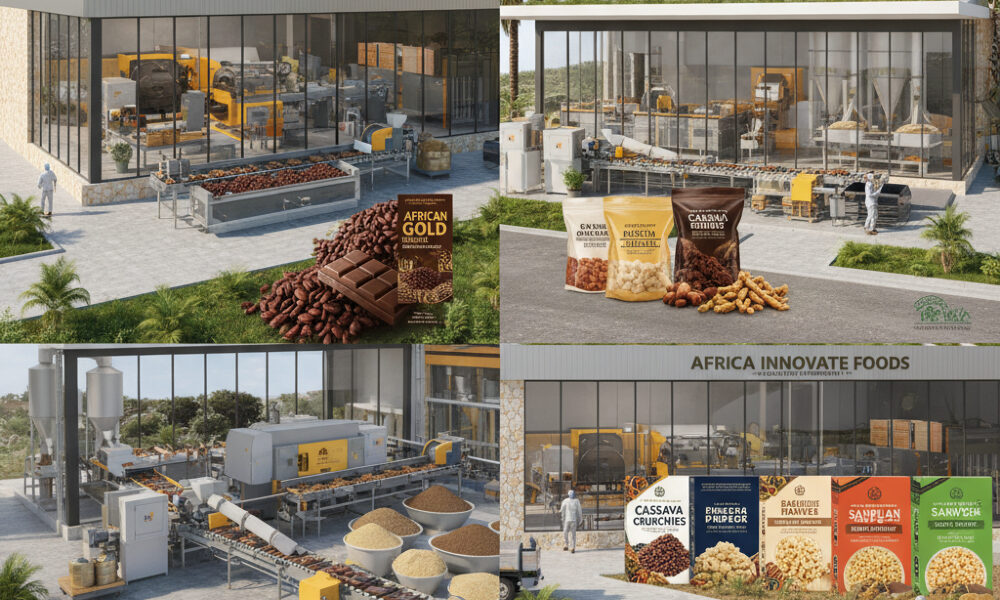
Consider this: Africa produces vast quantities of cocoa, coffee, cassava, and maize. Yet, most of the value-added processing – turning raw crops into chocolate, packaged foods, or health supplements – happens overseas.
We export commodities and import finished goods, losing billions in economic opportunity along the way.
The result? Few African agribusinesses have crossed the billion-dollar threshold.
But that could change – and fast.
The blueprint exists. South Africa has shown what strong infrastructure, regulatory maturity, and market access can achieve.
Companies like Pioneer Foods (now PepsiCo South Africa) and RCL Foods have demonstrated that large-scale, sustainable agribusiness models are viable. Now, it’s time to replicate and adapt this success across the continent.
The Road to Africa’s Agribusiness Revolution
The next wave of African corporate champions won’t come solely from tech hubs or financial centers. They will emerge from fields, food labs, cold chains, and export terminals. Here’s where the transformation will take root:
- Processing: Turning raw crops into shelf-ready products adds immense value. Imagine West African cocoa becoming premium chocolate brands made and marketed in Africa.
- Nutrition Innovation: With rising urban populations and evolving diets, there’s growing demand for fortified staples, plant-based proteins, and functional foods tailored to African tastes and health needs.
- Logistics and Cold Chains: Reducing post-harvest losses – which can exceed 30 percent for perishables – requires investment in storage, transport, and distribution networks. This isn’t just infrastructure; it’s profit infrastructure.
- Export Platforms: As global consumers seek diverse, sustainable food sources, Africa’s indigenous crops – from teff to moringa – can become international superfoods.
And let’s not overlook the human capital: Africa’s youthful population is increasingly tech-savvy, entrepreneurial, and eager to solve local problems with scalable solutions. From drone-powered crop monitoring to fintech-enabled farmer financing, innovation is accelerating across the agrifood ecosystem.
A Continent-Wide Opportunity
While South Africa may serve as an early hub due to its advanced logistics and financial systems, the real opportunity spans borders. Countries like Nigeria, Kenya, Ethiopia, and Ghana are nurturing agri-startups, building regional trade corridors, and reforming policies to attract investment.
The African Continental Free Trade Area (AfCFTA) further amplifies this potential, creating a US$3.4 trillion market where agribusinesses can scale without leaving the continent.
Building Value Chains That Last Generations
The next generation of African billion-dollar companies won’t just generate wealth – they will create jobs, strengthen food security, reduce dependency on imports, and position Africa as a net exporter of high-value food products.
This isn’t optimism. It is strategy. And the time to act is now.
Policymakers must prioritize agro-industrialization. Investors should look beyond Silicon Savannah and fund the “soil-to-shelf” economy.
Entrepreneurs – young and seasoned alike – must see agriculture not as subsistence, but as a dynamic, high-growth industry ripe for disruption.
The Bottom Line
Africa doesn’t need to invent a new model to build billion-dollar businesses. It already has proven examples.
What it needs now is focus, investment, and belief in the transformative power of agribusiness. The seeds are planted. The harvest is coming.
Agnes Chikukwa Hove is a seasoned executive and social entrepreneur with over 25 years of leadership experience across Africa. She is an expert in business strategy, community development, and women’s empowerment, and is a sought-after motivational speaker and executive coach. She holds a Master’s in Strategic Management and is dedicated to fostering sustainable growth and inspirational leadership.