A Diaspora View of Africa
Africa’s Looming Debt Problem


By Gregory Simpkins
The AfricaBrief news service recently reported that the African Forum and Network on Debt and Development (AFRODAD) says the 2026 Annual Meetings of the International Monetary Fund (IMF) and World Bank Group in Bangkok, Thailand, offered limited evidence of the structural reforms needed to address Africa’s increasingly dangerous debt challenges.
At a press briefing on October 21, AFRODAD officials presented their assessment of the meetings, highlighting rising debt-service costs, persistent fiscal pressures and shortcomings in existing debt restructuring mechanisms and emerging opportunities for developing countries to strengthen their collective bargaining power.
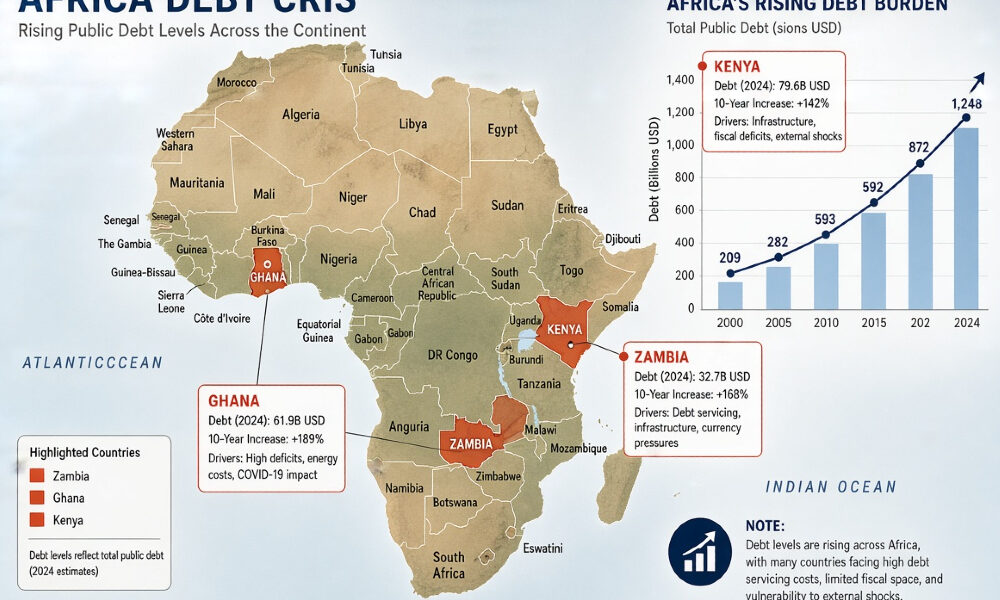
According to the IMF, 22 low-income African countries are estimated to be at high risk or already in debt distress, up from six in 2013.
So how did this perilous debt situation develop?
African debt problems have happened in three waves. We are now in the third.
Wave 1: 1970s-1980s – Petrodollar Loans
After the oil shocks, Western banks flush with Organization of Petroleum Exporting Countries money lent cheaply to African governments. When US interest rates spiked to 20 percent in 1981 and commodity prices collapsed, debts became unpayable. External debt-to-Gross National Income went from 21 percent in 1970 to 49 percent in 1980 to 111 percent by the 1990s.
That led to Structural Adjustment Programs and later Highly Indebted Poor Country (HIPC) debt cancellation in the 2000s.
Wave 2 and 3: 2010-2025 – The Current Crisis
This is the wave that got Zambia, Ghana, Kenya, Ethiopia and Mozambique into trouble.
After the global financial crisis, central banks kept rates near zero. African governments that had never issued bonds could suddenly issue Eurobonds. Ghana, Zambia, Kenya, Ethiopia and Nigeria issued first-ever 10 – 15-year Eurobonds at 7-10 percent interest. “Many developing countries in a desperate need for cash injection rushed to these low-cost loans, in markets with no rules or regulation,” said UN expert Attiya Waris. The IMF encouraged it.
In 2015, oil, copper and cocoa prices fell. Foreign currency earnings collapsed. In 2020, COVID-19 hit. Governments had to spend on health while exports stopped. In 2022, Russia invaded Ukraine. Food and energy import bills doubled, and the US Federal Reserve raised interest rates sharply. The average public debt in sub-Saharan Africa went from about 60 percent to 70 percent of GDP from 2019 to 2023. As a result, countries borrowed new loans to repay old loans, creating a debt spiral.
African governments collect very little tax. Ghana collects 16 percent of GDP, Kenya collects 17 percent and Zambia collects 21 percent as compared with 27 percent median for other developing countries. When reserves ran low, currencies crashed, making dollar debt more expensive.
Debt interest as share of revenue by 2022:
- Ghana: 45 percent
- Zambia: 39 percent
- Kenya: about 20 percent (up from 11 percent in 2014)
- South Africa: 15 percent
Kenya’s shilling lost 19 percent of its value in one year. Ghana’s cedi and Zambia’s kwacha collapsed. The old HIPC debt was 30-year concessional loans from World Bank. New debt is:
- 10-year Eurobonds at 8-11 percent,
- Chinese project loans with shorter maturities and collateral clauses (17 percent of sub-Saharan external debt is owed to China) and
- Hidden commercial loans.
This created a wall of repayments due 2024-2028.
Examples of African debt:
Zambia was the first pandemic default. There was 129 percent of GDP debt in 2020. The country borrowed heavily from China and the Eurobond market for infrastructure. Copper prices dropped, and a drought hit. In November 2020, Zambia failed to pay Eurobond interest – the first African default during the pandemic. The debt was restructured to US$6.3 billion under the G20 Common Framework with China and the Paris Club.
Ghana represented the largest debt restructuring. The country had US$45 billion in debt, 85 percent of GDP. Public debt has more than doubled since 2012. Ghana borrowed for a banking bailout, energy and to cover budget deficits. In December 2022, Ghana suspended payments on most external debt. The domestic debt exchange forced local banks and pensioners to take losses. A US$13 billion deal was reached with private creditors in October 2024 – the largest in African history. There was a US$3 billion IMF program attached.
Kenya was on the edge, with debt rising to 70 percent of GDP. Kenya used Eurobonds to build a standard gauge railway and highways. Interest payments consumed reserves from 47 percent of external debt in 2014 to more than 20 percent by 2022. The country avoided default in 2024 by issuing a new 2031 Eurobond at 10.7 percent to repay 2024 maturity, but at a much higher cost.
Mozambique had hidden debt. In 2016, the government disclosed US$2 billion in secret loans taken by state firms for a tuna fishing fleet and maritime security, guaranteed by the state, with help from Credit Suisse. The IMF and the World Bank pulled support, and the currency crashed. Mozambique is still restructuring.
Ethiopia sought Common Framework relief in 2021. The country defaulted on a US$33 million Eurobond payment in December 2023 after Tigray war costs and drought.
In short: these countries borrowed in dollars when rates were low for projects that don’t generate dollars, amidst low tax collection, then got hit by three external shocks back-to-back.
Strategies to Address Debt
There have been a variety of strategies to deal with African debt effectively, but only outright HIPC cancellation permanently lowered debt.
The Debt Service Suspension Initiative (DSSI) was a G20-World Bank-IMF program (May 2020–Dec 2021) that temporarily suspended debt service payments for 73 eligible low income countries, freeing about US$12.9 billion in payments and helping them manage COVID 19 fiscal pressures.
The Common Framework for Debt Treatments is a G20 Paris Club mechanism (established in 2020) that coordinates debt restructuring for DSSI eligible low income countries, using IMF-World Bank Debt Sustainability Analyses to define the needed treatment and requiring comparable terms from all creditors.
Both programs delay debt repayment but don’t cut enough of the debt.
Domestic exchange debt generally refers to domestic debt that is being restructured or “exchanged” under a government run debt exchange program, where existing obligations are swapped for new ones with different terms such as interest rates, maturities or repayment schedules, but this shifts the burden to local pensioners and banks.
Without higher taxes and export diversification, restructuring just resets the clock 10 years – which is exactly what happened to Zambia and Ghana after HIPC.
African nations often got into debt due to unwise outside advice or events fully out of their control. Rather than prey on nations in debt trouble, debt-holding nations and international financial institutions should create workable debt elimination programs, provided governments live up to the promises they make to get out of a financial hole that could swallow their future.
Gregory Simpkins, a longtime specialist in African policy development, is the Principal of 21st Century Solutions. He consults with organizations on African policy issues generally, especially in relating to the U.S. Government. He is Editor-in-Chief of The Habari Network, the premier African Diaspora news website and moderates the Network’s podcast: Real Talk Habari.