Alorh’s eye on the Motherland
Africa’s Jollof Wars
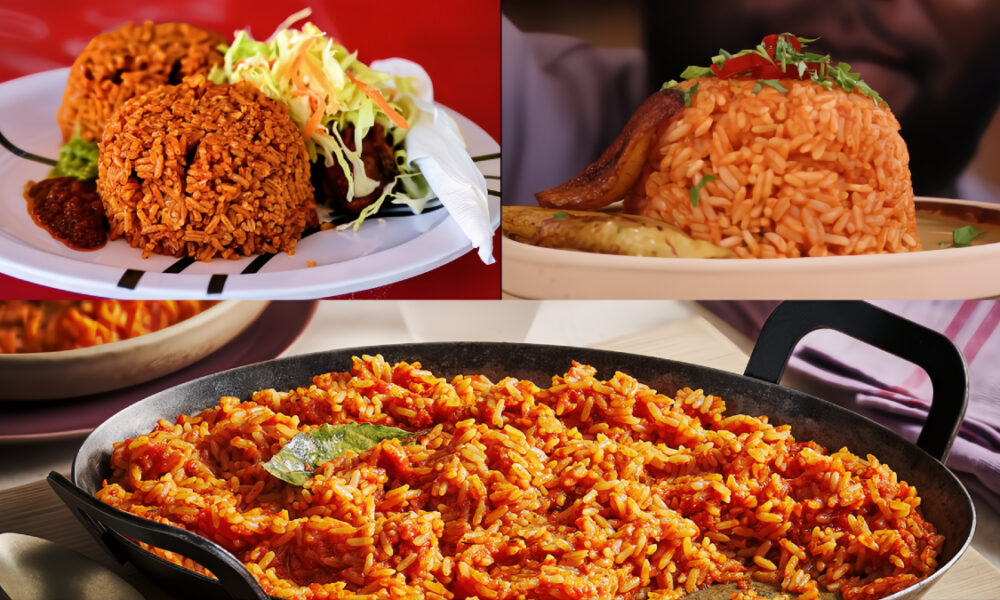


In Africa, the festive season is characterized by a feast of abundant food sharing with drink. One of the most common foods on the table is the almighty JOLLOF RICE. Jollof rice has become a delicacy on the tables of most Africans, especially in the West African sub-region.
This has caused ‘war’ and ‘battles between Ghana and Nigeria, namely the Jollof War. The battle of supremacy about which recipes and methods are the best always ends in a ‘war’.
With ‘Detty December’ becoming the best month to visit these two nations, it is very evident that people from both countries had a taste of Jollof.
Food is a central part of African celebrations, no matter the event or occasion. From street food vendors to the top restaurants in these countries, jollof is on the menu.
Interestingly, the Senegambians are the original owners of jollof, which they call ceebu jen (made with fish) or ceebu yapp (made with meat) in the Wolof language. The Gambian called Jollof Benachin
Jollof rice is believed to have spread across Africa during the Malian Empire around the 13th or 14th century. This empire was one of the largest and longest-lasting on the continent.
The Malian Empire helped develop skills in areas such as rice agronomy, blacksmithing, etc.
This empire was also key in the spread of Islam in West Africa. At the end of the empire, Jollof was spread across these areas.
African cuisine is one of the ways the continent continues to preserve its cultures and traditions. The similarities in food preparation and preservation are interesting. In Kenya, corn flour is used to prepare ugali. In Ghana, it is used to prepare akple.
As the season unfolded, Africa’s traditional foods were on the menu, especially rice dishes. In West Africa, especially Ghana, Nigeria, Senegal, and Gambia, jollof rice is the main food on the menu.
Mary Alorh is Director of Administration at DefSEC Analytics Africa Ltd. and is an expert in Gender, Youth, and Peace & Security initiatives in West Africa.