Business
Africa’s Investment Paradox: Risk, Reward, and the Right Questions to Ask


By Lailla Mutajogera
When I speak with investors about Africa, I hear the same six questions – again and again. They reflect a deep curiosity, but also a persistent hesitation shaped by outdated narratives and misunderstood realities.
“Isn’t it too risky?”
“But isn’t it full of opportunity?”
The answer, quite simply, is yes – to both.
Africa is the world’s most misunderstood investment frontier. It is a continent of contradictions: immense challenges coexist with unparalleled potential.
But the real differentiator between success and failure isn’t luck – it’s asking the right questions.
Let’s address them.
1. What Are the Risks – And What Do They Really Mean?
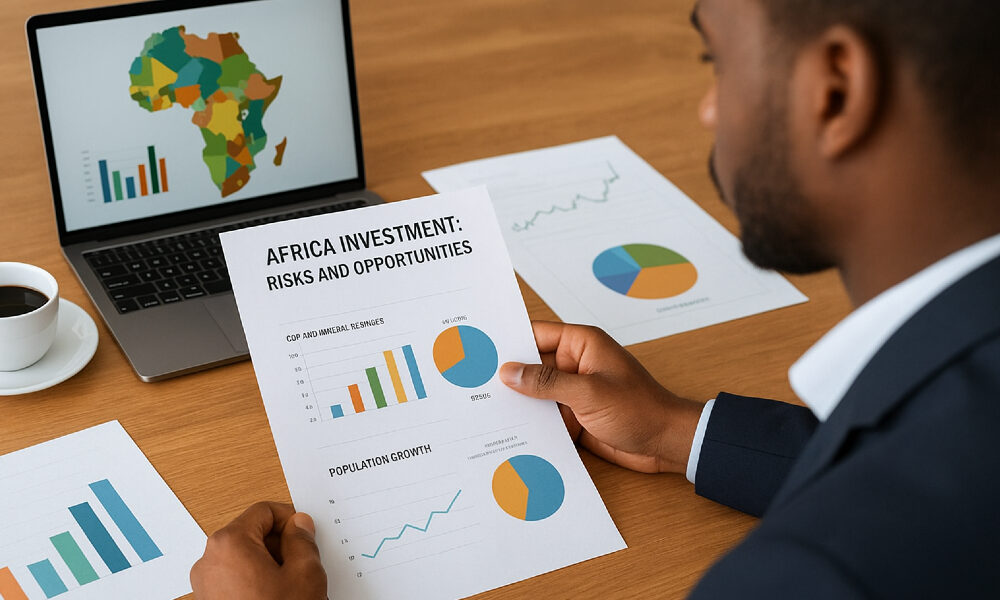
Africa accounts for just 3 percent of global GDP, yet it holds 30 percent of the world’s mineral reserves. It is home to 1.4 billion people today, with a population projected to reach 2.5 billion by 2050 – making it the youngest and fastest-growing region on Earth.
Yes, risks exist: currency volatility, political transitions, and infrastructure deficits are real. But in emerging markets, risk isn’t just a warning sign – it’s often the precursor to outsized returns.
The key is not to avoid risk, but to understand and manage it.
Investors who dismiss Africa due to risk overlook a fundamental truth: volatility creates value for those with patience, insight, and local intelligence.
2. Which Sectors and Countries Offer the Most Promise?
Forget broad generalizations. Africa is not a monolith – it’s a mosaic of 54 dynamic economies, each with distinct advantages.
But several high-growth sectors stand out:
- Consumer Markets: Household consumption is projected to reach US$2.5 trillion by 2030, driven by a rising middle class and urbanization.
- Agriculture: Africa holds 60 percent of the world’s uncultivated arable land – a critical asset in a food-insecure world.
- Fintech: With over 60 percent of adults still unbanked, digital financial services are expanding rapidly. Mobile money platforms like M-Pesa have already proven the model.
- Infrastructure: A US$100 billion annual financing gap underscores the need—but also the opportunity. Infrastructure projects in Africa deliver among the highest returns on investment globally.
- Energy: The continent has 40 percent of the world’s solar potential, yet produces just 1 percent of global solar power. The gap is a green investment goldmine.
Top innovation and investment hubs include Nigeria, Kenya, Egypt, Rwanda, and South Africa – each offering unique regulatory environments, talent pools, and market access.
3. Should I Invest Directly or Through Funds?
This is a strategic choice, not a one-size-fits-all answer.
- Exchange-traded funds (ETFs) and mutual funds offer diversification, liquidity, and reduced exposure to single-country risk. They are ideal for investors seeking broad exposure without operational complexity.
- Direct investments, on the other hand, offer higher potential returns and greater influence over strategy – but demand deep local knowledge, trusted partners, and boots on the ground.
Without reliable local networks, even well-capitalized ventures can fail. In Africa, relationships aren’t just helpful they are essential.
4. Can I Trust the Leadership?
In markets where institutions are still evolving, governance is not a box to check – it’s the foundation of success.
The companies that thrive are those led by credible founders, transparent boards, and long-term visionaries. Scrutinize leadership the way you would in any market – perhaps even more so.
Strong governance mitigates risk. It attracts talent. It builds trust with customers, regulators, and investors.
In Africa, the best businesses aren’t just profitable – they are principled.
5. What About the Legal and Regulatory Landscape?
The narrative of “red tape and uncertainty” is giving way to reform.
The African Continental Free Trade Area (AfCFTA) – the largest free trade zone in the world – connects 54 countries and a combined GDP of US$3.4 trillion. It’s poised to transform intra-African trade, reduce costs, and unlock regional supply chains.
Meanwhile, governments are rolling out incentives:
- Tax holidays
- Special Economic Zones (SEZs)
- Investment guarantees
And for those concerned about political risk, tools like Multilateral Investment Guarantee Agency (MIGA) and the African Development Bank (AfDB) offer insurance and credit enhancement – yet many investors still overlook them.
The regulatory environment is improving. The question is: are investors keeping up?
6. How Do I Stay Informed and Agile?
Africa moves fast. The biggest mistake? “Set it and forget it.”
Markets evolve rapidly – policy shifts, currency trends, and consumer behaviors change on short notice. Winners are those who:
- Build local partnerships
- Monitor regulatory and political developments
- Adapt strategies quarterly, not annually
This isn’t a passive asset class. It demands engagement, agility, and cultural fluency.
The Bottom Line: Africa Isn’t the Future – It’s Now
Africa is often framed as a land of “potential.” But this framing is outdated – and misleading. We are not waiting for opportunity. It’s already here.
- The median age in Africa is 19 – compared to 44 in Europe.
- By 2050, one in four people on Earth will be African.
- Urbanization, digital adoption, and industrialization are accelerating in real time.
This isn’t speculation. It’s demographics. It’s data. It’s momentum.
So, if you had US$10 million to invest today, where would you place it?
- Infrastructure – roads, power, housing?
- Fintech – digital payments, lending, insurance?
- Agriculture – feeding a continent?
- Renewables – harnessing the sun?
The answers depend on your risk appetite, time horizon, and values. But one thing is clear: ignoring Africa is no longer a viable investment strategy.
The question isn’t if Africa will matter. It’s whether you’ll be positioned to benefit when it does.
Lailla Mutajogera is an investor, entrepreneur, and CEO of Muta Investment Firm, a cross-border investment company with operations in Uganda, Rwanda, and Dubai. She specializes in connecting global investors with high-impact opportunities in African markets, focusing on commercial real estate, tourism, agribusiness, and asset management. Committed to practical, growth-driven investments, she champions projects that drive sustainable development across the continent.