Opinion
Africa’s Informal Economy Isn’t a Gap in the Market. It Is the Market.
Investors who overlook the continent’s unregistered traders, hawkers, and micro-distributors are missing the biggest growth story in emerging markets.


By Ajay Wasserman
Open a standard market-entry deck for sub-Saharan Africa and you will usually find the same ingredients: formal payroll data, registered retail footprints, and audited industry reports. It is a tidy picture. It is also, in most African markets, a picture of the minority.
According to the International Labour Organization, informal employment accounts for 85.8 percent of all jobs in Africa – the highest share of any region on Earth. That statistic tends to be read as a warning sign, evidence of an economy still waiting to modernize. It should instead be read as a market map. When the vast majority of a continent’s commerce happens outside registered structures, a spreadsheet built only from formal data isn’t measuring the market. It’s measuring a fraction of it and mistaking that fraction for the whole.
Informal Economy: Uncounted, Not Invisible
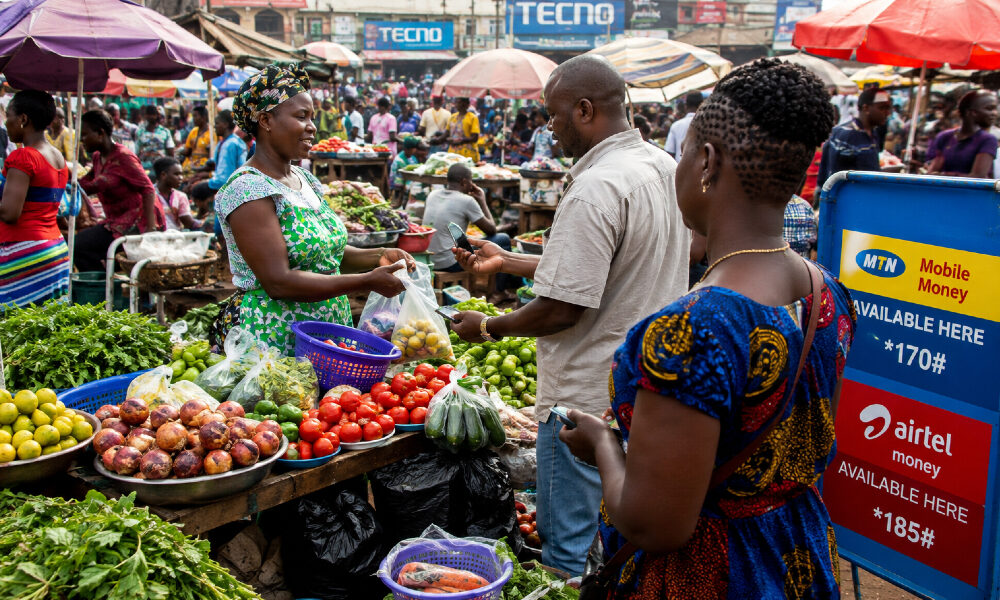
Informality does not mean disorganization. Africa’s roadside traders, cross-border wholesalers, and neighborhood pharmacies operate with a level of commercial sophistication that rarely makes it into a research report: dense trust networks built over years, inventory cycles fast enough to survive on razor-thin margins, and an intimacy with local customers that no formal retailer can replicate from a head office. What these operators typically lack is not competence. It’s infrastructure – affordable capital, digital records, bargaining leverage, dependable logistics, and a cushion against economic shocks.
That distinction matters enormously for anyone deciding where to put capital to work. The opportunity in payments, logistics, healthcare, insurance, connectivity, wholesale distribution, and working-capital finance is not to replace the informal economy with something more familiar to Western investors. It is to build around it.
Four Questions Before Writing a Check
For investors evaluating opportunities in African markets shaped by informal commerce, four questions do more work than any conventional market-sizing exercise:
- Is the underlying demand frequent and essential, or occasional and discretionary? Businesses built on habitual, non-negotiable needs tend to be far more resilient than those betting on aspirational spending.
- Can the business operate profitably at small transaction sizes? Africa’s consumer market runs on volume, not ticket size. A model that only works at Western price points and basket sizes will not survive contact with the market it claims to serve.
- Does the model reinforce existing distribution and trust networks, or try to bypass them? The informal sector’s greatest asset is relationships built over years. Platforms that route around those relationships, rather than through them, tend to struggle; those that strengthen them tend to compound.
- Can better data, payments, or procurement improve resilience without shifting costs onto the customer? Digitization is only valuable if it makes life easier and cheaper for the trader and the household buying from them – not just easier for the investor tracking the numbers.
Growth Starts Before Formalization
There is a persistent assumption in development and investment circles that informality is a temporary condition Africa will eventually outgrow, and that the smart money should wait for that transition to arrive. That assumption gets the causality backward. In many African markets, informal commerce is not a stage the economy passes through on its way to something better. It is the engine already running.
The task for investors and operators is not to force millions of traders, distributors, and small operators into business models imported from elsewhere. It is to build investable platforms around how people already earn, trade, and transact – then help those systems become more productive, more visible to capital, and more resilient to shocks.
Africa’s informal economy is not a rounding error in the continent’s growth story. It is where that story begins.
Ajay Wasserman is the Group CEO and Chief Investment Officer of Fio Capital Group, a private family office and investment holding company based in Pretoria. Focused on empowering entrepreneurs and fostering sustainable growth, he believes the future success of global economies depends on the innovation and leadership of private entrepreneurs and businesses.