Zina’s Youth View on Africa
Africa’s ICC Exodus: Sovereignty or a Shield for Impunity?


By Godfred Zina
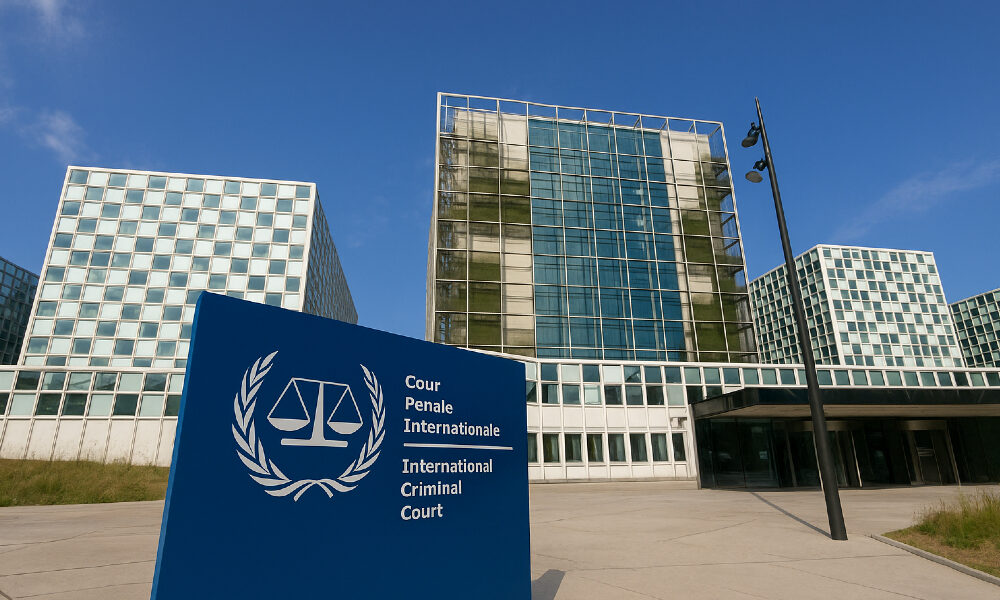
In recent years, the International Criminal Court (ICC) has found itself at the center of a fierce geopolitical and moral debate across Africa. Once heralded as a beacon of global justice, the Court is now being branded by some African leaders as an instrument of “neo-colonialist repression” – a charge that has culminated in the high-profile withdrawals of Burkina Faso, Mali, and Niger from the Rome Statute in September 2025.
Under the terms of the Rome Statute, these withdrawals will only take effect one year after formal notification. Yet their symbolic weight is immediate: they signal a deepening rift between African states and the international justice system – and raise urgent questions about accountability, sovereignty, and the future of human rights on the continent.
The Sovereignty Argument – and Its Critics
Proponents of the withdrawals argue that the ICC has disproportionately targeted African leaders while ignoring atrocities committed elsewhere. They call for “African solutions to African problems,” advocating for homegrown judicial mechanisms that reflect local contexts and priorities.
But critics counter that this rhetoric often serves as a convenient smokescreen for authoritarian leaders seeking to evade accountability. The timing is telling: all three withdrawing nations – Burkina Faso, Mali, and Niger – are currently governed by military juntas that have consolidated power amid political instability.
Their pivot away from The Hague coincides with a strategic realignment toward Moscow, whose own leader, Vladimir Putin, has been the subject of an ICC arrest warrant since March 2023 over alleged war crimes in Ukraine.
This shift isn’t merely geopolitical – it’s ideological. It reflects a growing rejection of liberal international norms in favor of sovereignty narratives that prioritize regime survival over justice for victims.
A Pattern of Defiance
This isn’t the first time African leaders have challenged the ICC. Former Kenyan President Uhuru Kenyatta famously dismissed the Court as “a toy of declining imperial powers” during his own ICC prosecution.
Uganda’s Yoweri Museveni labeled it “useless” at his 2016 inauguration, while Sudan’s Omar al-Bashir long portrayed the ICC as a political weapon aimed at destabilizing African states. South Africa’s Jacob Zuma echoed similar sentiments, refusing to arrest Bashir during a 2015 visit and citing the Court’s alleged anti-African bias.
Now, history appears to be repeating itself – with potentially graver consequences.
Sudan’s Crisis and the Limits of Fragmented Justice
Even as the ICC faces retreat, demands for accountability persist. On September 26, 2025, the Sudanese Coalition for Human Rights (SCHR) filed a landmark complaint with the ICC against four senior Sudanese military leaders, including General Abdel Fattah al-Burhan, head of the Transitional Military Council. The suit alleges widespread atrocities, including the use of chemical weapons against civilians – a claim corroborated by multiple international investigations.
The coalition has also submitted parallel complaints to the African Commission on Human and Peoples’ Rights and urged the Organization for the Prohibition of Chemical Weapons (OPCW) to investigate and suspend the Port Sudan Authority’s membership.
Yet Burhan remains at large. The U.S. Treasury imposed targeted sanctions on him in January 2023 for violating international humanitarian law and obstructing peace efforts. But without a unified international enforcement mechanism, such measures often fall short.
The Accountability Gap
The withdrawals by Burkina Faso, Mali, and Niger risk deepening what legal scholars call the “accountability gap.” By exiting the ICC, military regimes may believe they have insulated themselves from prosecution.
In reality, they are undermining the very principle of universal justice – and setting a dangerous precedent for other leaders tempted to follow suit.
True justice requires more than symbolic gestures or fragmented legal actions. It demands consistent, impartial institutions that victims can trust.
While the African Union’s vision for a continental court holds promise, its credibility hinges on independence from political interference. If controlled by the same elites it’s meant to hold accountable, such a court could easily become another tool of impunity rather than redress.
The Path Forward
Africa’s relationship with the ICC need not be binary – either total submission or outright rejection. Constructive reform is possible.
The Court itself has acknowledged past missteps and is working to broaden its geographic and political scope. Meanwhile, regional mechanisms must be strengthened with robust safeguards for judicial independence, victim participation, and transparency.
The choice before African leaders today is not between sovereignty and foreign domination – it’s between shielding perpetrators and delivering justice to survivors. As the continent grapples with coups, conflict, and humanitarian crises, the stakes couldn’t be higher.
The world is watching. And so are the victims.
Godfred Zina is a freelance journalist and an associate at DefSEC Analytics Africa, a consultancy specializing in data and risk assessments on security, politics, investment, and trade across Africa. He also serves as a contributing analyst for Riley Risk, which supports international commercial and humanitarian operations in high-risk environments. He is based in Accra, Ghana.