Opinion
Africa’s Harvest Is Ready. Its Infrastructure Isn’t.
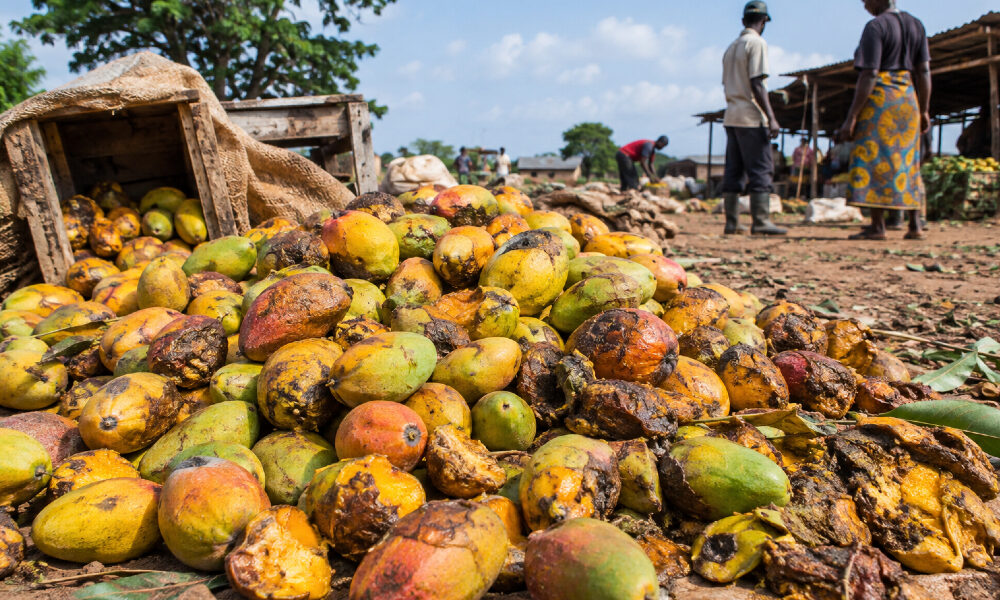
Mangoes rot by the roadside not because Africa grows too little, but because it has nowhere to put the surplus. The missing piece of infrastructure isn’t another highway – it’s a drying tray.


By Raymond Chimhandamba
Every mango season in the author’s home village told the same story. The trees ripened almost in unison, and for a few glorious weeks, fruit was everywhere. Families ate their fill. Children climbed trees for fun as much as food. Neighbors gave away armfuls to anyone who would take them.
And still, mangoes piled up. Perfectly good fruit softened, fermented, and rotted at the edges of household compounds – not because anyone lacked appetite, but because nature had delivered a month’s worth of food in a single week.
This is not a story about scarcity. It is a story about timing.
The Real Problem Isn’t Farming – It’s the Gap Between Harvest and Market
Development conversations about Africa tend to default to a familiar diagnosis: the continent doesn’t produce enough food. But look closely at seasons like mango harvest, or the tomato gluts that regularly crash prices across African markets, and a different picture emerges. The problem often isn’t insufficient production – it’s a market and preservation system too thin to absorb abundance when it arrives.
Tomatoes make the pattern painfully visible. When supply peaks, prices collapse and unsold produce piles up and spoils beside market stalls. Weeks later, when the glut passes, those same households pay a premium for tomatoes that, not long before, were being thrown away a few miles down the road.
This is a logistics failure dressed up as an agricultural one. And the two fixes – better roads and better preservation – are not interchangeable.
Roads move agricultural value across space. A highway can shift tomatoes from a rural farm to a city market.
Preservation moves agricultural value across time. It lets that same harvest still have value next month, when the surplus has been absorbed and prices have recovered.
Africa needs both. It has invested heavily in the first. It has barely started on the second.
A Factory Small Enough to Fit in a Village
The traditional answer to preserving fruit is canning – pulping, bottling, sterilizing. It works, but it demands capital, reliable electricity, clean water, and production volumes that few rural cooperatives can muster.
Drying is the more modest, more achievable cousin. A ripe mango is heavy, delicate, and has days – not weeks – before it spoils. A dried mango is light, shelf-stable, and can wait for a buyer, a better price, or a more distant market.
That single transformation changes the economics of the entire harvest. A household is no longer forced to sell, eat, or give away everything at once, competing with every neighbor doing the same thing in the same week. A cooperative can accumulate dried fruit gradually. A trader can justify the cost of reaching a market three towns over. A school-feeding program or food manufacturer gets a product with a shelf life measured in months, not days.
Crucially, this value gets created close to the farm – not at a distant, capital-intensive facility. The equipment needed can start small: an enclosed solar cabinet, raised drying racks, a mesh tunnel shared by a handful of households. It isn’t glamorous. But it’s infrastructure, in the truest sense – a foundation other economic activity can be built on top of.
Sunlight Alone Won’t Do the Job
It would be convenient to assume that a continent with abundant sunshine has already solved fruit drying by default. It hasn’t.
Mangoes and tomatoes are full of moisture, and drying them safely is a technical process, not a passive one. Fruit dried too slowly turns moldy. Fruit dried unevenly ferments. Left uncovered outdoors, it draws insects, dust, and animals. Even after drying, cheap packaging can let moisture creep back in and undo the whole effort.
Research on improved solar dryers backs this up: enclosed, engineered systems consistently dry fruit faster and more safely than simply leaving slices in the sun, protecting against contamination while hitting the moisture thresholds needed for safe storage. There’s a real difference between spreading mango slices on a tarp and operating a controlled drying system – one is improvisation, the other is production.
This distinction matters for how Africa thinks about industrial development. The instinct is to picture industrialization as ports, highways, and power plants – the big, capital-hungry stuff. Those investments matter. But there’s an entire layer of infrastructure sitting between the farm gate and the factory floor that gets almost no attention: village drying setups, small cold rooms, aggregation points, grading and milling operations, basic packaging and storage. None of it is dramatic. Collectively, it decides whether a harvest turns into income or into waste.
Preservation Is Leverage
Here’s the part that gets underappreciated: extending a crop’s shelf life isn’t just a technical fix. It’s an economic weapon.
A farmer who must sell today has no leverage – buyers know the clock is running out on the product, and they price accordingly. A farmer who can store the harvest for a month has options: pool output with neighbors, wait out a price dip, negotiate with a bigger buyer, even build a brand.
That said, a solar dryer alone guarantees nothing. Someone still has to find buyers. The dried product still has to meet real standards for taste, texture, and hygiene. Working capital still has to bridge the gap between processing the fruit and getting paid for it. Plenty of villages have acquired the equipment and still failed to build a business, because nobody worked out who would actually buy the output, in what quantity, and at what price.
Africa’s problem isn’t a shortage of promising technology. It’s a shortage of organizations capable of connecting that technology to dependable, paying demand.
Food First, Materials Second, Waste Last
There’s a temptation, once “agricultural waste” enters the conversation, to jump straight to its industrial afterlife – turning peels, husks, and stalks into fuel, fiber, or packaging. That instinct needs a strict order of priority: an edible mango is food first, and only becomes a candidate for anything else after every reasonable effort has been made to feed people with it.
Once that’s settled, the leftover streams are genuinely significant. Mango processing leaves peels and pits. Pineapple harvests generate huge volumes of leaves. Banana farming leaves pseudostems behind. Sugar mills produce bagasse. Cashew processing yields shells. Rice milling generates husks.
These residues could plausibly become animal feed, compost, energy, construction material, packaging, or industrial fiber – but “plausibly” is doing a lot of work in that sentence. A residue scattered across hundreds of smallholder farms is not the same commodity as the same material concentrated at a factory gate. It has to be collected, cleaned, dried, and delivered to a consistent spec before anyone can build a business on it. And often, what looks like “waste” to an outside investor is already doing a job – feeding livestock, protecting soil, or fueling a household stove.
The right question isn’t “what can we manufacture from this waste?” It’s: what’s the best use of this material once its role in food, ecology, and existing livelihoods has actually been accounted for?
Turning Leftovers Into an Actual Supply Chain
Proving a banana stem contains useful fiber, or that bagasse can be pulped, is a science experiment. Turning it into industrial infrastructure is a logistics problem – and a much harder one.
A manufacturer weighing whether to build on that feedstock needs answers to unglamorous questions: How much is available? Where? Is supply seasonal? How consistent is the quality? What will it cost once it’s collected and pre-processed?
Answering those questions is its own industry – one Africa mostly lacks. It requires biomass aggregators, rural processors, and commercially minded intermediaries who can walk an idea from a scattered farm all the way to a paying customer, mapping supply, resolving competing uses, and locking in commercial commitments before capital gets deployed. This connective layer, unglamorous as it sounds, may be one of the continent’s biggest untapped industrial opportunities.
The Advantage of Building Something New
It’s tempting to frame Africa’s post-harvest losses purely as a problem to be solved. The more interesting framing is to ask what kind of industrial edge might come from solving it well.
The continent already has the raw ingredients: agricultural output, sunlight, labor, generations of local know-how, and enormous unmet demand. What it lacks is the connective tissue between them – because these pieces are almost always managed in separate silos. Agriculture sits in one ministry, energy in another, manufacturing and waste management somewhere else entirely.
The opportunity is in stitching those silos together. A solar dryer connects sunlight to food preservation. An aggregation center connects smallholders to industrial scale. A residue-processing hub connects farm leftovers to manufacturing. Storage and packaging connect one harvest season to the next.
Rich countries are now spending enormous sums trying to retrofit circular, waste-reducing principles onto industrial systems that were built decades ago without them. Africa has something far rarer: the chance to build new systems with resource efficiency baked in from day one, rather than bolted on later.
That chance won’t be realized by simply declaring that agricultural waste “has value.” It becomes real only when farmers, processors, manufacturers, and buyers can all depend on the same functioning chain – start to finish.
The Fruit and the Sun Were Never the Problem
The mangoes rotting at the edges of that childhood village weren’t evidence of failed farming. The harvest had succeeded – spectacularly. What failed was everything meant to happen after it.
Africa’s next industrial leap may not start with a smokestack or a mega-factory. It might start with a drying tray, a solar tunnel, and a simple realization that both the fruit and the sun were there all along.
What was missing wasn’t the resource. It was the infrastructure to let it be used.
Raymond Chimhandamba is a Johannesburg-based consultant, writer, and speaker specializing in African industrial development, manufacturing value chains, and investment opportunities. He is director of Handas Consulting and founder of Kunakisa Recycling, with expertise in market entry, manufacturing localization, due diligence, absorbent hygiene products, nonwovens, recycling, and the commercial use of agricultural waste. He has contributed more than 40 articles to Nonwovens Industry Magazine and writes for International Fiber Journal. He has also spoken at international industry events organized by INDA and EDANA. Raymond is currently writing Asymmetric Africa, a book examining overlooked opportunities in African markets.