Owusu on Africa
Africa’s Enduring Crossroads: Lessons from the Fall of Haile Selassie and the Shadow of a New Cold War


By Fidel Amakye Owusu
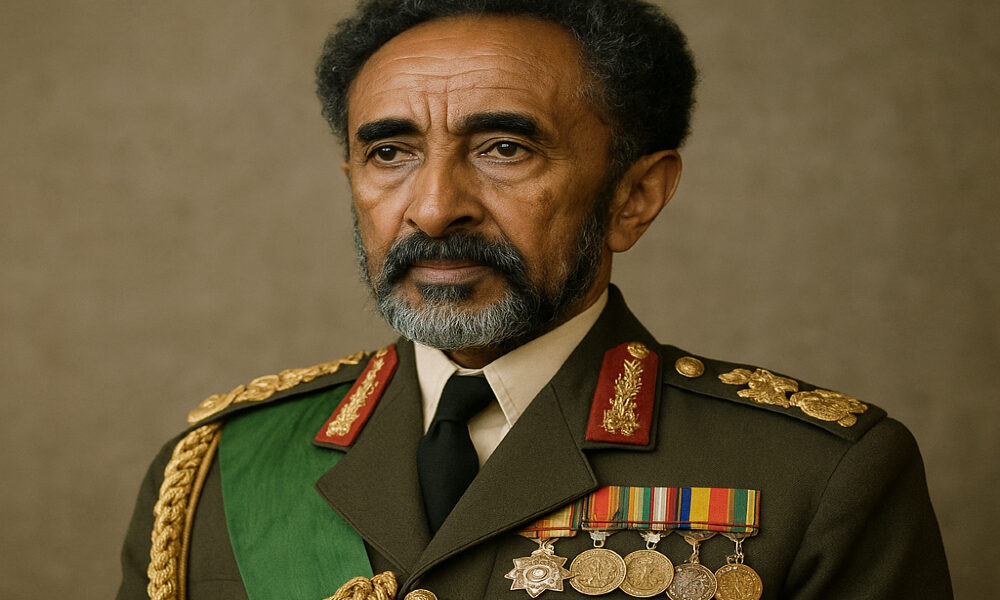
On August 27, 1975, the world learned of the death of Emperor Haile Selassie – a moment that marked not just the end of an era, but the closing of a chapter in Africa’s postcolonial struggle for sovereignty, dignity, and self-determination. Though officially announced years after his overthrow, the circumstances surrounding his death remain shrouded in mystery, much like the broader legacy of how global powers have shaped – and often undermined – African leadership.
Haile Selassie was more than a monarch; he was a symbol. His defiant stand against Benito Mussolini’s 1935 invasion of Ethiopia – followed by his exile and stirring appeal to the League of Nations – made him a global icon of anti-imperial resistance.
His triumphant return to Addis Ababa in 1941, restored by Allied forces, cemented his status as a leader who had weathered fascism and emerged with Ethiopia’s independence intact – a rare feat on a colonized continent.
But history is rarely kind to symbols. By the 1970s, the emperor, once hailed as Africa’s elder statesman, was overthrown in a military coup led by the Marxist-Leninist Derg regime.
Mengistu Haile Mariam, the junta’s most prominent figure, justified the coup as a necessary revolution against a feudal, aristocratic system – one that, despite Haile Selassie’s modest modernization efforts, failed to deliver equitable progress to Ethiopia’s masses.
Crucially, this upheaval did not occur in a vacuum. It unfolded against the backdrop of the Cold War, when Africa became a battleground for ideological supremacy.
The Horn of Africa – strategically positioned along the Red Sea and the Gulf of Aden – was of immense geopolitical value. As the United States and the Soviet Union vied for influence, African leaders found themselves forced to choose sides, often at the cost of their own legitimacy and stability.
The Cold War’s African Battleground: When Sovereignty Was a Pawn
Ethiopia’s shift from a Western-aligned monarchy to a Soviet-backed socialist state was emblematic of this broader pattern. Just as Haile Selassie had been supported by the West during his exile, so too was his downfall indirectly enabled by Eastern powers seeking to expand their reach.
The irony was not lost on history: the same international actors who had once championed his restoration now backed his removal.
This dynamic was repeated across the continent. In Ghana, Kwame Nkrumah – the visionary architect of African unity and Pan-Africanism – was overthrown in 1966 by a military coup widely believed to have had Western backing.
Despite his attempts at non-alignment, Nkrumah’s growing ties with the Eastern Bloc marked him as a threat in the eyes of Western intelligence agencies.
Patrice Lumumba’s tragic assassination in 1961 remains one of the darkest chapters of Cold War interference in Africa. A democratically elected leader of the Congo, Lumumba was deposed and murdered with the complicity of foreign powers who saw his nationalist agenda as incompatible with their interests.
These events were not isolated. From Angola to Mozambique, civil wars fueled by proxy support devastated nations, leaving scars that endure to this day.
The message was clear: in the Cold War calculus, African sovereignty was negotiable.
Echoes of the Past: The Return of Great-Power Competition in Africa
Now, decades later, we are witnessing a resurgence of great-power competition – a “New Cold War” playing out across the African continent. China’s Belt and Road Initiative, Russia’s expanding military and diplomatic footprint, and renewed strategic interest from the United States and European nations have turned Africa once again into a theater of geopolitical contestation.
This time, the stakes are not purely ideological, but economic and strategic: access to critical minerals, control of maritime trade routes, and influence over a youthful, rapidly growing population. And just as in the past, this competition is fueling instability.
The recent surge in coups – in Mali, Burkina Faso, Niger, and Gabon – cannot be attributed solely to domestic governance failures. They are also symptoms of a broader struggle, where external actors exploit fragility to advance their own agendas.
Yet a troubling narrative persists among some African publics: the belief that one foreign power is a “savior,” while another is an “imperialist.” This binary thinking – rooted in Cold War-era polarization – blinds us to a fundamental truth: no nation, regardless of rhetoric, will prioritize Africa’s interests above its own.
A Future Forged in African Interests – Not Foreign Agendas
The lesson from Haile Selassie’s fall – and from the turbulent decades that followed – is not that Africa should retreat from global engagement. On the contrary, the continent must engage more strategically, more collectively, and with a clearer sense of its own priorities.
Africa does not need patrons. It needs partners.
And partnerships must be based on mutual respect, transparency, and shared benefit – not dependency or ideological allegiance.
As we reflect on the legacy of August 27, 1975, and the unresolved questions surrounding the emperor’s final days, we must also ask: Have we learned from history? Can Africa chart an independent course in an era of renewed great-power rivalry?
The answer lies not in choosing sides, but in building institutions, strengthening regional unity through the African Union, and asserting a foreign policy that puts African interests first.
The Cold War may be over, but its shadows remain. The true test of Africa’s 21st-century leadership will be whether it can finally step out of them.
Fidel Amakye Owusu is an International Relations and Security Analyst. He is an Associate at the Conflict Research Consortium for Africa and has previously hosted an International Affairs program with the Ghana Broadcasting Corporation (GBC). He is passionate about Diplomacy and realizing Africa’s global potential and how the continent should be viewed as part of the global collective.