Alorh’s eye on the Motherland
Africa’s Cultural Richness and the Urgent Need for Democratic Governance


By Mary Alorh
Africa is a continent defined by its extraordinary cultural and ethnic diversity. Within the borders of a single nation, multiple cultures often coexist, while shared traditions and ethnic ties frequently transcend national boundaries.
This deep interconnectivity underscores the porous nature of Africa’s borders and highlights the importance of viewing governance and human rights through a regional lens.
In recent months, the Tuaregs in Mali and Burkina Faso have taken legal action at the International Criminal Court (ICC), raising serious concerns about alleged human rights abuses and violations committed by national armies and foreign mercenaries since 2022. These developments point to a broader crisis: the erosion of democratic institutions and the collapse of accountability frameworks across parts of the continent.
One of the defining features of unconstitutional and undemocratic rule is the absence of checks on power. When leaders operate without oversight or fear of consequence, human rights abuses become normalized.
In recent years, social media has exposed disturbing scenes – former government officials subjected to public beatings and accusations of corruption without due process. While such actions may be fueled by public outrage, only courts of competent jurisdiction have the authority to administer justice.
Any form of extrajudicial punishment is, by definition, a violation of basic human rights.
The Role of Democracy in Preventing Tyranny and Ensuring Representation
In response, a formal petition has been submitted to the ICC calling for an investigation into allegations of war crimes and human rights abuses committed by national armies and their foreign allies, including the controversial Wagner-affiliated “Africa Corps.” These allegations underscore the urgent need for international oversight and intervention.
Meanwhile, in Mali, the junta’s recent announcement of a five-year extension to its rule – following the dissolution of all political parties – casts a shadow over any near-term return to democratic governance. The situation raises difficult questions about the future of democracy in Africa. Yet, as British historian Lord Acton famously observed, “Power tends to corrupt, and absolute power corrupts absolutely.”
The real issue lies not in the viability of democracy, but in the collective silence that follows elections, allowing leaders to consolidate unchecked authority.
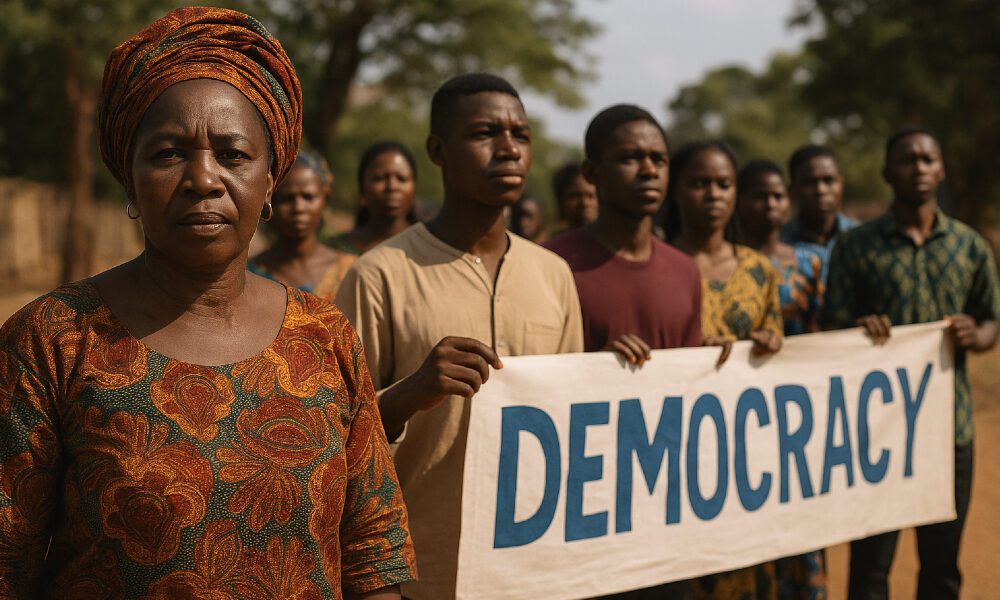
Given Africa’s complex tribal and ethnic landscape, democracy remains not just desirable – but essential. Principles such as open political participation, free and fair elections, and a free press are vital safeguards against the monopolization of power by any one group, family, or tribe.
Democracy ensures that citizens not only have the right to choose their leaders but also the opportunity to lead themselves.
There is, in fact, a compelling example on the continent worth emulating: Botswana. This nation has successfully integrated democratic governance with traditional institutions, creating a stable and prosperous society. Its model demonstrates that democracy can thrive when rooted in local context and cultural authenticity.
Toward a Future Built on Rights, Accountability, and Regional Solidarity
Without a clear constitutional framework guiding governance, cycles of abuse and human rights violations will persist. It is now more critical than ever for regional and international bodies – such as the African Union (AU) and the United Nations (UN) – to support efforts aimed at restoring democratic rule across the continent.
The most vulnerable victims of these crises are often women and children, who bear the brunt of conflict, displacement, and systemic violence. Without democratic structures to protect them, they remain at heightened risk.
Ultimately, the absence of democratic governance leaves nations fragile and susceptible to exploitation by extremist groups. If Africa is to achieve lasting peace and sustainable development, it must reaffirm its commitment to democratic principles – not as foreign impositions, but as homegrown foundations for justice, stability, and inclusive progress.
Mary Alorh is Director of Administration at DefSEC Analytics Africa Ltd., and is an expert in Gender, Youth, and Peace & Security initiatives in West Africa.