Opinion
Africa’s Concrete Paradox – Can Cities Thrive Without Smokestacks?
Urban populations are booming, but factory floors remain empty. That mismatch is the continent’s defining economic challenge.
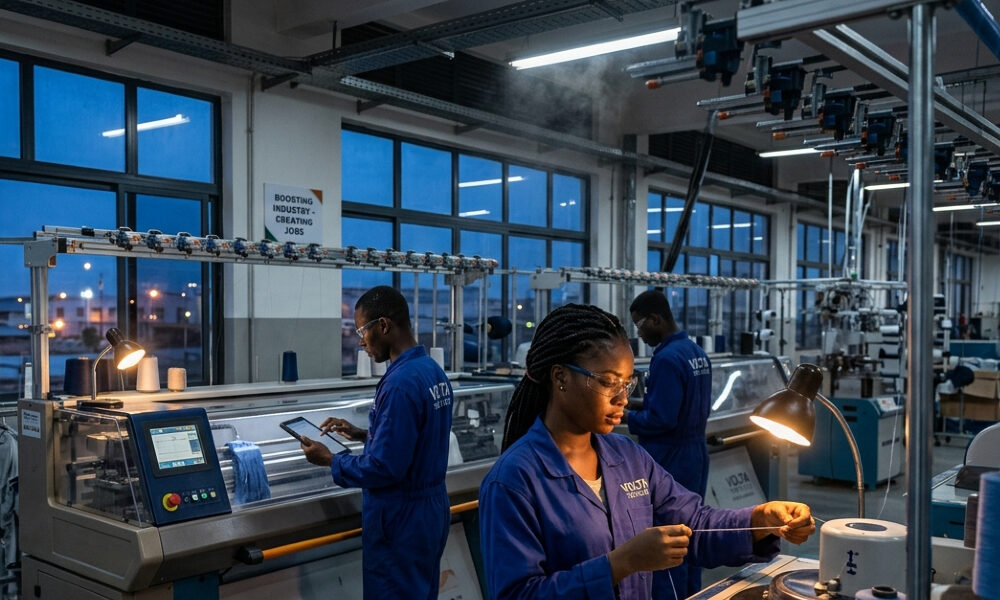


By Dishant Shah
By 2050, Africa’s urban population is projected to nearly double, swelling to roughly 1.5 billion people. Every week, hundreds of thousands of Africans pack up and move to cities, chasing better jobs, better schools, better hospitals, and simply a better shot at life. On paper, this looks like the same growth story that transformed East Asia over the past half-century: people moving from farms to cities, from subsistence to wages, from the periphery to the engine room of the economy.
But look closer, and the engine room is oddly quiet.
Manufacturing still accounts for only 10 to 12 percent of Africa’s GDP – a share that has barely budged in decades. While the continent’s skylines rise, its factory floors are not keeping pace. Instead, it is services, retail, construction, telecommunications, and a sprawling informal economy that are absorbing the bulk of new urban arrivals. Economists have a name for this mismatch: urbanization without industrialization.
It is a phrase worth taking seriously, because history suggests it should not be possible – or at least not sustainable.
The Playbook That Isn’t Being Followed
The classic development playbook, followed by Britain in the 19th century, South Korea in the 20th, and China in the early 21st, runs in a specific order. Rural workers move to cities. Factories absorb them. Manufacturing exports generate foreign currency and technological know-how. Wages rise. A middle class emerges. Only then does the service sector balloon into the dominant force it becomes in mature economies.
Africa appears to be skipping a step. Cities are filling up, but the factories that historically justified – and funded – that migration are not arriving in equal measure. The result is a labor market where a booming population increasingly competes for jobs in informal trading, gig work, and low-productivity services rather than the kind of manufacturing employment that reliably lifts households out of poverty at scale.
This matters because manufacturing has always punched above its weight in the development story. It tends to create structured, higher-paying jobs; demand less formal education than many service-sector roles; generate export earnings; and pull in technology and skills that spill over into the rest of the economy. Replace it with informal retail or ride-hailing apps, and you get urban growth without the productivity gains that are supposed to come with it.
Where the Counter-Narrative Is Being Written
Yet it would be a mistake to treat this as a settled verdict. A handful of governments are actively trying to rewrite the equation.
Ethiopia has poured resources into industrial parks designed to attract textile and light manufacturing investment. Morocco has quietly built one of the most credible automotive manufacturing ecosystems outside of the traditional industrial powers, exporting cars and components across Europe. Egypt continues to expand industrial zones anchored around the Suez Canal, leveraging its position at one of the world’s great trade choke points. Nigeria and Kenya, meanwhile, are experimenting with local-content policies and special economic zones aimed at coaxing manufacturers away from Asia’s traditional hubs.
Layered on top of these national efforts is the African Continental Free Trade Area (AfCFTA), an ambitious project to stitch together 54 economies into a single market of over a billion consumers. If it works as intended, AfCFTA could do for African manufacturing what regional integration did for Southeast Asia: create the scale and the supply-chain logic that make building factories on the continent – rather than simply shipping goods into it – worth the investment.
The Real Question
So which trend wins?
Will Africa’s next wave of urban growth be powered by factories, logistics corridors, and industrial clusters – the kind of infrastructure that turns rapid urbanization into rising living standards? Or will its cities keep sprawling faster than industrial capacity can follow, entrenching a pattern of urban growth long on population and short on productive jobs?
The answer will not be uniform across 54 countries with wildly different endowments, institutions, and ambitions. But the stakes are uniform: a continent that urbanizes without industrializing risks building cities that are bigger, not better. Get it right, and Africa could still write its own version of the growth story that transformed Asia. Get it wrong, and the world’s fastest-growing cities may become monuments to opportunity deferred rather than opportunity delivered.
Dishant Shah is a partner at Legion Exim, a company specializing in facilitating the export of high-quality engineering products directly sourced from manufacturers in India to Africa. His areas of expertise include new business development and business management.