Owusu on Africa
Africa’s Collective Voice: Why Negotiating as One Bloc Is Long Overdue
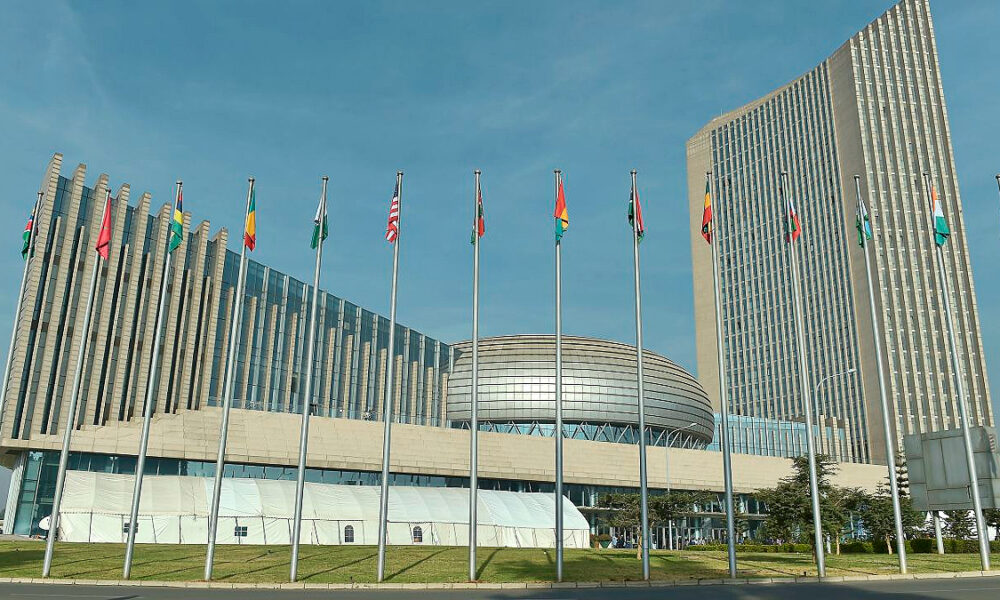


By Fidel Amakye Owusu
The proposition that Africa’s fifty-four sovereign nations should negotiate as a single bloc is not radical – it is rational. Continental political cooperation has existed in various forms since 1963, yet more than six decades later, Africa still approaches critical global negotiations fragmented, divided along regional fault lines, and speaking in discordant voices.
That this proposal now commands serious attention is welcome, if long overdue.
A unified negotiating posture would dramatically amplify Africa’s leverage across trade agreements, climate finance, debt restructuring, industrial policy, and geopolitical diplomacy. In an era defined by intensifying great-power competition and the wholesale reconfiguration of global supply chains, bargaining power has become the ultimate currency.
No region stands to gain more from collective action than Africa. Yet formidable obstacles persist.
The Fragmentation Problem
At the regional level, Africa’s Regional Economic Communities (RECs) have struggled to mature into cohesive political and economic bargaining units. Rather than serving as building blocks toward continental unity, several have devolved into arenas of fragmentation.
In West Africa, the withdrawal of Sahel states from the Economic Community of West African States (ECOWAS) has fractured one of the continent’s most established blocs. In the Horn of Africa, Sudan and Eritrea remain disengaged from the Intergovernmental Authority on Development (IGAD), constraining its effectiveness as a forum for regional coordination.
The Economic Community of Central African States (ECCAS) continues to be undermined by persistent internal rivalries and overlapping political interests.
North Africa presents distinct challenges. Entrenched geopolitical tensions – most prominently between Morocco and Algeria over Western Sahara – have paralyzed regional cooperation and foreclosed prospects for deeper integration.
In Southern Africa, the Southern African Development Community (SADC) has yet to benefit from consistent, visionary leadership capable of aligning national priorities with regional objectives.
These fractures are not merely diplomatic inconveniences. They exact tangible economic costs.
Fragmentation erodes Africa’s bargaining power in global negotiations, leaving individual states exposed to unfavorable trade terms, asymmetric investment agreements, and externally imposed development frameworks. It also damages the credibility of continental initiatives such as the African Continental Free Trade Area (AfCFTA), whose viability depends as much on political cohesion as on tariff schedules.
National Success Cannot Replace Collective Strength
Several African economies – Ghana among them, alongside others pursuing macroeconomic reforms and industrial strategies – have demonstrated pockets of resilience and growth in recent years. But national success stories, however significant, cannot substitute for collective strength.
In a global system structured around scale and market power, fragmentation guarantees marginalization.
The solution is not to dismantle regional blocs but to reorient them fundamentally. RECs must transform from arenas of competition into instruments of convergence.
Their mandates require harmonization, their political coordination must be strengthened, and their strategic objectives need alignment with continental priorities articulated through the African Union.
Sovereignty Through Unity
Above all, Africa’s political leadership must recognize that twenty-first-century sovereignty is not diminished by cooperation – it is enhanced by it. Negotiating as fifty-four separate states may preserve the illusion of autonomy, but it entrenches structural weakness.
Negotiating as one continent would transform Africa from a price-taker into a price-maker, from a rule-follower into a rule-shaper.
The case is no longer theoretical. It is practical, urgent, and unavoidable.
If Africa is serious about securing equitable partnerships, capturing greater value from its natural resources, and determining the terms of its engagement with the world, then speaking with one voice is not merely advisable – it is an economic and geopolitical imperative.
The continent’s future prosperity depends not on abandoning sovereignty but on pooling it strategically. In an international order increasingly dominated by large trading blocs and coordinated economic powers, Africa’s choice is stark: unite and negotiate from strength, or remain divided and accept the terms others dictate.
The time for continental unity is not coming. It is here.
Fidel Amakye Owusu is an International Relations and Security Analyst. He is an Associate at the Conflict Research Consortium for Africa and has previously hosted an International Affairs program with the Ghana Broadcasting Corporation (GBC). He is passionate about Diplomacy and realizing Africa’s global potential and how the continent should be viewed as part of the global collective.