Opinion
Africa’s Cities Will Define the Continent’s Future


By Dishant Shah
In the 1970s, Lagos was a modest coastal city of just 1.5 million people. Today, it’s a sprawling metropolis of over 20 million – larger than the populations of Chile, the Netherlands, or Australia.
Kinshasa tells a similar story: once a colonial administrative outpost, it’s now among the world’s fastest-growing cities and on track to rival Cairo in size by 2035.
These aren’t isolated cases. They are symptoms of a seismic shift reshaping an entire continent: Africa is urbanizing faster than any other region on Earth.
And this transformation will define not just Africa’s destiny – but the global economic landscape for decades to come.
The Urban Surge: By the Numbers
A new demographic map of Africa reveals three critical trends:
- Population Powerhouses: Nigeria, Egypt, the Democratic Republic of Congo, and South Africa already anchor the continent’s largest urban clusters, each home to tens of millions.
- Breakneck Growth Zones: Coastal West Africa, the East African Great Lakes region, and parts of Southern Africa are urbanizing at unprecedented speed – highlighted in vivid orange on demographic heat maps.
- The Quiet Giants: Beyond the headlines, cities like Dar es Salaam, Luanda, Abidjan, Kumasi, and Lubumbashi each house over a million residents – and are growing steadily with little international attention.
This isn’t just about population density. Urbanization in Africa is an economic revolution in motion.
Cities as Engines of Opportunity – and Risk
Cities concentrate talent, capital, and connectivity. They fuel innovation, attract investment, and create markets.
The Abidjan-to-Lagos corridor – a mere 1,000-kilometer (621-mile) stretch along West Africa’s coast – already hosts more than 40 million people. Within two decades, it could rival global urban powerhouses like India’s Mumbai-Pune belt or China’s Pearl River Delta in scale, dynamism, and economic clout.
And Africa’s urban population is strikingly young. Half the continent is under 19.
By 2050, Africa will add nearly 1 billion people – most of them city dwellers. That’s a tidal wave of potential: a massive workforce, explosive consumer demand, and unmatched cultural energy.
But urbanization does not guarantee prosperity.
Without deliberate planning, inclusive policies, and massive infrastructure investment, cities can become crucibles of inequality, congestion, and social unrest.
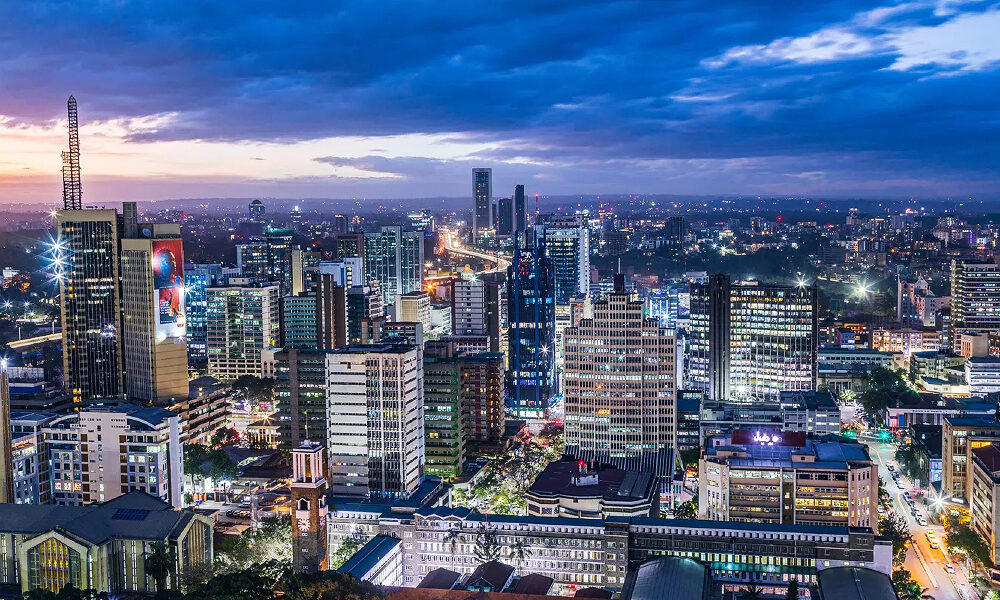
Consider Nairobi’s sprawling informal settlements, Johannesburg’s recurring service-delivery protests, or Lagos’ legendary traffic jams – each a stark reminder that growth without governance is a recipe for crisis.
The Stakes – and the Opportunity
Africa stands at a pivotal moment. Its cities could emerge as the world’s next great innovation hubs, fashion capitals, and trade corridors.
They could drive green transitions, digital leapfrogging, and homegrown entrepreneurship on a global scale.
Or they could buckle under the strain of unplanned expansion, leaving millions trapped in poverty despite living in the heart of economic activity.
The difference lies in choices made today: in national urban policies, in municipal leadership, in private-sector partnerships, and in how the international community supports – not just observes – this transformation.
The Bottom Line
Africa’s future won’t be written in its villages or its boardrooms alone – it will be forged in its cities. The question is no longer if Africa will urbanize, but how.
Will its cities rise as inclusive engines of shared prosperity? Or will they fracture under the weight of their own momentum?
The world should be watching closely – because the answer will shape more than just Africa’s trajectory. It will redefine global growth in the 21st century.
Dishant Shah is a partner at Legion Exim, a company specializing in facilitating the export of high-quality engineering products directly sourced from manufacturers in India to Africa. His areas of expertise include new business development and business management.