Opinion
Africa’s Cashew Boom Needs Ecosystems, Not Just Factories


By Curtis Akunfu
Last week in Accra, at the 2026 African Cashew Alliance conference, delegates did what they do every year. They talked about production, about farmers and about processing capacity. All worthy topics. Yet one question kept nagging at me, and it was rarely asked aloud: what makes a processor competitive after the factory is built?
Part of the answer came into focus in Vietnam in November 2025. In the country’s major cashew-processing areas, large shell-oil factories sit deliberately close to the shelling operations that feed them. Some are privately financed. Some received strong state backing in their early years. Others were built as public-private partnerships. The ownership models differ, but the logic is the same: the cashew shell is not waste. It contains a valuable oil that is used in industrial coatings, resins and friction materials.
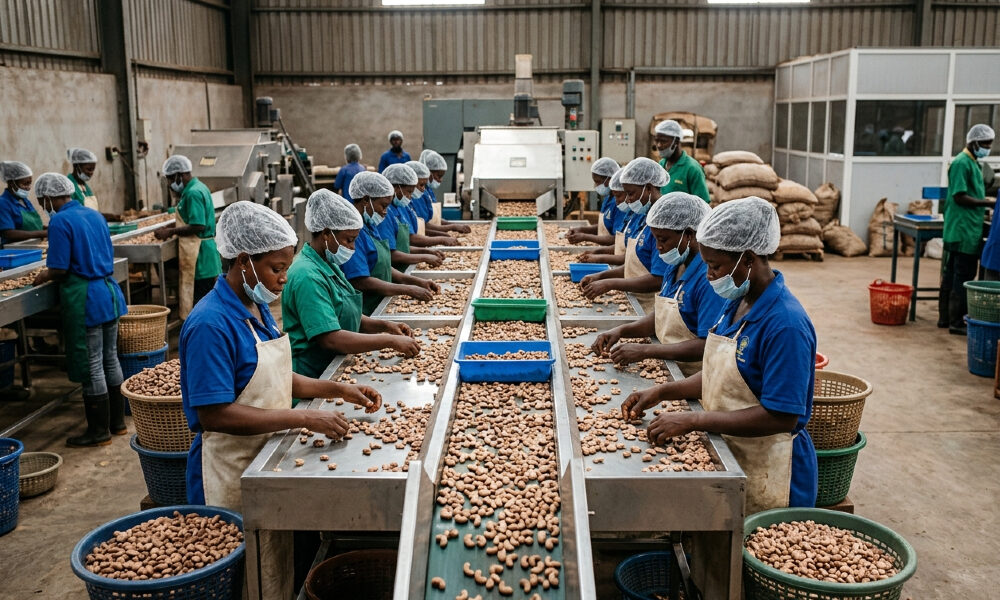
Back in Ghana, the picture looks very different. Across much of the country, shells are still fed into boilers or treated as a disposal problem. The consequence is easy to overlook and expensive to ignore. A processor that earns money only from the kernel must ask that single product to carry the entire burden of profitability. Every cost, from power to financing to logistics, gets loaded onto the kernel’s price.
That is one reason African kernels struggle to compete with those from Vietnam and India. Those countries have not merely built factories; they have built ecosystems around them. Shells flow into oil extraction. Broken pieces find buyers. By-products earn their keep. A Vietnamese processor is one node in a dense commercial network. Its African counterpart too often stands alone.
Building the System, Not Just the Plant
This should change how African governments, regulators and development partners think about industrial policy. Supporting cashew processing has too often meant helping someone buy a machine or commission a plant. Necessary, but not sufficient. The harder task is creating the conditions in which a factory can compete once it is running.
Governments that cannot build every piece of that support system themselves can still make it easier for others to do so. The toolkit is familiar:
- Tax holidays and duty waivers on imported machinery
- Land concessions for processors and by-product industries
- Specialized industrial zones with reliable power, water and roads
- Targeted incentives for shell-oil extraction and other by-product ventures
- Public-private partnerships where the commercial case is sound
None of this is exotic. It is the ordinary machinery of industrial development, applied to a crop that Africa grows in abundance and still too often exports raw.
The Argument In One Line
Africa does not need only more cashew factories. It needs processing ecosystems. The continent’s cashew future will not be settled on the farm alone. It will be decided by what happens around the factory, after the factory and because of the factory. Policymakers and investors should start treating that as the central question of African cashew, not a footnote to it.
Curtis Akunfu is the Managing Director of Duapa Agri, a vertically integrated agribusiness operating across West and East Africa. With nearly 20 years of leadership in Africa’s agri-commodities sector, he also serves as a Global Council Member and Chair of the Agricultural Finance and Investment Working Group at the World Agriculture Forum.