Owusu on Africa
Africa’s Border Paradox: How Hard Lines and Porous Realities Fuel Extremism


By Fidel Amakye Owusu
Across the Sahel, the Lake Chad Basin, and the forests of northern Mozambique, a dangerous paradox is unfolding: Africa’s borders are simultaneously rigid in law and porous in practice – and extremist groups are exploiting this contradiction with devastating precision.
Since independence, African nations have fiercely guarded their sovereignty, viewing open borders as a threat to national identity and political control. Leaders across the continent have long dismissed calls for regional integration as foreign interference, reinforcing hard, militarized frontiers to deter migration – not terrorism.
Today, those same borders, designed to keep people out, are failing to keep extremists in. The result?
A security landscape where cooperation exists on paper but collapses at the frontier.
The Illusion of Control
Officially, African borders remain sovereign, sealed, and non-negotiable. But on the ground, they are riddled with gaps – unpatrolled stretches of savanna, winding rivers, and remote mountain passes.
Security forces, constrained by jurisdictional boundaries and under-resourced command structures, cannot pursue insurgents across borders without cumbersome diplomatic approvals. Meanwhile, terrorist networks operate with fluidity, exploiting these legal and logistical blind spots.
This is not theoretical. It is operational.
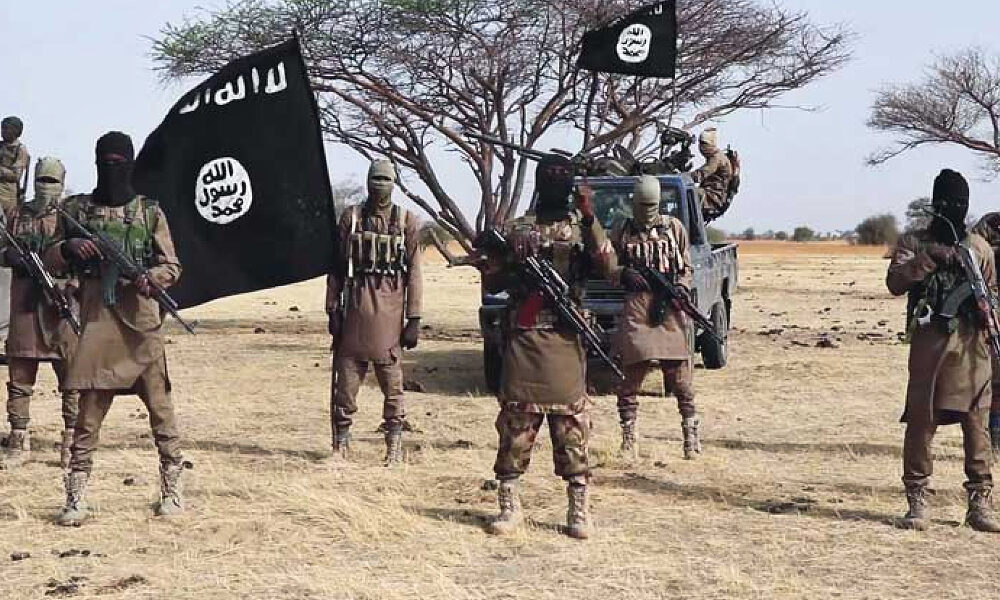
In West Africa, the tri-border region of Mali, Burkina Faso, and Niger has become a terrorist sanctuary. ISIS in the Greater Sahara (ISGS) and the Islamic State West Africa Province (ISWAP) move freely across these zones, launching coordinated attacks, then vanishing into neighboring territories before security forces can respond.
Recently, ISWAP has extended its reach into southeastern Burkina Faso, threatening Benin, Togo, and Ghana – with Ghana the only coastal nation spared, so far.
In the Lake Chad Basin, where Nigeria, Chad, Niger, and Cameroon converge, ISWAP has entrenched itself, using the porous frontier to recruit, resupply, and strike with impunity. In Central Africa, the Islamic State’s Central African Province (ISCAP) operates along the volatile Uganda-DR Congo border, while in northern Mozambique, Al-Shabaab affiliates – now rebranded as “Islamic State Mozambique Province” – have crossed the Ruvuma River into Tanzania, destabilizing a region once considered stable.
Even in North Sinai, though geographically part of Asia, Al-Qaeda and ISIS affiliates leverage the Gaza-Egypt border to project influence – a reminder that extremism does not respect continental boundaries.
The Accra Initiative: A Glimmer of Hope – But Not Enough
Efforts to bridge this gap are emerging. The Accra Initiative, launched by Ghana, Côte d’Ivoire (Ivory Coast), Burkina Faso, and Mali, represents one of the most promising attempts at cross-border counterterrorism coordination.
Yet even this model struggles against bureaucratic inertia, intelligence silos, and lack of sustained funding.
The problem is systemic. Without synchronized intelligence sharing, joint patrols, and unified command structures, counterterrorism remains a patchwork of reactive operations – not a strategy.
The Way Forward: Sovereignty Must Evolve
African nations cannot afford to equate border control with national sovereignty. In the 21st century, sovereignty must mean the capacity to protect citizens – not the right to isolate them from regional solutions.
The continent needs:
- A Continental Counterterrorism Framework: Modeled on NATO’s Article 5, but adapted for Africa – enabling automatic cross-border pursuit of confirmed terrorist threats.
- Regional Joint Task Forces: With integrated command centers, real-time intelligence fusion, and mobile rapid-response units.
- Investment in Border Technology: Drones, biometric surveillance, and AI-powered analytics to monitor remote sectors – not just military outposts.
- Diplomatic Courage: Leaders must overcome the reflex to label regional cooperation as “interference” and recognize that no state is an island in the age of transnational extremism.
The terrorists are not waiting. They are moving faster than our bureaucracies, exploiting the very borders we built to feel safe.
If African nations continue to treat borders as fortresses instead of gateways for cooperation, they will keep losing ground – one porous frontier at a time. The time for symbolic gestures is over.
The survival of African states depends on their ability to think regionally – and act together.
Fidel Amakye Owusu is an International Relations and Security Analyst. He is an Associate at the Conflict Research Consortium for Africa and has previously hosted an International Affairs program with the Ghana Broadcasting Corporation (GBC). He is passionate about Diplomacy and realizing Africa’s global potential and how the continent should be viewed as part of the global collective.