Business
Africa’s Banking Giants: A Tale of Two Economies


By Des H Rikhotso
As Ethiopia embarks on an ambitious plan to localize currency production, the continent’s banking landscape reveals a striking concentration of financial power – and the fragility that comes with it.
Ethiopia’s Monetary Sovereignty Push
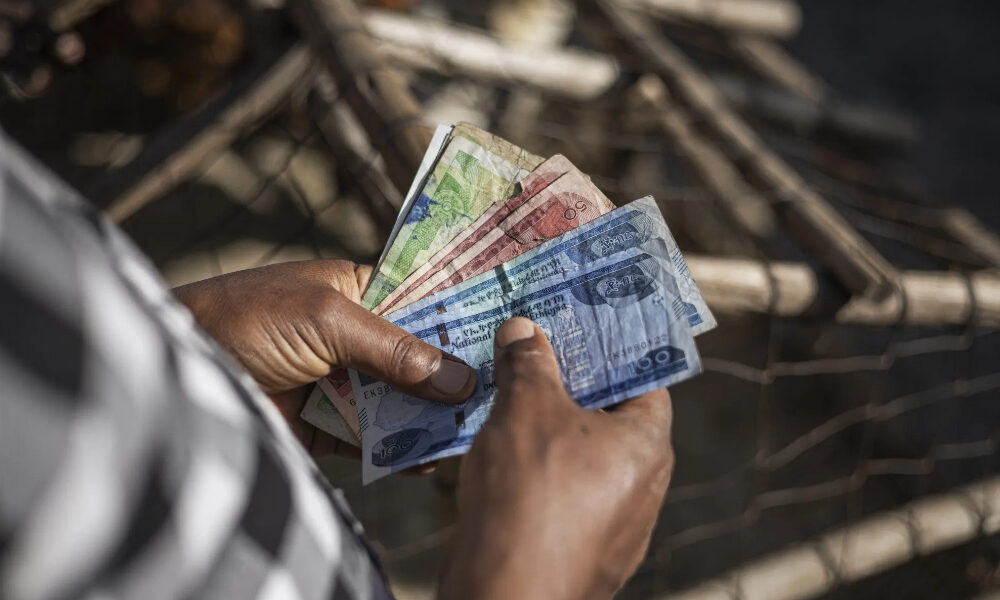
Prime Minister Abiy Ahmed’s announcement at the Finance Forward Ethiopia 2026 conference signals a decisive shift toward economic self-reliance. By bringing production of the Ethiopian Birr home, the government aims to insulate itself from external vulnerabilities that have long plagued African economies dependent on foreign printing services.
The Ethiopian Investment Holdings (EIH), established in 2021, will spearhead this initiative alongside its broader mandate to manage national investments strategically. The ambition is staggering: by 2030, EIH targets contributing approximately 20 percent of Ethiopia’s GDP, positioning itself as a cornerstone of the nation’s sustainable development trajectory.
This move reflects a broader understanding across Africa that monetary sovereignty begins with control over the most fundamental symbols of economic power – the physical currency itself.
The Profit Paradox: Where Africa’s Banking Wealth Concentrates
While Ethiopia charts its independent course, the continent’s banking profits tell a story of stark geographic concentration. In 2024, Absa Group of South Africa claimed the crown as Africa’s most profitable bank, posting US$1.201 billion in earnings – a remarkable achievement built on strategic evolution and continental expansion.
Absa’s ascent offers lessons in adaptive strategy. Originally operating as Barclays Africa Group, the institution leveraged its association with the British banking giant to entrench its brand across the continent.
When Barclays reduced its stake, the rebranding to Absa represented not retreat but transformation. The bank successfully consolidated South African operations while extending its footprint into new African markets, demonstrating that local knowledge combined with international pedigree creates formidable competitive advantage.
The top five reads like a duopoly of power: Egypt’s Banque Misr (US$1.19 billion) and Commercial International Bank (US$1.091 billion) claim second and third place, while South Africa’s Standard Bank (US$1.069 billion) and Nedbank (US$876.4 million) round out the leaders.
The Complete Picture
Top Five Most Profitable Banks:
- Absa Group (South Africa): US$1.201 billion
- Banque Misr (Egypt): US$1.19 billion
- CIB Egypt (Egypt): US$1.091 billion
- Standard Bank (South Africa): US$1.069 billion
- Nedbank (South Africa): US$876.4 million
Notable Performers:
- Guaranty Trust Bank (Nigeria): US$662.1 million
- Zenith Bank (Nigeria): US$670.6 million
- National Bank of Egypt and Attijariwafa Bank (Morocco) also feature prominently among Africa’s top ten, though precise profit figures vary by source
What the Numbers Reveal
This concentration of banking profits in just two countries exposes uncomfortable truths about Africa’s economic architecture. South Africa and Egypt dominate not through population size alone, but through more stable currencies, deeper capital markets, and regulatory frameworks that attract both domestic and foreign capital.
Nigeria’s position proves particularly instructive. Despite strong domestic performance and serving Africa’s largest population, Nigerian banks struggle to compete globally due to currency devaluation and macroeconomic volatility.
Guaranty Trust Bank and Zenith Bank both posted respectable profits exceeding US$660 million, yet they remain overshadowed by their South African and Egyptian counterparts. This isn’t a failure of management or market share – it’s the harsh mathematics of operating in a more challenging economic environment.
The rankings underscore a fundamental reality: in banking, as in much of finance, stability is profitability. Exchange rate fluctuations can transform a banner year in local currency terms into a middling performance in dollar rankings. Economic conditions matter as much as business strategy.
Looking Forward
Ethiopia’s currency localization and the profit distribution across African banking reveal two sides of the same coin. One nation seeks to build economic resilience through greater control; the established banking powers demonstrate what financial maturity can achieve – while simultaneously showing how concentrated that achievement remains.
For Africa’s financial future, the challenge is clear: how can more nations build the institutional stability that allows their banking sectors to compete globally? Until economic volatility is tamed across the continent, the profit league tables will likely remain dominated by the same few countries, while others – no matter how large their populations or ambitious their banks – struggle to break through.
The true measure of Africa’s banking success won’t be found in any single year’s profit rankings. It will emerge when geographic diversity matches financial performance, and when monetary sovereignty efforts like Ethiopia’s translate into sustained economic resilience across the continent.
Des H Rikhotso (PgDip-BA, MBL) is a seasoned C-suite Multi-Industry business executive with 25+ years of Business Leadership Experience across the South, East and Western Sub-Sahara Africa Region. Based in Kampala, Uganda he serves as East Africa Region Business Executive, driving Business Strategic Growth and Operational Excellence – contributing his Leadership Voice and Clarity to the Region. Des has held Business Leadership roles at BMW Group Africa, Volkswagen Group Africa, Peugeot Motors South Africa, Toyota/Lexus South Africa, Nissan Group of Africa, G.U.D Holdings (Africa Exports Operations Division) and The HDR Group of Companies. He holds Under-Graduate and Post-Graduate business degrees from the University of the Western Cape, Wits University (Wits Business School) and the University of South Africa.