Opinion
Africa’s Archive Was Never Empty – It Was Interrupted
The systematic delegitimization of African intellectual traditions was not an accident of history. It was a design choice – and its consequences persist.


By Wavinya Makai
There is a reason the demand for “sources” arrives with such particular intensity whenever African knowledge enters academic spaces. It is framed as rigor. It is performed as neutrality. But beneath it lies a long architecture of doubt, carefully constructed over centuries, conditioning the world to question African knowledge before it has even listened to it.
Colonial power did not only conquer land. It reorganized reality.
Among its most consequential distortions was a deceptively simple claim: that Africa did not write, did not document, and did not think in systems worthy of preservation. That African knowledge existed only in the air – never on paper, never in ink, never in archives.
That its peoples were memory without method, culture without theory.
When the Shelves of Timbuktu Speak, the World Should Listen
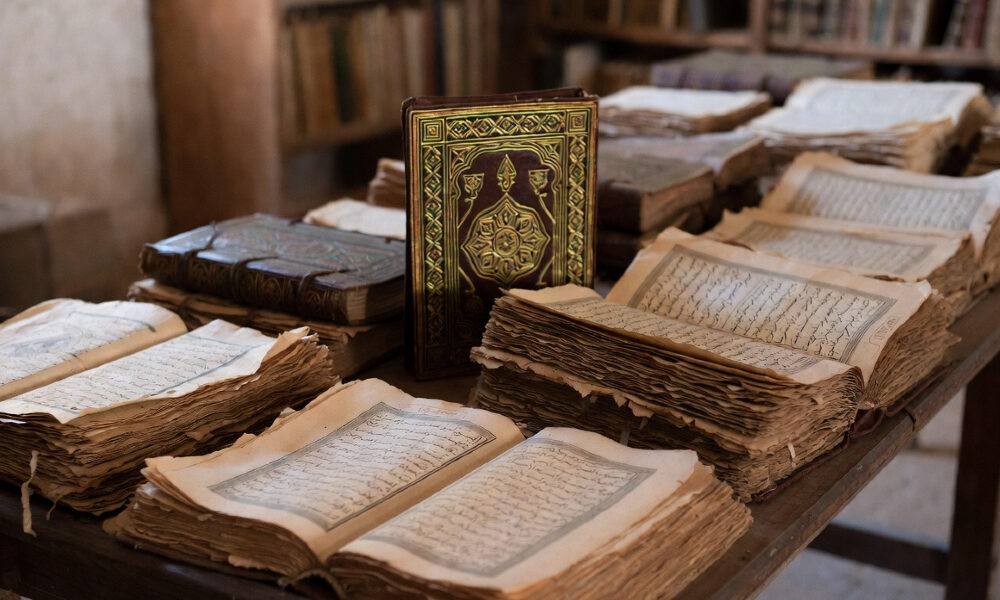
The manuscripts of Timbuktu have long told a different story. Texts on astronomy, law, medicine, governance, and mathematics – preserved across generations, studied, debated, and taught – do not emerge from folklore.
Institutions such as the Ahmed Baba Institute stand as evidence of civilizations that took knowledge seriously enough to record it, protect it, and transmit it with deliberate intellectual discipline. These were not incidental artifacts. They were the products of organized scholarly culture.
So how did the world arrive at a place where African knowledge must perpetually justify its own existence?
The answer is not absence. It is displacement.
Books were seized. Archives were scattered. Some were destroyed. Others were absorbed into foreign institutions, catalogued under different names, and systematically detached from their origins.
Even in recent years, during the armed conflict in Mali, entire communities risked their lives to conceal manuscripts from destruction – a people still shielding their intellectual heritage in the shadows while the broader world debated whether that heritage had ever existed at all.
Epistemic Injustice Is Not a Metaphor – It Is a Mechanism
That is what epistemic injustice looks like when it becomes structural. It does not announce itself. It simply sets the terms of credibility. It determines whose knowledge qualifies as “theory” and whose is reduced to “tradition.”
Whose written record constitutes an “archive” and whose spoken record is dismissed as merely “oral.” Over time, those distinctions begin to feel natural – as though they emerged from some neutral assessment of intellectual worth rather than from deliberate acts of cultural subordination.
They did not.
The Kenyan novelist and theorist Ngũgĩ wa Thiong’o warned that the colonization of the mind would outlast the colonization of land. The philosopher V.Y. Mudimbe demonstrated how Africa itself was reinterpreted through a colonial library that filtered, rearranged, and at times erased entire knowledge systems to conform to external frameworks.
What was produced was not scholarship about Africa. It was, in large part, a scholarship about how Africa had been imagined by those who sought to govern it.
The most dangerous consequence of this process was never simply what the world came to believe about Africa. It was what Africans were gradually conditioned to believe about themselves – that their intellectual traditions required external validation to be considered legitimate, that the burden of proof rested with the knowledge rather than with those who dismissed it.
Reclaiming the Archive: A New Generation Rewrites the Terms of the Debate
But the terms of that debate are changing.
A new generation of scholars, writers, and thinkers is advancing a more rigorous interrogation – not of African knowledge itself, but of the methodological assumptions that have long governed how knowledge is classified, valued, and preserved. They understand that the question is not whether African intellectual traditions exist.
The question is how those traditions have been categorized, displaced, and in some cases deliberately diminished within systems that were never designed to accommodate them.
So when the question comes – Where are your sources? – answer it.
But refuse to compress an entire civilization into the narrow aperture of that question. Expand the question itself. Challenge the assumptions that animate it. Examine who constructed the standard of credibility being invoked, and in whose interests that standard continues to operate.
The archive was never empty. It was interrupted.
Restoring it is not merely an act of cultural recovery. It is an act of intellectual precision – a correction of the historical record that serious scholarship has always demanded, and that the full story of human knowledge requires.
Wavinya Makai is a Kenyan author, development strategist, and Pan-African scholar specializing in African economic sovereignty. Her work focuses on youth development, unemployment, and education reforms that cultivate innovators. She is the author of Capital Violence: The Economic War on African Dignity and holds a Master of Philosophy in Development Studies from the University of Cambridge. Makai has been featured as a development analyst on Citizen TV Kenya and is a frequent speaker on leadership and human rights.