A Diaspora View of Africa
African Tourism and Development Hampered by Conflict


By Gregory Simpkins
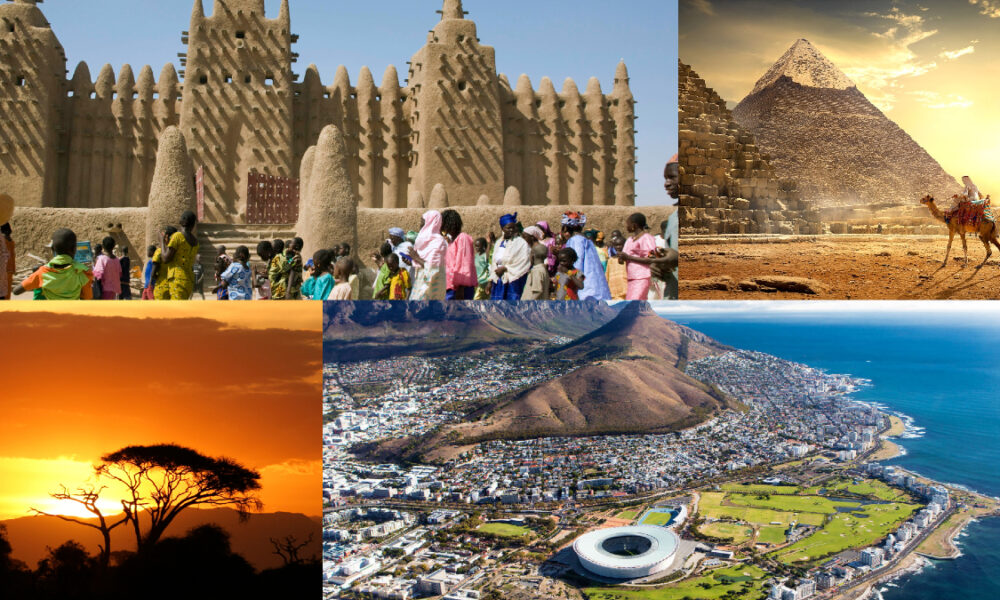
Summertime is a prime season for tourism, and there are Americans who will want to visit Africa, this year again, or for the first time. I have been going to Africa since 1989 and have visited 29 countries. In each one of them, I have found fascinating sights.
In Egypt, the first time I visited the pyramids, I found the Giza site to be like a movie set because I had seen the three pyramids and the Sphinx so often in the movies and on television. South Africa offers cosmopolitan sights and places in Johannesburg, Durban, and Cape Town. Some look to me like cities in America, but just outside is the bush. Cities such as Nairobi, Kenya, and Dakar, Senegal, offer many diversions in modern settings. The Corniche beachfront areas in Dakar rival any seaside area in the world. The supermarkets in Nairobi surpass even those in America for their selection of products. Kigali, Rwanda, is one of the cleanest cities I’ve ever been in anywhere in the world
Wildlife viewing in Tanzania is fabulous in the Ngorongoro Crater, where multiple species live side-by-side. Botswana has numerous animals protected by strict visitation rules as does the area featuring the mountain gorillas in Rwanda. Even lesser-known destinations such as Djibouti offer abundant sea life, beaches, and natural wonders. Natural attractions such as the Nile River, Lake Victoria, and Victorias Falls, as well as areas of the Sahara Desert, such as in Algeria, should be seen.
Then there are historic sites such as the Great Zimbabwe and the Meroë Pyramids in Sudan that are sights to behold. However, the latter also reveals a major challenge for African tourism in some locations: unresolved conflict.
According to the Armed Conflict Location & Event Data Project (ACLED) watchlist for 2024, five conflict countries-plagued countries inhibit travel there. Sudan is prominent on the list of countries with conflict. In April 2023, war broke out in the capital Khartoum between the Sudanese Armed Forces (SAF) headed by General Abdel Fattah al-Burhan and the paramilitary Rapid Support Forces (RSF) led by Mohamed Hamdan Dagalo, known as ‘Hemedti’. In 2024, peace remains as elusive as ever in Sudan.
What started as a power struggle between rival warlords has since escalated into a nationwide conflict that has drawn in rebel groups, ethnic militias, and international actors. More than 13,000 people have reportedly died in Sudan since fighting began in April, which is probably a significant underestimate of the conflict’s human toll. Additionally, more than 7 million people have been displaced, amid a deteriorating humanitarian situation and claims of ethnic cleansing and widespread human rights violations against the civilian population. ACLED says there has been a lack of diplomatic efforts to achieve a complete ceasefire, likely because of a focus on conflicts considered more vital to the global order in Ukraine and the Middle East.
In countries such as the United States, which has a limited history on the continent, there is a lack of understanding of the size of Africa and the fact that there are 55 separate countries.
In Sudan, the Pyramids of Meroë are a large number of Nubian structures, encompassing three cemeteries near the ancient city of Meroë. The Meroë pyramids date to the later stage of the Kingdom of Kush (3rd century BCE–4th century CE) and were burial places for Kushite monarchs, other members of the royal family, and important officials and dignitaries. The three cemeteries collectively encompass more than a thousand graves, out of which at least 147 were pyramids. The majority of the pyramids (at least 82) are from the southern cemetery and were not burials of royals.
ACLED reports that the military juntas that overthrew elected governments and now rule Burkina Faso, Mali, and Niger are likely to continue to shape the Sahel region’s security policies in 2024. Their rise across the Sahel ushered in a new era, leading to the withdrawal of French troops, the termination of the United Nations peacekeeping mission to Mali, and the entrenchment of Russian mercenaries.
The Center for Preventative Action reported in February 2024 that the current instability is associated with the collapse of the Libyan state in 2011, which led to the proliferation of weapons and armed fighters in the region. The influx of extremists into northern Mali reignited the dormant Tuareg rebellion in 2012, which had previously surfaced in 1963, 1990, and 2006.
Representing only 10 percent of the Malian population, the Tuareg people, organized under the National Movement for the Liberation of Azawad (MNLA), sought an autonomous state and aligned themselves with multiple Islamist groups, including al-Qaeda in the Islamic Maghreb (AQIM), the Movement for Unity and Jihad in West Africa (MUJAO), and Ansar al-Dine to push government forces out of the north. Then-President Amadou Toumani Touré was deposed in a March 2012 coup by the army, which disapproved of the government’s failure to suppress the rebellion – the same rationale used by coup leaders in Burkina Faso and Niger.
The consequent collapse of state institutions in the north enabled the MNLA to capture the regional Malian capitals of Gao, Kidal, and Timbuktu; the group had declared the independent state of Azawad in northern Mali, the Center reported. The MNLA quickly split from al-Qaeda and other allied Islamist groups following their attempt to impose Islamic law and declare an Islamic caliphate over the northern territory. The terrorist and anti-terrorist activity in northern Mali has prevented tourism to historic sites in Timbuktu for several years.
During its Golden Age, Timbuktu was a global powerhouse known for its intellectual, economic, and religious sectors. Trading commodities included slaves, Islamic literature and manuscripts, and goods such as gold, salt, and ivory. Timbuktu is located on the north and west side of a bend in the Niger River, a favorable geographical position that allowed the city to become a prominent trading stop in the Saharan trade routes, elevating the city to great fame and prosperity beginning in the 12th century. Early on in the northern Mali conflict, there was great concern about historic locations and documents being destroyed by extremists with no appreciation of history other than what involved their narrow interests. The conflict has prevented a thorough examination of what may have been lost there.
The Regional Impact of Conflict
Unfortunately, conflict in one country too often bleeds over into other countries, creating a disruptive flood of refugees and bad publicity. In countries such as the United States, which has a limited history on the continent, there is a lack of understanding of the size of Africa and the fact that there are 55 separate countries.
Since I started traveling to Africa, I have been asked why I continue to travel to conflict areas in Africa when for the most part, the areas I visited were separate from the areas experiencing conflict. Some of us Africanists used to laugh when we heard some ill-informed people refer to the late Nelson Mandela as the President of Africa, but that is an example of the lack of knowledge about Africa.
Nairobi is more than twice as far from Luanda, Angola, at 1703.56 miles compared to Boston’s distance from Chicago at 848.67 miles. However, when the media reports a conflict in one area of Africa, many Americans assume the entire continent is a flame. If there is a riot in Boston, you wouldn’t think Chicago would be affected.
Last year, my friend and colleague David Saunders, President of the Venue International Professionals travel agency, gave a presentation to students in the U.S. Foreign Service Initiative, operated by the Lockridge Foundation in Washington, D.C., to encourage young people to consider careers in international affairs. He told them that the travel and tourism industry employs one out of every twelve people and contributes ten percent of global GDP. He added that the travel and tourism industry not only generates cultural wealth but also is one of the most important economic engines for global growth and development. Imagine how much GDP is lost due to actual conflict and fear of conflict among outsiders.
Saunders said that in order for tourism to flourish as it has in many locations worldwide, there has to be coordination between transportation, hotels, and attractions. Too often that has not been the case in some African countries looking to increase tourism through the attractions they offer. I recall being in Guinea some years ago and having officials promote the museum in Boke, which not only featured displays and historical artifacts about West African history but also the international slave trade on a river leading to an island at the mouth of the Atlantic Ocean that featured numerous bird species. Unfortunately, at the time there was a significant lack of infrastructure to facilitate such tourism.
Many of us have lamented over the years the poor coverage of Africa – especially the more positive aspects. At this point, it will be up to African nations to enhance their promotion of their tourist attractions and the private sectors to unite to create effective systems to move tourists around to sights they want to promote. They must no longer depend on the international media or developed nations to help in this effort, except for increased efforts to reign in the conflicts that damage tourism and limit development. That, they must demand.