A Diaspora View of Africa
African Progress Endangered by Increasing Conflict


By Gregory Simpkins
Africa is home to 11 of the world’s 20 fastest-growing economies in 2024, with countries like Niger, Senegal and Libya leading the charge. The continent’s real GDP growth is expected to average 3.8 percent and 4.2 percent in 2024 and 2025, respectively, outpacing the global average.
East Africa is projected to lead Africa’s growth momentum, with growth rising to 5.1 percent in 2024 and 5.7 percent in 2025.
Growing Investment and Development Momentum
The European Investment Bank has pledged more than €2 billion (US$2.31 billion) to support renewable energy projects in Africa, including hydroelectric, solar, and wind power plants. This investment aims to enhance energy security and reduce reliance on fossil fuels.
The African Development Bank Group has launched initiatives to promote sustainable development, including the Land Accelerator Africa program, which supports entrepreneurs restoring degraded land and promoting eco-friendly practices. Countries like Morocco and Kenya are advancing digital-energy innovation ecosystems and clean manufacturing.
Business Insider Africa reports that Africa’s real estate market is poised to reach US$17.64 trillion by 2025, driven by rapid urbanization and increased infrastructure investment. From rapidly expanding commercial corridors to booming short-stay tourism hubs, real estate demand is being fueled by a mix of urbanization, Diaspora inflows, infrastructure upgrades and renewed interest from global investors seeking high-growth, inflation-resilient opportunities.
These and other advancements in Africa are threatened by the ongoing violence, coups and electoral upheavals experienced on the continent that could turn off the faucet of investment just when progress is being realized.
Coups Proliferate in West Africa
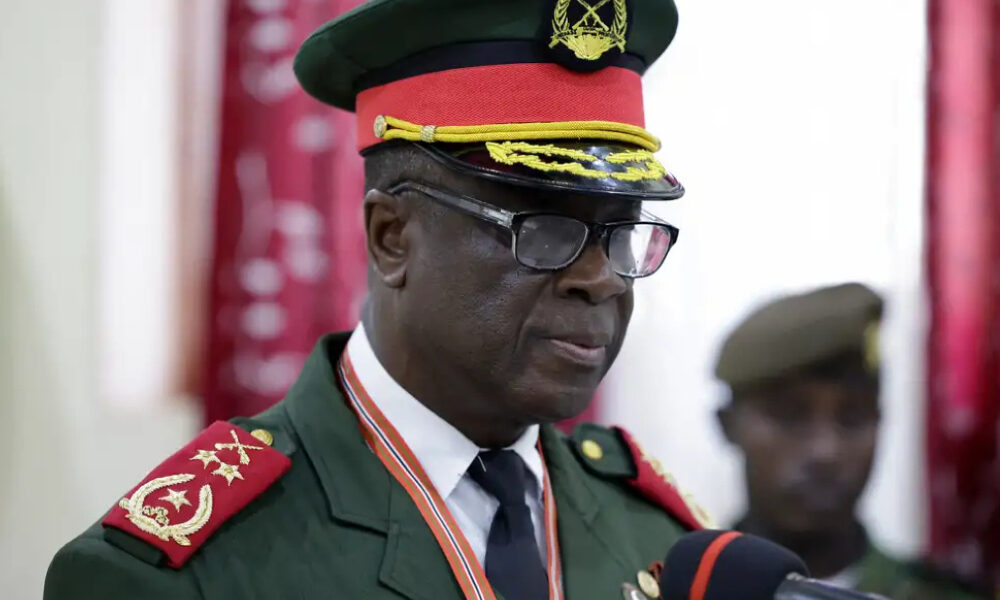
On November 26, a group of military officers claimed “total control” of Guinea Bissau. General Horta Inta-A Na Man was sworn in as the transitional president of the country the next day, staging the West African nation’s latest military coup.
This came a day after two leading candidates in a tightly contested Guinea Bissau presidential election each declared victory and a day before provisional results had been expected to be announced in the race between President Umaro Sissoco Embaló and Fernando Dias, a 47-year-old political newcomer who had emerged as Embaló’s top challenger to run the West African state, which is a hub for cocaine trafficking.
“I have just been sworn in to lead the high command,” Inta-A Na Man declared, after taking the oath of office in a ceremony at the military’s headquarters on Thursday, Agence France Presse journalists observed.
He said evidence had been “sufficient to justify the operation,” adding that “necessary measures are urgent and important and require everyone’s participation.” The expressed justification involved an alleged drug baron and others interested in toppling the government.
The African Union (AU) Commission chairperson on Thursday condemned the military coup and called for the immediate and unconditional release of President Embaló and all detained officials, the AU said in a statement.
This episode of turmoil is only the latest in this coup-prone country in a recently coup-prone region. In addition to this month’s Guinea Bissau coup, several other countries in the region have created a “coup belt.”
Coups took place in Mali in August 2020 and May 2021, led by Colonel Assimi Goïta. In Guinea, a coup occurred in September 2021, led by Colonel Mamady Doumbouya, ousting President Alpha Condé.
Coups happened in Burkina Faso in January and September 2022, led by Lieutenant Colonel Paul-Henri Sandaogo Damiba and Captain Ibrahim Traoré, respectively.
In Niger, a coup occurred in July 2023, led by General Abdourahamane Tchiani, ousting President Mohamed Bazoum. Additionally, a coup took place in Gabon in August 2023, led by General Brice Oligui Nguema, ousting President Ali Bongo Ondimba.
On November 27, the capital city of Bissau was mostly quiet, with soldiers on the streets and many residents staying indoors even after the overnight curfew was lifted. Businesses and banks were closed.
One might reasonably believe that a country considered a narco-state such as Guinea Bissau might not have been on many investors’ lists even before this latest coup, but it only adds to the perceived instability in the region that would discourage all but the hardiest investors from doing business in these countries.
Democratic Erosion Beyond the Sahel
Even previously relatively calm and advancing Tanzania has failed to avoid conflict. A November 18 report from the African Center for Strategic Studies described Tanzania’s effort to pick up the pieces following the government of President Samia Suluhu Hassan’s precedent-shattering violent crackdown against protestors and ordinary citizens surrounding the country’s October 29 elections.
This effort comes amid an atmosphere of ongoing intimidation and extremely limited access to information. The violence was accompanied by a government-imposed curfew and a shutdown of transport, markets, the internet, and newspapers – a first since independence.
Protests began the morning of the election in which major opposition candidates were barred from running and most election sites were quiet as voters boycotted the polls, according to the report. Chants of “Hatutaki CCM” (“we don’t want Chama Cha Mapinduzi!”) rung out in some areas.
Police subsequently fired live ammunition into the crowds – amplifying both fear and anger at the government’s heavy-handedness.
Many people were shot in their neighborhoods, markets and even in the sanctuary of their homes. As families searched for bodies of loved ones, over 200 youth were charged with treason.
Dawan Africa reported on November 27 that in response to the current situation, the European Parliament has formally rejected a major 2026 aid package to Tanzania, citing what it calls “systemic democratic backsliding” and serious human rights violations following the country’s controversial October 2025 elections. The decision, adopted by two key committees, has forced the European Commission to suspend the proposed funding, effectively putting Tanzania’s development cooperation with the EU on hold.
TRT Afrika English reported two days later that Tanzania told foreign diplomats on Friday to refrain from making comments that could “disrupt or distort” an inquiry into deadly unrest that erupted during last month’s general election. An internal inquiry might have the same level of confidence as the 98 percent vote tally Saluhu Hassan received in a questionable election.
Turning Point for Africa’s Future
Unfortunately, the two cited examples of unrest and conflict are not the only ones worth noting on the continent. At a time when African countries are organizing their markets to attract trade and investment more effectively, unrest and conflict threaten to undo Africa’s most significant advancements since independence.
This current situation is not inevitable, but the true causes of this matter must be identified in short order and rooted out to the greatest extent possible if Africans are to enjoy the fruits of their abundant natural and human resources.
Gregory Simpkins, a longtime specialist in African policy development, is the Principal of 21st Century Solutions. He consults with organizations on African policy issues generally, especially in relating to the U.S. Government. He further acts as a consultant to the African Merchants Association, where he advises the Association in its efforts to stimulate an increase in trade between several hundred African Diaspora small and medium enterprises and their African partners.