Opinion
African Industrialization and the Mineral Processing Mirage: A Case for an Industrial Readiness Test
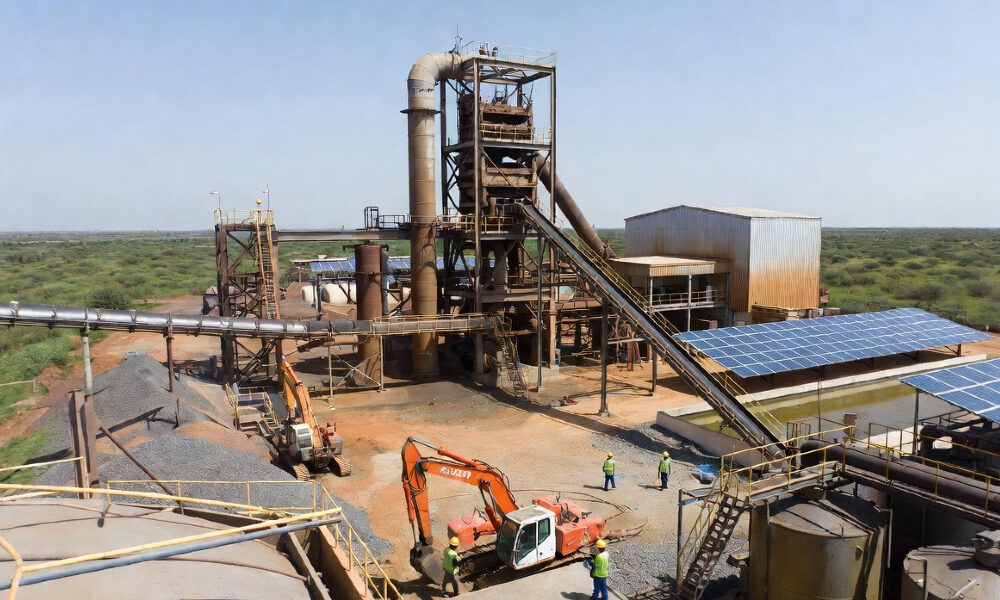
Africa’s push to process minerals locally is the right ambition. But without proven technology, reliable infrastructure, and stable policy, processing plants risk becoming expensive monuments rather than engines of growth.


By Apollo Buregyeya
Across Africa, a consensus is forming. From Accra to Lusaka, governments are pushing to process minerals at home rather than ship them abroad in raw form. Ghana’s proposed mining reforms are the latest example, but similar debates are unfolding continent-wide. The logic is straightforward: more jobs, more value captured domestically, less dependence on exporting unprocessed ore.
The ambition is sound. The harder question – the one too often glossed over – is how to make local processing commercially viable, not just politically popular.
The Lesson From China
China’s recent moves offer a cautionary tale worth studying closely. The International Energy Agency has warned that Beijing’s export restrictions on rare earths and processed graphite could disrupt manufacturing industries worth trillions of dollars globally. The lesson is not about who owns mineral deposits. It is about who controls the processing technology, industrial capacity, and supply chains that manufacturers around the world depend on.
That distinction matters enormously for Africa. It reframes what industrialization actually requires. A processing plant, on its own, is not an industrial strategy. It is one link – necessary but not sufficient – in a much longer production chain.
Six Questions Every Government Should Ask First
Before greenlighting a major processing investment, policymakers should be able to answer six hard questions:
- Feedstock: Is there enough raw material to sustain production for the plant’s entire economic life?
- Technology: Is the processing technology proven, and is it backed by skilled engineers, technicians, and operators?
- Infrastructure: Are reliable power, water, transport, and communications already in place – not promised, but built?
- Capital: Has long-term financing and adequate working capital actually been secured?
- Markets: Are there identifiable buyers for the finished product?
- Policy stability: Will government policy hold steady long enough for investors to recoup what they have put in?
These questions apply whether the mineral in question is iron ore, copper, graphite, cement, fertilizer, or gemstones. The scale of investment shifts from project to project. The underlying industrial logic does not.
Toward an Industrial Readiness Test
East Africa – and the continent more broadly – would benefit from adopting something like an Industrial Readiness Test for major processing investments. Instead of asking only whether minerals should be processed locally, governments need to ask a tougher follow-up: do the conditions actually exist for those industries to succeed over decades, not just survive a ribbon-cutting ceremony?
Industrialization should not be measured by the number of factories built. It should be measured by the number of competitive production systems established – and, critically, sustained.
Apollo Buregyeya, Ph.D., is a civil engineer and entrepreneur focused on developing sustainable African industries that leverage local mineral resources to improve living standards. He is the founder and CEO of Eco Concrete Ltd, a construction company specializing in innovative solutions tailored to the African environment. Committed to resource ownership and appropriate technology for value creation, he also teaches at Makerere University in Kampala, Uganda.