News
African Dev’t Bank president Akinwumi Adesina awarded the 2017 World Food Prize
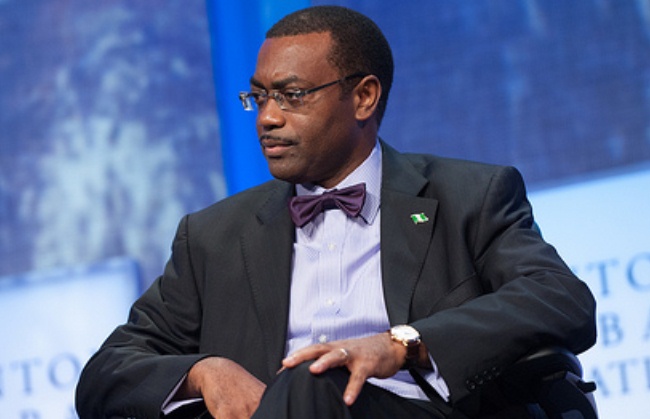
“I believe that what Africa does with agriculture and how it does it is not only important for Africa but it is important for how we are going to feed the world by 2050 because 65 percent of all the uncultivated arable land left in the world is in Africa. To help Africa get it right in agriculture is also going to be a key part of securing food for the world.“
– Akinwumi Adesina.
Akinwumi Adesina, president of the African Development Bank (AfDB), has been named the winner of this year’s World Food Prize.
The prestigious US$250,000 prize is given annually to an individual who has worked to advance human development by “improving the quality, quantity or availability of food in the world”.
The award which was created 31-years ago, has become known as the ‘Nobel Prize’ for food and agriculture.
Monday’s announcement by the president of the World Food Prize, Ambassador Kenneth Quinn, was made at a ceremony held at the U.S. Department of Agriculture attended by U.S. Secretary of Agriculture Sonny Perdue. Since its founding in 1986, the Prize has honored 45 individuals for their outstanding contributions to food security around the world.
“These individuals have been at the forefront of every major breakthrough in agriculture and food production in the last 30 years”, Quinn told reporters before Monday’s announcement. He said the laureates have led the “single greatest period of food production and hunger reduction in all human history”. Nominations for the prize, he said, are submitted by organizations and prestigious individuals. A selection committee – made of individuals from around the world – makes the decision.
Quinn announced that the committee noted a couple of “distinct achievements” of Adesina: his role in organizing and making the African fertilizer summit a “great success”; his work with leading non-profit organizations and banks to expand the availability of commercial credits to agriculture and farmers across the continent when he was a senior executive of the Alliance of Green Revolution of Africa; the digital e-wallet scheme during his 5-year tenure as minister of agriculture of Nigeria, which helped tackle corruption that had pervaded the fertilizer industry.
Quinn said Adesina has helped galvanize support to transform agriculture on the continent through his various initiatives which increased farmers’ yield and incomes. “All of his policies were very farmer friendly, and he became known as the ‘farmer’s minister'”.
The committee was also “taken” by Adesina’s own life that began with him growing up in a poor village, and how education “allowed him to lift himself up,” Quinn said.
Accomplishments
The award recognizes several of Adesina’s accomplishments including:
– Negotiating a partnership between commercial banks and development organizations to provide loans to tens of thousands of farmers and agribusinesses in Ghana, Kenya, Mozambique, Tanzania and Uganda.
— Creating programs to make Nigeria self-sufficient in rice production and to help cassava become a major cash crop while serving as Nigeria’s minister of agriculture from 2011 to 2015.
– Helping to end more than 40 years of corruption in the fertilizer and seed sectors in Nigeria by launching an electronic wallet system that directly provides farmers with vouchers redeemable for inputs using mobile phones. The resulting increased farm yields have led to the improvement of food security for 40 million people in rural farm households.
The AfDB president came from a family of farmers. With some education, however, his dad got a job as a civil servant which provided the means to send his 4 sons to school. Adesina, the second, experienced the poverty of smallholder farmers and their families during his years of schooling in the village.
Adesina told reporters that he was thrilled when he first learned that he had been selected as this year’s winner for the work he’s done over the years. “But for me it is not about the past as much as even the future; I feel greatly inspired and motivated to do even more until we free Africa and the world of hunger”.
He is excited about what lies ahead. “I see a future where agriculture is treated as a business, not as a way of life; I see a continent in the next 10 years that will be able to feed itself; I see a continent that will be able to transform its rural economy from zones of misery to zones of economic prosperity; I see a continent that is able to end malnutrition”.
Since he became president, he said, the bank has committed itself to a strategy which aims to end hunger and rural poverty on the continent in the next decade. Feed Africa, the 2ond of the AfDB’s top 5 priorities to which it has already committed US$24 billion dollars, was launched at its headquarters in Abidjan last year.
Adesina said some of the areas of focus of the new plan will be “how to get technology to farmers – at the scale of millions of farmers all across Africa – and how to get the youth to be involved in agriculture as a business”.
Adesina said he doesn’t seek the spotlight: “You know you never work for recognition. I was just doing by job, which is to improve the lives of farmers,” he said. “But it’s such a great honor for that work to be recognized for the impact it’s having across the world”.