Opinion
Africa: The Untapped Frontier of Global Investment


By Dishant Shah
Africa is often one of the most misunderstood regions when it comes to long-term investment. Yet beneath the surface of outdated perceptions lies a continent brimming with potential – some of the greatest in the world.
Home to over 1.4 billion people today, Africa’s population is projected to double by 2050, at which point one in every four people on Earth will be African. This isn’t just a demographic shift – it’s a powerful signal for investors willing to look beyond traditional markets.
But where – and how – should one begin?
Key Sectors Driving Africa’s Growth
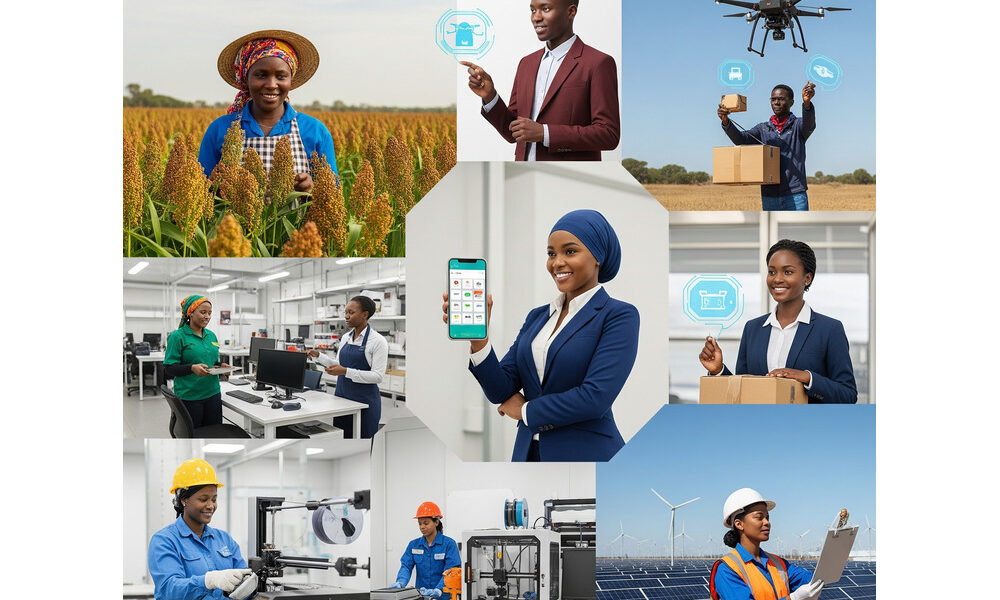
The key lies in thinking sector-first rather than country-first. Agriculture, fintech, logistics, manufacturing, and renewable energy are emerging as some of the most promising areas for growth and impact.
Consider agriculture: Africa contains approximately 60 percent of the world’s uncultivated arable land, yet it imports more than US$50 billion worth of food annually. That gap represents a massive opportunity for agribusiness investment – from cold chain logistics to agri-processing – where returns extend beyond finance into real societal transformation.
Fintech is another booming frontier. In sub-Saharan Africa alone, mobile money transactions surpassed US$832 billion in 2022, according to GSMA – a figure larger than the GDP of many African nations.
With mobile platforms leapfrogging traditional banking systems, the region is now pioneering decentralized finance and borderless digital payments. Initiatives like the Pan-African Payment and Settlement System (PAPSS) and the African Continental Free Trade Area (AfCFTA) are paving the way for a new era of intra-African trade – one that’s digital, dynamic, and seamless.
Meanwhile, manufacturing and low-cost industrialization are gaining momentum. Countries like Ethiopia, Kenya, Rwanda, and Ghana are positioning themselves as new regional hubs.
As wages rise in Asia, global companies are increasingly looking to Africa to diversify their supply chains. The continent is no longer just a consumer market – it’s becoming a factory floor.
Energy remains another critical domain. Over 600 million Africans still lack access to electricity.
But instead of replicating outdated centralized grid models, Africa is embracing decentralized solar power, mini-grids, and battery-based storage. For Africa, the clean energy transition is not a luxury or a trend – it’s a necessity. And within that necessity lies enormous opportunity.
Strategies for Smart Investment
So, how should investors approach this complex but promising landscape?
First, build strong local partnerships. Understand the nuances of each region.
What works in Nigeria may not resonate in Senegal; what scales in Kenya might falter in Zambia. Africa is not a single market – it is 54 distinct countries, each with its own cultural, political, and economic dynamics.
Second, don’t just bring capital – bring patience. African markets are fast-changing but not always fast-moving. The most rewarding investments often require time, trust, and deep local understanding.
The Decade Ahead: Who Will Own Africa’s Future?
In the coming decade, success in Africa won’t go to those with the deepest pockets. It will go to those with the sharpest insights, the strongest on-the-ground presence, and the vision to think decades ahead.
So, where would you place your bets? On aging economies slowing under demographic strain – or on a continent powered by the world’s youngest and fastest-growing population?
The future is being written in Africa. The question is: Will you be part of the story?
Dishant Shah is a partner at Legion Exim, a company specializing in facilitating the export of high-quality engineering products directly sourced from manufacturers in India to Africa. His areas of expertise include new business development and business management.