A Diaspora View of Africa
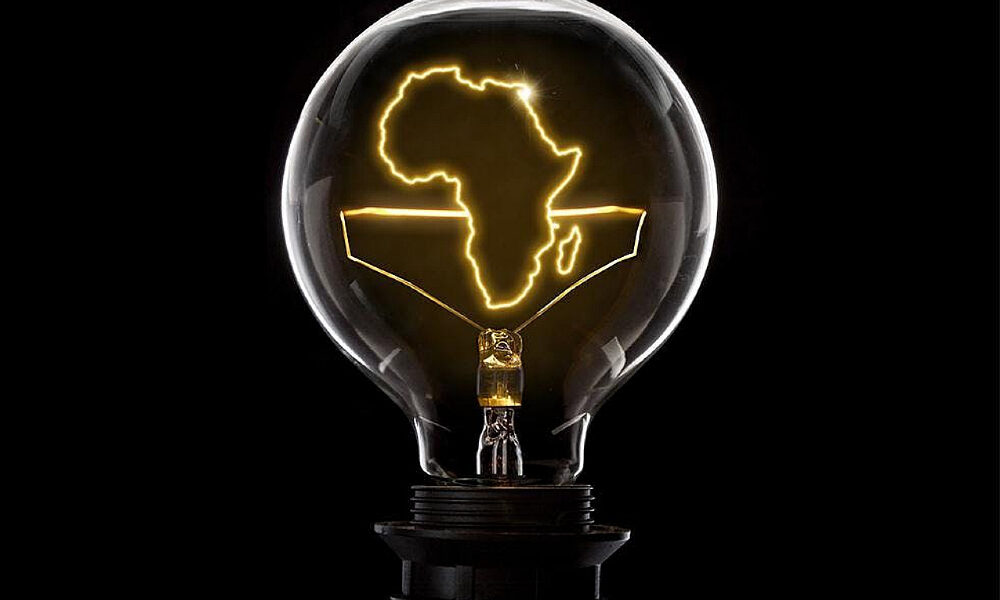
Africa resumes its innovation


By Gregory Simpkins
Africa was the world’s cradle of civilization, and the people who left over the millennia (as well as those who remained) offered new ideas for survival and progress. The earliest human inventions such as the hand-axe and manipulating of fire originated in Africa, and people in Africa developed inventions used up to the modern day, including fishhooks, bows and arrows, and boats.
On the more technologically advanced stage, ASBMB Today – the website of the American Society for Biochemistry and Molecular Biology, cites several advancements by ancient Africans:
- More than 35,000 years ago, Egyptians scripted textbooks about math that included division and multiplication of fractions and geometric formulas to calculate the area and volume of shapes. Distances and angles were calculated, algebraic equations were solved and mathematically based predictions were made of the size of floods of the Nile. The ancient Egyptians considered a circle to have 360 degrees.
- Several ancient African cultures birthed discoveries in astronomy. A structure known as the African Stonehenge in present-day Kenya (constructed around 300 B.C.) was a remarkably accurate calendar. The Dogon people of Mali amassed a wealth of detailed astronomical observations. Many of their discoveries were so advanced that some modern scholars credit their discoveries instead to space aliens or unknown European travelers, even though the Dogon culture is steeped in ceremonial tradition centered on several space events. The Dogon knew of Saturn’s rings, Jupiter’s moons, the spiral structure of the Milky Way and the orbit of the Sirius star system.
- Many advances in metallurgy and tool making were made across the entirety of ancient Africa. Advances in Tanzania, Rwanda and Uganda between 1,500 and 2,000 years ago surpassed those of Europeans then and were astonishing to Europeans when they learned of them subsequently. Ancient Tanzanian furnaces could reach 1,800°C – 200 to 400°C warmer than those designed by the Romans.
- Various past African societies created sophisticated built environments. Of course, there are the engineering feats of the Egyptians: the impressive obelisks and the more than 80 pyramids. The largest of the pyramids covers 13 acres and is made of 2.25 million blocks of stone. Later, in the 12th century and much farther south, there were hundreds of great cities in Zimbabwe and Mozambique. There, massive stone complexes were the hubs of cities. One included a 250-meter-long, 15,000-ton curved granite wall. The cities featured huge castle-like compounds with numerous rooms for specific tasks, such as iron-smithing. In the 13th century, the empire of Mali boasted impressive cities, including Timbuktu, with grand palaces, mosques and universities.
- Many medical treatments we use today were employed by several ancient peoples throughout Africa. Before the European invasion of Africa, medicine in what is now Egypt, Nigeria and South Africa, to name just a few places, was more advanced than medicine in Europe. Some of these practices were the use of plants with salicylic acid for pain (as in aspirin), kaolin for diarrhea (as in Kaopectate), and extracts that were confirmed in the 20th century to kill Gram positive bacteria. Other plants used had anticancer properties, caused abortion and treated malaria – and these have been shown to be as effective as many modern-day Western treatments. Medical procedures performed in ancient Africa before they were performed in Europe include vaccination, autopsy, limb traction and broken bone setting, bullet removal, brain surgery, skin grafting, filling of dental cavities, installation of false teeth, what is now known as Caesarean section, anesthesia and tissue cauterization. In addition, African cultures preformed surgeries under antiseptic conditions universally when this concept was only emerging in Europe.
- Most of us learn that Europeans were the first to sail to the Americas. However, several lines of evidence suggest that ancient Africans sailed to South America and Asia hundreds of years before Europeans. Thousands of miles of waterways across Africa were trade routes. Many ancient societies in Africa built a variety of boats; the Mali and Songhai built boats 100 feet long and 13 feet wide that could carry up to 80 tons. Currents in the Atlantic Ocean flow from this part of West Africa to South America. Genetic evidence from plants and descriptions and art from societies inhabiting South America at the time suggest small numbers of West Africans sailed to the east coast of South America and remained there.
The deconstruction of African technology
So, if Africans were so technologically advanced long ago, how did their societies become so backward and dependent in recent decades upon what we now call the developed world? Why did Europe originate the Industrial Revolution and not Africa?
During the long colonial period, African innovation was stifled as waves of globalization and the Industrial Revolution swept across the globe. As Jared Diamond, the Pulitzer Prize-winning author of Guns, Germs, and Steel wrote, Africa’s geography, unlike that of Europe or Asia runs North to South and not East to West. Such a layout, combined with natural impediments like mountains, gorges and unnavigable rivers, kept African people separated and frustrated the sharing of technology. Also, the colonial powers, playing on existing inter-tribal conflicts, used a divide and conquer strategy and further limited cooperation among African people.
African ingenuity thrived in some places despite colonial ambitions to control technology on the continent
When colonization, backed by advanced weaponry and inter-European collaboration, firmly took hold, technology Europeans actually originally may have learned from Africa or Asia in the past was not shared with the indigenous people. Resources that once made Africans such as Mansa Musa extremely wealthy were used to create wealth in Europe. To this day, in some places in Africa and elsewhere in the African Diaspora, natural resources continue to be mined or harvested and then processed elsewhere to be purchased back by the people who initially owned them.
African ingenuity thrived in some places despite colonial ambitions to control technology on the continent resulting in advancements ranging from a vaccine against yellow fever in 1937, the first human-to-human heart transplant in 1967 to today’s Southern African Large Telescope, the largest optical telescope in the southern hemisphere.
Even in the post-colonial era, innovation in Africa remains challenged by factors that serve to stymie access to capital, including property rights muddled by tribal land claims, poor technical manpower largely due to a rampant brain drain to more developed societies and inadequate infrastructure left by departing colonial powers in the hands of often hand-picked leaders who thought little of building their societies for the future.
And innovations don’t stop there. One example of an innovative startup is M-Pesa, a mobile payment platform launched in Kenya in 2007. M-Pesa revolutionized mobile payments in Africa and has since been adopted in other African countries. Another example is Andela, a Nigerian company that trains and employs software developers across Africa.
The revival of African innovation
According to Ventures Africa, an online platform for news, analysis and discussion about African business, policy, innovation, and lifestyle, the top 5 African countries for innovation in 2022 were:
- Mauritius, which retained its position as Africa’s most innovative country. It moved up seven places from 2021 to rank 45th globally and 1st in sub-Saharan Africa on the Global Innovation Index by continuing to focus on its ICT and emerging technologies sectors to fuel innovation-driven development and transformation.
- South Africa, which boasts a rich history of innovation and invention, with notable achievements such as the development of oil from coal (Sasol), speed guns, smart lock safety syringes, and electric game-drive vehicles. The country was among the first to create electric game-viewing vehicles that were so quiet they startled both people and animals.
- Morocco, which was ranked as the third most innovative African country and 67th globally in 2022, has consistently leveraged innovation to drive growth in its most productive sectors. The country’s higher-tech sectors, such as pharmaceuticals, aerospace and the automotive industry have flourished, with companies collaborating with international partners to establish integrated supply chains.
- Tunisia, which ranked as the fourth most innovative country in Africa and 73rd globally, has as its main drivers of innovation government funding, a high number of graduates in science and engineering and high-tech exports. In an effort to further boost innovation, the Tunisian government launched a new strategy in 2022 aimed at creating 840,000 industrial jobs and increasing the value of exports by 2035.
- Botswana, which recorded the highest improvement from 2021 to join Mauritius, South Africa, Morocco, and Tunisia in the top five list, moved from the 106th position in 2021 to the 86th position on the global level in 2022. The country’s strengths for the year centered around expenditures on education, new businesses and applied tariffs. Botswana performed above the regional average in industrial development and, human capital and research.
As the world stands at the dawn of Globalization 4.0, it is time for Africa to again be a major source of global innovation – not only to ensure its own progress, but to help the rest of the world succeed in this new technological era.
Gregory Simpkins, a longtime specialist in African policy development, is the Principal of 21st Century Solutions. He consults with organizations on African policy issues generally, especially in relating to the U.S. Government. He further acts as a consultant to the African Merchants Association, where he advises the Association in its efforts to stimulate an increase in trade between several hundred African Diaspora small and medium enterprises and their African partners.