Opinion
Africa Is Wealthier Than You Think – But It Can’t Keep Its Wealth
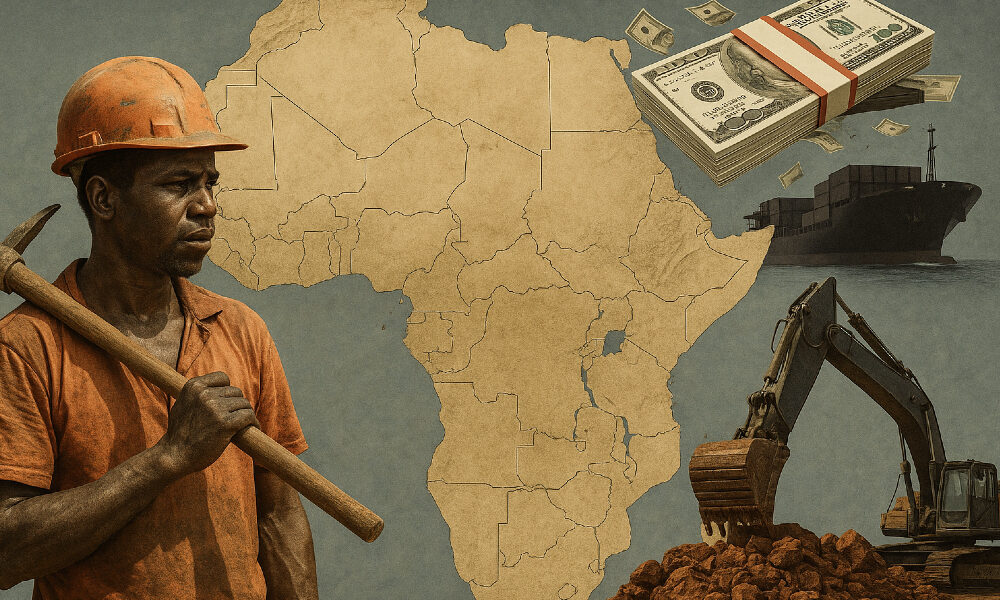


By Dishant Shah
Africa is rich – not just in natural resources, but in talent, innovation, and ambition. Yet, year after year, the continent quietly hemorrhages billions of dollars that could be fueling schools, clinics, and thriving businesses.
An estimated US$88.6 billion leaves Africa annually through illicit financial flows – money siphoned off via shady contracts, trade misinvoicing, and undeclared corporate profits that never reach national treasuries. That’s equivalent to about 3.7 percent of Africa’s gross domestic product (GDP), every single year.
Meanwhile, lower-income African countries paid roughly US$60 billion in debt repayments in 2024 alone – funds that flow directly to foreign creditors rather than being invested in local hospitals, roads, or job creation. Much of this debt traces back to loans taken decades ago under murky conditions, yet their burden still weighs heavily on today’s budgets.
The cost isn’t only economic – it’s ecological. More than US$29 billion is lost annually due to illegal logging, overfishing, and wildlife trafficking. Forests are stripped bare, fisheries are depleted, and endangered species are poached at alarming rates – all while enforcement agencies struggle with limited funding.
Out of Africa, Into the World: A Lost Opportunity for Value Addition
Foreign corporations also dominate control of Africa’s vast mineral wealth. Take the Democratic Republic of Congo, which holds nearly 60 percent of the world’s cobalt reserves – a critical component for electric vehicle batteries.
Yet most of the raw ore is exported, with little refining or processing done locally. As a result, the lion’s share of value – and profit – ends up elsewhere.
This pattern repeats across the resource sector: gold, diamonds, oil – raw materials leave the continent, while finished goods return at premium prices. The imbalance is stark: Africa accounts for just 3 percent of global manufactured exports, even as it sends abundant commodities overseas.
Then, electronics, textiles, and other finished products flow back in – at significantly higher costs. This cycle locks Africa into a position of disadvantage: selling cheap, buying expensive.
At the household level, remittances serve as a crucial lifeline. In 2023, Africans living abroad sent home approximately US$90.2 billion, representing 5.2 percent of the continent’s GDP – more than double the amount of official development aid.
While these funds support families and basic needs, they rarely translate into large-scale investment in infrastructure or enterprise.
A System Designed to Leak: The Cost of Unfair Rules
When all these outflows are tallied, the numbers tell a sobering story: the money coming in simply cannot match the money going out.
The result? A persistent financing gap – an estimated US$200 billion per year – needed to achieve key sustainable development goals.
Foreign aid alone won’t bridge it.
This isn’t about assigning blame. It’s about confronting a system riddled with structural leaks – from opaque financial channels to inequitable trade rules – that hold Africa back from realizing its full potential.
Imagine what could change if just half of what currently slips away were retained within the continent. Healthcare could expand, infrastructure could modernize, and education systems could be transformed.
Africa’s future shouldn’t be one of perpetual catch-up. It should be a story of homegrown progress – where wealth generated stays where it belongs, fueling growth from within.
How different might that future look – if Africa kept just half of what it now loses?
Dishant Shah is a partner at Legion Exim, a company specializing in facilitating the export of high-quality engineering products directly sourced from manufacturers in India to Africa. His areas of expertise include new business development and business management.