Opinion
Africa Is Done Selling Itself Cheap: From Raw Material Exports to Value Creation
A quiet revolution in resource policy is reshaping the continent’s economic future – and the world should be paying attention.


By Endre Vestvik
Africa will never be the same again.
Across the continent, one of the most consequential geopolitical and economic shifts in decades is quietly gathering momentum. It is not being announced with fanfare at global summits or splashed across the front pages of Western newspapers. It is happening in mining ministries, trade offices, and processing plants – country by country, policy by policy. But make no mistake: it amounts to a fundamental rewriting of Africa’s role in the global economy.
The End of the Export Trap
For generations, African economies competed on a single metric: how much raw material they could dig up, harvest, or extract and ship abroad. Copper, cobalt, lithium, diamonds, cocoa, coffee, timber, shea – the list of commodities is long, but the pattern was always the same. Africa supplied the inputs. Other regions captured the value, through processing, manufacturing, and branding that turned cheap raw materials into expensive finished goods.
A growing chorus of African leaders is now calling this arrangement what it is: a colonial-era export trap, one that has persisted for decades after formal colonialism ended. And increasingly, they are doing something about it.
The Evidence Is Mounting
The scale of this shift becomes clear only when you look across the continent at once. Consider what has happened in just the past few years:
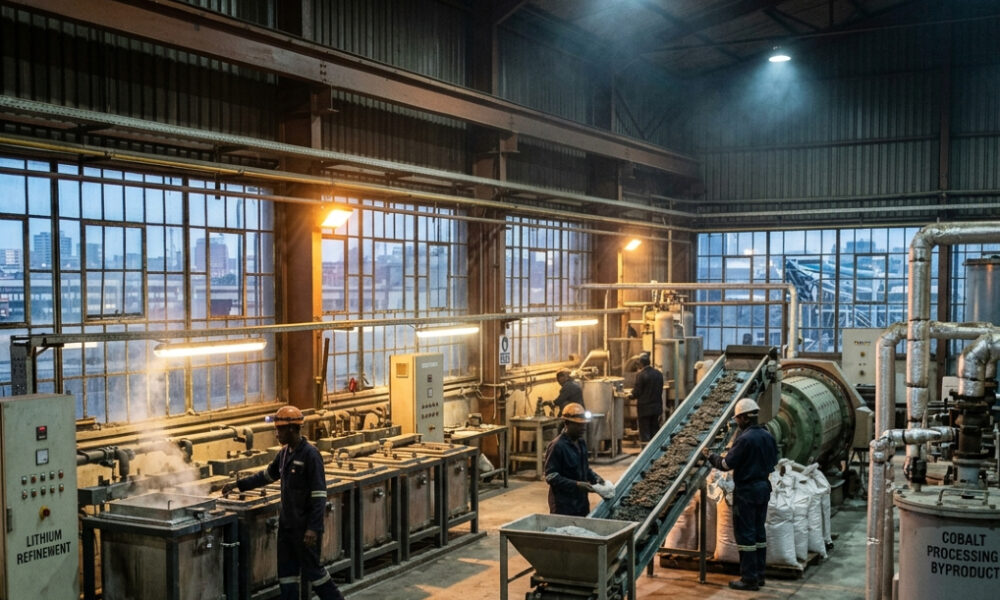
- Zimbabwe has banned exports of raw lithium, requiring greater domestic processing before the mineral – critical to the global battery supply chain – can leave the country.
- The Democratic Republic of Congo is investing heavily in domestic copper and cobalt processing, rather than continuing to export unrefined concentrates to buyers overseas.
- Botswana has steadily repatriated more of its diamond cutting and polishing industry, work that was long outsourced to hubs like Antwerp and Mumbai.
- Gabon has banned raw log exports outright, betting on building a domestic timber industry instead of simply feeding foreign sawmills.
- Côte d’Ivoire and Ghana, which together grow the majority of the world’s cocoa, have launched the Cocoa Value Addition Alliance – a tacit admission that supplying the raw beans while others make (and sell) the chocolate is no longer a winning strategy.
- Nigeria is pushing to process more of its shea domestically, aiming to capture a larger share of the value from one of Africa’s most important cosmetic ingredients rather than exporting raw shea nuts.
- Uganda continues to expand its capacity to roast, process, and package coffee before export, rather than remaining primarily a supplier of green, unroasted beans.
Different Tools, Same Direction
These policies are not identical, and they should not be mistaken for a single coordinated strategy. Some rely on outright export restrictions. Others lean on tax incentives, foreign investment, or regional cooperation frameworks. The approaches vary as much as the commodities involved.
Nor is success guaranteed. Building globally competitive processing and manufacturing industries requires far more than a policy announcement – it demands capital, reliable energy, functioning infrastructure, and a skilled workforce, none of which can be conjured overnight. Some of these initiatives will falter under the weight of those requirements. A few may be reversed entirely.
But taken together, they point in the same direction. For decades, African governments competed to export more raw material. Today, a growing number are competing to export more value.
A Transformation in the Making
This is not a minor policy trend. It marks, arguably, the beginning of one of the most significant economic transformations in Africa’s modern history – one that could reshape global supply chains for everything from electric-vehicle batteries to chocolate bars.
The real question facing the continent is no longer whether Africa should move up the value chain. That debate is largely settled. The question now is which industries, and which countries, will lead the transformation – and which will be left behind, still exporting raw material while their neighbors export finished goods.
For decades, the world grew accustomed to an Africa that supplied the world’s inputs at the lowest possible price. That Africa is disappearing. What replaces it will define the continent’s economic trajectory for a generation.
Endre Vestvik is an entrepreneur and founder and CEO of Kampala-based Wild Coffee, a company advancing value-added coffee production at the source in Uganda and across Africa. A self-described “coffee evangelist,” he champions fair trade, sustainability, and single-origin African coffee, working directly with farmers to eliminate middlemen, increase farmer incomes, and promote sustainable practices from farm to cup.