Opinion
Africa Is About to Rate Africa. The Real Question Is What That Changes.
A new African credit rating agency launches this fall. Its success will be measured not by the ratings it issues, but by whether Africa’s own capital finally starts financing Africa’s own growth.


By Michael Sudarkasa
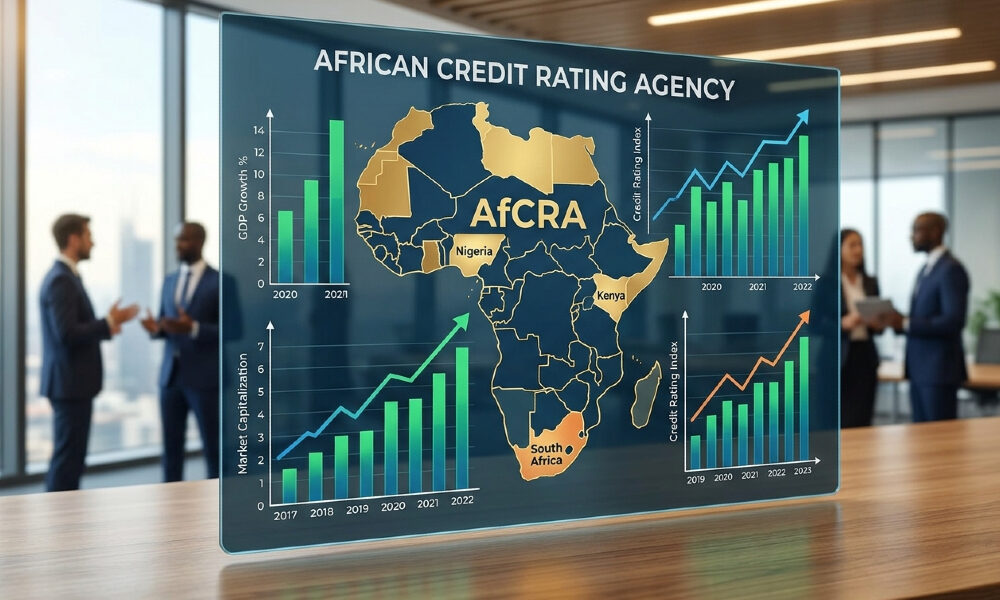
On October 6, 2026, a new institution will open its doors in Mauritius: the African Credit Rating Agency, or AfCRA. On paper, it is a technical development – one more entrant into the obscure but consequential business of credit ratings. In practice, it could mark a meaningful shift in how Africa’s financial architecture works, and in whose judgment that architecture relies on.
For decades, the risk profiles of African governments and companies have been set almost entirely by three firms: Moody’s, S&P Global, and Fitch. These agencies serve a genuine function in global capital markets, and AfCRA should not be mistaken for their replacement. Its real opportunity lies elsewhere.
A Second Opinion, Not a Rival Verdict
The interesting question AfCRA raises is not whether Africa can produce its own ratings. It is whether Africa can produce credible ones – ratings grounded in local data, structural economic transformation, and long-term development trends, while still meeting the standards of independence and rigor that investors demand.
If AfCRA gets this right, the payoff extends well past sovereign debt. A credible African rating body could widen coverage of the continent’s corporations, infrastructure projects, sub-sovereign entities, and small and medium-sized enterprises – the very businesses most often overlooked by the global agencies. Better information could, in turn, deepen domestic capital markets and narrow the persistent perception gap that inflates Africa’s cost of capital.
None of this happens automatically. Credibility is the entire game. AfCRA will need robust governance, insulation from political pressure, transparent methodology, reliable data, and – perhaps hardest of all – buy-in from the investors and regulators who ultimately decide whether a rating means anything.
The goal, then, is not to hand Africa better ratings. It is to produce better-informed ratings of African risk and opportunity. That distinction sounds subtle. It isn’t. Because the more consequential shift here may not be how international investors perceive Africa – it’s how African investors deploy capital within Africa.
The Trillion-Dollar Question Sitting at Home
Perhaps the most underappreciated storyline around AfCRA has little to do with foreign investment at all. It concerns domestic resource mobilization – a term that sounds bureaucratic but describes something enormous: getting Africa’s own money to work for Africa.
African pension funds, insurers, sovereign wealth funds, and other institutional investors collectively oversee a vast pool of capital, estimated by the African Development Bank at roughly US$4 trillion. At the same time, the continent faces staggering financing gaps in infrastructure, energy, housing, agriculture, industrialization, health care, and climate resilience.
The obvious question follows: why isn’t more of that US$4 trillion already flowing into those needs?
Part of the answer is a shortage of bankable projects. But a less-discussed part is the absence of financial infrastructure that lets institutional investors evaluate opportunities with confidence. This is precisely the gap AfCRA is positioned to fill.
Pension funds and insurance companies cannot invest simply because a project sounds worthwhile. They operate under fiduciary duties, prudential rules, and strict risk thresholds. What they need is credible information, investable instruments, dependable risk assessments, and increasingly, opportunities structured and denominated in ways that match their long-term liabilities.
A trustworthy African rating institution could become one link in a much larger chain:
African savings → African investment → African productive capacity → African prosperity.
Picture even a modest reallocation of Africa’s institutional capital toward infrastructure, manufacturing, agro-processing, renewable energy, housing, and scaling businesses. The cumulative effect could be transformative. Africa still needs foreign capital, and will for the foreseeable future. But a continent that already commands trillions in domestic savings should not have to depend so heavily on money from elsewhere.
The task now is not to find more capital. It is to put the capital Africa already has to work.
Michael Sudarkasa is a commercial attorney and African economic development expert. He is the CEO and founder of Africa Business Group, a South Africa-based consultancy focused on business development, agriculture, renewable energy, and capacity building. With extensive experience in private sector growth, trade, investment, and corporate finance across Africa, he has authored publications on African trade and investment and previously led the African Fertilizer and Agribusiness Partnership (AFAP). He also serves on multiple boards and advisory panels in the economic development and impact investment sectors.