Business
Should Africa be inspired by China’s industrial development?
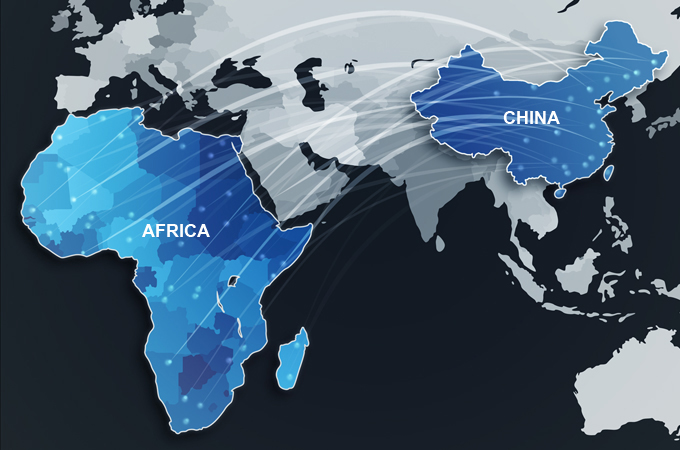
Modern Diplomacy | Africa, which is struggling to boost its industrial sector, has decided to seek inspiration from the Chinese model.
Several African delegations were eager to attend the 5th and final plenary session of the 12th African Economic Conference (AEC) in Addis Ababa, Ethiopia.
The theme of the session was “Institutions, competitiveness and industrial policy in the age of global value chains: lessons from China“.
Professor Zhongxiu Zhao of the University of International Business and Economics in Beijing recalled the birth of Chinese industrialization, which was characterized by 4 main phases between 1860 and the late 1990s:
– the 1st, from 1860 to 1900, was marked by the import of equipment;
– the 2nd, from 1920 to 1930, placed the private sector in the driving seat of industrialization;
– the 3rd, between 1949 and 1980, relied on cheap labor;
– and the 4th, which began in the late 1990s, is characterized by incentives for farmers.
China has finally launched its decentralization policy by opening industrial parks in 19 provinces.
“This is innovation on a Chinese scale, and all financial markets rely on these innovations,” said Zhao. He added that China has not yet achieved its industrial development programme since the adoption 2 years ago of the “Made in China” plan for the periods 2015-2025, 2025-2035 and 2035-2049. The goal is to make China a global industrial giant.
“This plan has 5 components: quality, green development, the optimization of population-oriented structures, the creation of new expertise, and the planning of an open market,” said Zhao.
“China developed by listening to people inside the country, and not by waiting for external aid. The Chinese took notice of what was happening in their own country.”
Professor Xiaobo Zhang, a researcher at the International Food Policy Research Institute (IFPRI), acknowledged the entrepreneurial spirit that has always prevailed in China, an economy that has remained open.
“In the textiles sector, for example, independent contractors are used. This means that everyone can be an entrepreneur,” said Zhang, mentioning that this is an opportunity that Africans can use to their advantage.
“As incomes rise in China, consumers want better quality products. For example, the Chinese import large amounts of Ethiopian coffee. There is therefore a huge potential for African agricultural products. Many Chinese people also want to visit Africa. The tourist sector can therefore be developed,” advised Zhang.
Professor Fang Xia of the University of International Business and Economics in Beijing encouraged developing countries to show that they themselves can produce goods and enter the global value chain.
“You have the advantage of being on Europe’s doorstep. You must create economic zones throughout your countries. There are challenges in many African states and China can help to overcome them. Infrastructure is a key sector for improvement. It will allow the entire process to be set up,” suggested Xia.