Business
Africa has become the fastest growth region for private banking
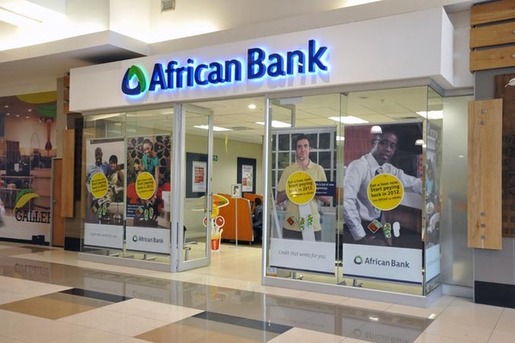
The private banking unit of South Africa-based Investec holds Africa’s largest portfolio of assets under management with US$23.7 billion, reflecting increased demand for services from the affluent segment of the continent’s population.
Africa has over 160,000 high net worth individuals (HNWI) who collectively hold around US$660 billion in wealth. Approximately US$120 billion is tied up with wealth management companies, according to New World Wealth.
“Africa is the fastest growth region for private banking globally,” said Andrew Amoils, senior analyst at the New World Wealth. “We estimate the African private banking market will grow by 8 percent per annum over the next 10 years.”
According to a benchmark report from CapGemini, the high net worth individuals population in Africa grew 9.9 percemt compared to 9.2 percent globally while high net worth individual wealth in the region increased by 11.5 percent compared the global average of 10 percent.
South Africa continues to be the hub for African private banking with over US$50 billion in assets under management. As African economies prosper, new hubs of growth are emerging with Angola, Kenya, Nigeria and Tanzania seen as promising markets for the private banking industry.
Nigeria’s Potential: Nowhere is the growth more evident than in Nigeria where the country’s new-found status as the continent’s largest economy is attracting financiers.
According to WealthInsight, Nigeria is home to around 16,680 high net worth individuals, a figure that is forecast to rise by 7 percent to reach around 18,401 by 2018.
“In private banking terms, these 16,680 high net worth individuals in Nigeria are collectively worth US$138 billion, a number that is set to rise 22 percent to reach US$180 billion by 2018,” Oliver Williams, analyst at WealthInsight wrote in a note.
“To add gravitas to this data, further qualitative research by WealthInsight into Nigeria’s wealth sector reveals a completely undeveloped market. And, while the majority of high net worth individuals in Nigeria have a wealth of between US$1 million and US$5 million, many newly created dollar millionaires and returning diaspora are relatively un-financially savvy.”
Africa presents a sliver of hope for an industry that is still reeling from a global financial crisis that has rocked reputations. The private banking industry is now at an inflection point and there are two overarching strategic priorities for wealth managers: achieving excellence in client experience; and managing transformational change.
Financial Deepening: Private banking is part of an all-round growth experienced by the banking sector across the Sub-Saharan Africa region. The Economist Intelligence Unit (EIU) estimates bank loans in 16 major African countries will expand by 178 percent to reach US$980 billion by 2020, while deposits will grow by 188 percent to reach US$766 billion.
“Our more likely second scenario anticipates financial sector deepening in addition to high levels of economic growth,” the EIU said in a report on African bank outlook to 2020. “The deepening will result from more households and businesses saving, borrowing and transferring money with banks, and using these services more intensely. To reflect this, we project bank deposits and asset expansion at 1.5 times the rate of gross domestic growth (GDP) growth.
Under this scenario, assets will grow by 248 percent to US$1.37 trillion, while deposits will expand by 270 percent to US$1.1 trillion by 2020.”
The EIU believes growth will be strong in fast developing markets such as Angola, Ghana, Uganda and Tanzania. In each of these high-growth countries, the EIU foresees bank deposits and assets rising at least threefold over the forecast period, and they could grow much more quickly in a scenario that also features financial deepening.
Banking systems in countries like Nigeria, with its massive population, oil wealth and free market orientation, hold considerable promise. “In the east, where economic integration within the East African Community is advancing briskly, Kenya will remain the regional financial hub.
Ethiopia is one of the fastest growing economies, although it imposes many restrictions in its state-led development model. In southern Africa, Mozambique and Zambia offer good prospects.
While private banking has traditionally been the domain of major international institutions, a new era of austerity and cost-cutting has left the private banking arena wide open for African institutions. South Africa’s Standard Bank, for example, has expanded its regional footprint operates to around 18 countries and is providing the entire gamut of services to its well-heeled clients. Togo-based Ecobank operates in 32 countries, while Nigeria’s United Bank for Africa is also expanding its regional footprint.
All three banks are looking to provide services across the entire value-chain starting from the completely unbanked to those who expect personal service and require investment advice.
Finally, democratic roots are taking hold in many African countries, which means wealth creation is not just the domain of a handful of elite, but is giving rise to a new breed of entrepreneurs, family groups and businesses that will require private banking services as their net worth starts growing.
Source: Reuters