Opinion
Africa: Education in focus
By David S. Levin

You get what you pay for
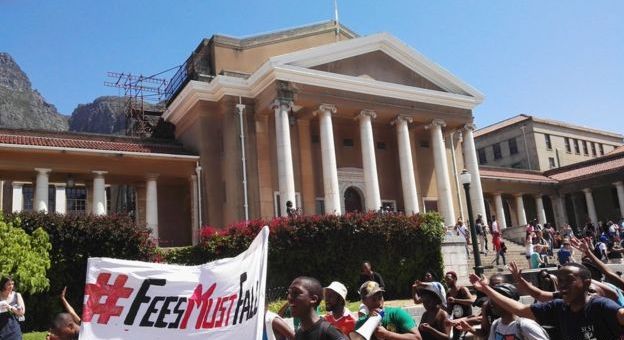
South Africa’s university system is on fire. Literally. Student protests and riots are raging everywhere. Campus buildings are being set ablaze. And bystanders and the police are in the cross-hairs as they clash with demonstrators. Higher education in South Africa is on the verge of collapse as the calls for free tuition have gripped the country and schools have closed for the year in response to the violence. And now, public opinion is starting to turn against the protestors as many of South Africa’s esteemed academic institutions come under attack.
Despite the inequities, real and perceived, South Africa is fortunate to have the education system it does – certainly when you compare it to much of the rest of the continent. And despite the deluge of contentious issues from Wits to the University of Cape Town, it is still the best system anywhere in Africa.
But like everything else in life, there is a cost for quality. As the saying goes, “you get what you pay for.” And with South Africa’s government already reeling from a prolonged commodity driven economic slump, there are few options available to the African Nation Congress (ANC) to remedy this. What the protestors have to realize is that ultimately, the money has to come from somewhere. Nothing is ever free. It’s just a question of who pays.
The “Fees Must Fall” protesters however need only look upstream into the rest of Africa to see just how lucky they are. From elementary school through university, it is not a pretty picture. So, if the protesters dare to look, here is what they would see.
First, let’s consider the bigger picture. By the year 2050, two-thirds of Africa’s population is expected to live in its cities. Cairo, Johannesburg, Lagos, and Kinshasa, as well as others, are all going to experience significant growth as people move from the countryside – as well as neighboring countries – to these urban areas looking for work. How these countries manage this migration will be critical to the future of the continent.
Urbanizing
Africa is urbanizing at a rapid pace. Already, across the continent, the population living in the cities has doubled from 1995 to 472 million in 2015. Here’s the rub though. Africans from all parts of the continent are moving into cities that are not fully ready to receive them. So as Africa’s urban populations explode, there will be a severe lack of services and infrastructure to support their growing numbers. Housing, jobs, power, food, clean water, and basic sanitation will all be areas of heightened concern for local governments as more and more people flow into these major metropolitan areas.
But as daunting as these problems will be, the real crisis facing Africa’s cities are the woefully ill-prepared schools awaiting the massive influx of students that are coming in. In other words, Africa’s future workforce. In no uncertain terms it all starts in the classroom.
As many of the migrants moving to these cities will be children and teens, it is they who will suffer the most. There is simply not enough money in government coffers to provide a quality education for these students and not enough per capita employment income to enable their families to pay for it themselves. So the trend will continue and add to an ever-increasing, under-educated African populace with skills that are built around mining and agriculture – in a world that is increasingly becoming centered on technology and services.
Just look at the numbers as they always tell the real story. Liberia, for instance, has a population of 4.6 million people and a 47 percent literacy rate. That means 2.4 million Liberians cannot read or write.
Nigeria has a 59.6 percent literacy rate which means approximately 68 million people there cannot read or write. And with the country’s population expected to increase to close at least 400 million by 2050, with many of them being children and teens, how will Nigeria’s schools manage this?
More glaringly, in Ghana, where the literacy rate is 57 percent, less than 5 percent have acquired a higher education. Simply put, that means that formal education ends at high school for most people there. And countries like Gambia, Eritrea and Mali aren’t even in the conversation.
Mali, for instance has a literacy rate of just 33.4 percent.
These countries, as well as many others in Africa, all suffer from a profound lack of basic resources and scholastic materials like books, computers, pencils, paper, desks and chairs. There are excessively large class sizes, insulting levels of gender inequality, poor training for teachers, and little to no access to internet broadband in many areas. To sum it up, Africa currently has more than 40 million children that are not even in school according to UNESCO. Elementary school enrollment in Africa is among the lowest in the world. And if they are not in elementary school, they are not going to be attending university either and will likely never have a job that is not located on a farm or in a mine.
Ripple Effect
So, here’s the bottom line. Education is the true differentiator between the haves and have-nots and the correlation between it and a fully functioning, productive society is undeniable. In essence, it is what defines – and divides – great countries from ones that perpetually struggle. And for all the media rhetoric, how can “Africa Rise” if it cannot read or write? In short, if things stay as they are, “Africa Rising” will sadly remain yet another unfulfilled narrative.
I hope the protesters in South Africa soon come to recognize what they actually have there – and that they are only hurting themselves and, in the long run, their country. There are an estimated 1,000,000 students enrolled in South Africa’s universities. The likelihood of free education in a country that is in a protracted economic downturn and mired in painful political scandals is not simply not realistic.
This is where the law of unintended consequences comes into play – the so-called ripple effect. By violently demonstrating and shutting down the schools, the demonstrators are potentially depriving South Africa of educated, employable and productive citizens. Citizens that would contribute to the growth of their country. Those who might become accountants, teachers, doctors, factory workers, architects and pharmacists will be compromised and could leave the country altogether to seek a proper education elsewhere. And many of them might not ever return. It is the quintessential brain drain.
And South Africa simply cannot afford that.
David S. Levin is the Managing Partner of Nexus Capital Markets, LLC