Opinion
Africa Doesn’t Need to Copy Anyone’s Industrial Playbook – It’s Writing Its Own


By Dishant Shah
Every conversation about Africa’s economic future eventually circles back to the same question: How do we industrialize at scale, and who leads the charge?
What we don’t discuss enough is this: Africa’s path won’t be linear, and it won’t resemble Europe’s, China’s, or Southeast Asia’s trajectory. It will be its own mosaic – shaped by geography, politics, entrepreneurs, and a new generation of continental champions.
Several transformative ideas deserve closer examination.
Regional Thinking, National Execution
Africa’s fragmentation – political, geographical, infrastructural – remains the heaviest tax on growth. Yet once regional markets connect, local industries suddenly achieve scale.
Integration isn’t merely desirable; it’s the fundamental unlock for prosperity.
Infrastructure as Operating System
Infrastructure extends far beyond roads and ports. It constitutes the real operating system of industrialization.
When travel across the continent remains slow, trade stagnates. When trade stagnates, entrepreneurship stays local.
And when entrepreneurship stays local, industries never reach escape velocity.
The Corridor Economy
The future isn’t about factories alone – it’s about corridors. Energy corridors. Logistics corridors. Digital corridors.
Countries grow, but corridors accelerate them. This network approach represents a departure from traditional industrial policy, recognizing that connectivity matters as much as capacity.
Empowering the Missing Middle
Industrialization rises when small and medium enterprises rise. Africa’s missing middle – the medium-sized firms that create jobs and build supply chains – needs capital, mentorship, and market access.
Not charity. Not paternalism.
Just the right environment to scale. These businesses form the connective tissue between subsistence entrepreneurship and major corporations.
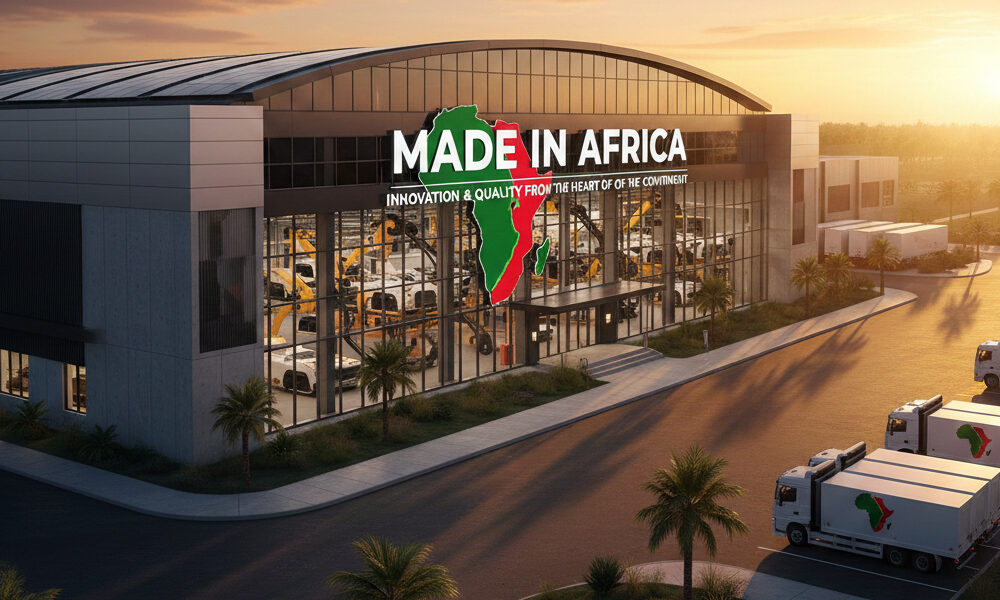
“Made in Africa” as Strategy, Not Slogan
Local manufacturing doesn’t merely create jobs; it lowers prices, improves quality, and reduces dependency. The pharmaceutical industry exemplifies this perfectly: produce locally and you instantly improve medicine access, reduce counterfeits, and build genuine capacity.
What applies to pharmaceuticals applies equally to consumer goods, agricultural products, and technology.
Purpose-Driven Enterprise
Successful investment responds to social need. African entrepreneurs understand this intuitively.
They build businesses with purpose embedded in the model: mobility, health, food, finance, energy. This is why the continent’s next champions will look different from Western corporations – more necessity-driven, more problem-focused, more grounded in local realities.
Integration’s Promising Beginning
The African Continental Free Trade Area (AfCFTA) isn’t just policy paperwork. It represents a long-term rewiring of how African economies interact.
It marks the beginning of a holistic environment where capital, goods, and people flow with diminishing friction. Implementation challenges remain substantial, but the framework now exists.
Writing the Blueprint
Africa isn’t searching for a blueprint – it’s writing one. If the next decade unfolds favorably, the continent will transition from fragmented markets to unified corridors, from import dependence to local manufacturing, and from isolated entrepreneurs to regional champions.
Industrialization won’t be a singular event. It will be a continental project, powered by demographic scale, bold ideas, and a generation thinking beyond borders.
The transformation requires patience, capital, policy coherence, and institutional development. But the momentum is building.
The best part? It has already started.
From Addis Ababa to Lagos, from Nairobi to Accra, entrepreneurs are solving problems, building supply chains, and creating markets. The question is no longer whether Africa will industrialize, but how quickly its own model will take shape – and whether the world is ready to recognize it when it does.
Dishant Shah is a partner at Legion Exim, a company specializing in facilitating the export of high-quality engineering products directly sourced from manufacturers in India to Africa. His areas of expertise include new business development and business management.