Opinion
Africa Deserves Better Than Being Locked Out of the World Cup


By Farhia Noor
As the 2026 FIFA tournament approaches, visa restrictions threaten to exclude millions of African fans from the world’s greatest sporting event.
Today, I write not as a mere observer of global football, but as a witness to an injustice that has persisted far too long in the shadows of international sport. As the FIFA World Cup 2026 prepares to kick off across the United States, Canada, and Mexico, the African continent faces an uncomfortable reckoning.
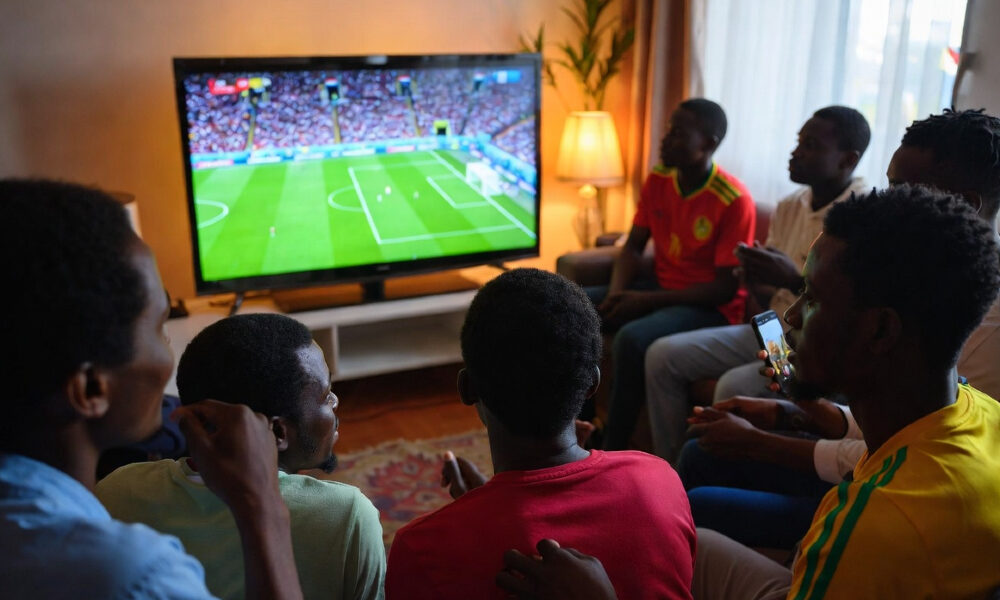
For millions of passionate supporters across our nations, this tournament—the pinnacle of the beautiful game – may remain forever out of reach. Not because they lack devotion to their teams, not because they cannot afford the journey, and certainly not because their enthusiasm falls short of fans from other continents.
They will be absent because visa bans, travel restrictions, and discriminatory immigration policies effectively bar entire African nations from entering the United States.
The Scale of Exclusion
The numbers tell a sobering story. Twelve African countries face complete U.S. entry bans: Burkina Faso, Chad, Republic of the Congo, Equatorial Guinea, Eritrea, Libya, Mali, Niger, Sierra Leone, Somalia, South Sudan, and Sudan.
Another twelve nations contend with partial restrictions that make travel arduous if not impossible: Angola, Benin, Côte d’Ivoire (Ivory Coast), Gabon, The Gambia, Malawi, Mauritania, Nigeria, Senegal, Tanzania, Zambia, and Zimbabwe.
In total, 24 African countries – representing hundreds of millions of people – face barriers to attending the world’s most watched sporting event.
The impact on qualified African teams compounds this injustice. Senegal and Ivory Coast, both facing partial restrictions, will see their own citizens struggle to support their national teams on football’s grandest stage.
Morocco, Tunisia, Egypt, Algeria, Ghana, Cape Verde, and South Africa have also qualified, yet countless fans from these nations and across the continent will watch from thousands of miles away – not by choice, but by policy.
Rewriting Africa’s Narrative
An African proverb teaches us: “Until the lion learns to write, every story will glorify the hunter.” For generations, Africa has permitted others to author our narrative – in football, in international travel, in global opportunity, and ultimately, in human dignity.
This acquiescence must end.
Football represents far more than entertainment. It is soft power in its purest form, shaping international narratives, building geopolitical influence, and defining who belongs on the world stage.
When African nations participate in global tournaments, we bring not only exceptional talent but also millions of supporters whose passion enriches the entire spectacle.
The world benefits from African football, enjoys African culture, and profits from African participation. It is time the world treats Africa accordingly.
A Seven-Point Action Plan
Africa must respond to this exclusion with strategic action and unified resolve:
First, collective negotiation. African football leaders, particularly through the Confederation of African Football (CAF), must speak and act as one voice. Fragmented responses only weaken our position.
Second, expedited fan visas. Host nations must establish fast-track visa programs for verified supporters, journalists, and legitimate business travelers attending the tournament. Bureaucratic obstacles should facilitate security, not serve as de facto bans.
Third, diplomatic pressure. African governments should explicitly link sports cooperation with equitable treatment of their citizens. Access to talent must come with access for supporters.
Fourth, permanent representation. CAF must evolve into a robust defender of African fan rights globally, establishing protocols that protect supporter access for every major tournament.
Fifth, strategic hosting. Africa must aggressively bid for more global tournaments. Our people should never be systematically locked out of events we help create. Bringing these competitions to African soil ensures our fans can participate fully.
Sixth, public accountability. Discriminatory immigration systems must be exposed through international advocacy, media campaigns, and diplomatic channels. Silence enables injustice.
Seventh, strategic boycotts. Africa should seriously consider refusing participation in tournaments hosted by nations that systematically exclude our citizens. Our dignity is non-negotiable. If our fans cannot attend, perhaps our teams should reconsider whether they should either.
Standing for Something
Another proverb reminds us: “If you do not stand for something, you will fall for anything.” Africa has fallen for promises of inclusion while experiencing systematic exclusion.
We have accepted participation without guarantees of equality. We have offered our talent while our people face humiliation at consulates and border crossings.
This pattern must change.
When Africa participates in global football, it must be with guarantees of fair treatment. When Africa engages with international tournaments, it must be with equality assured. When Africa supports the World Cup with our players and our passion, it must be with dignity intact.
The Road Forward
The 2026 World Cup presents both a challenge and an opportunity. African football associations, governments, and civil society organizations must coordinate an unprecedented campaign for supporter access.
This effort should begin immediately, leveraging every diplomatic, economic, and cultural tool at our disposal.
We must also look beyond 2026. The systematic exclusion of African fans from global sporting events reflects broader patterns of inequality in international mobility, where passport strength correlates disturbingly with historical power rather than contemporary reality.
Football offers a platform to challenge these inequities precisely because the sport’s universal appeal exposes their absurdity. African players grace the world’s greatest clubs and leagues.
African talent has become indispensable to global football. Yet when tournaments arrive, those same nations that eagerly recruit our athletes erect walls to keep our supporters out. This hypocrisy demands confrontation.
An Unstoppable Africa
I am African, and I believe deeply in our collective courage, our potential for unity, and in an unstoppable continent that commands respect on every stage. We have the talent, the passion, and the moral authority to demand better.
The question is whether we have the resolve to act on that authority. The 2026 World Cup will proceed regardless of whether African fans fill the stadiums.
But the tournament’s legacy – and football’s claim to being a truly universal sport – will be forever tainted if hundreds of millions are excluded by discriminatory policies that treat African citizenship as inherently suspect.
Africa must not accept this reality quietly. We must advocate loudly, negotiate strategically, and if necessary, walk away from tournaments that treat our people as unwelcome.
The world needs African football. It is time the world demonstrated that it values African fans equally. Our dignity demands nothing less.
Farhia Noor is a seasoned business consultant based in Dar es Salaam, Tanzania. With a proven track record in developing enterprises and executing turnkey projects across both government and private sectors, she brings deep expertise to the table. Farhia is also a committed advocate for community-led development and is passionate about advancing sustainable, intra-African growth.