Opinion
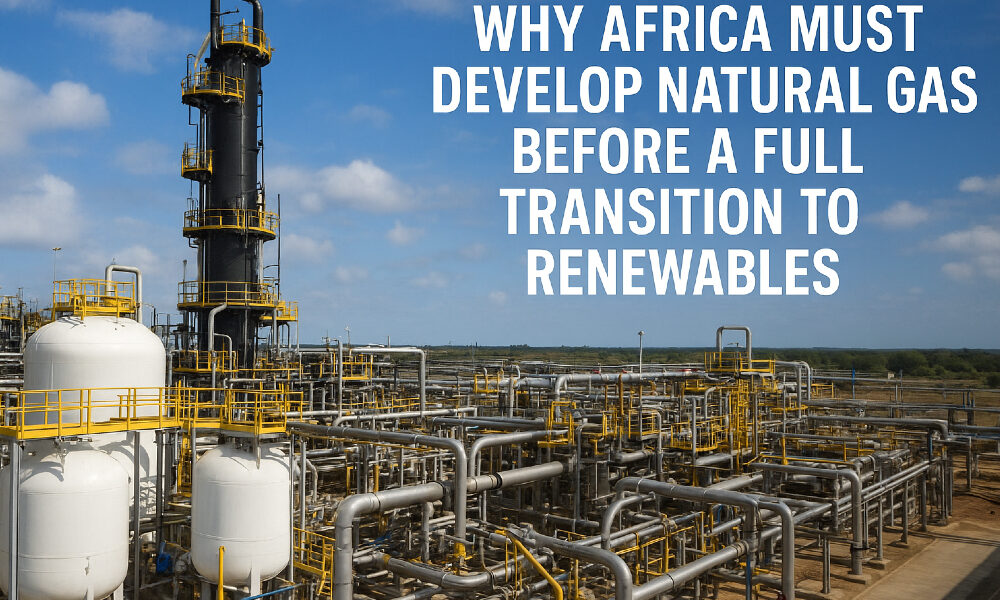
Africa Cannot Afford a Hasty Exit from Oil and Gas


By NJ Ayuk
As global leaders rush to declare victory over fossil fuels, a dangerous blind spot is emerging – one that threatens to condemn hundreds of millions of Africans to energy poverty, economic stagnation, and political instability. A blanket ban on African oil and gas development, cloaked in the noble rhetoric of climate justice, is not environmental progress.
It is economic colonialism dressed in green.
Africa possesses the world’s largest untapped natural gas reserves – an estimated 140 trillion cubic feet – yet over 600 million people still live without access to electricity. This is not a failure of ambition.
It is a consequence of external pressure that prioritizes Western emissions targets over African survival.
We are not asking to remain dependent on fossil fuels forever. We are asking for the time, investment, and dignity to use our resources as a bridge – not a barrier – to a cleaner, more equitable future.
The Cost of Denial
When Europe turned away from Russian gas after the invasion of Ukraine, the ripple effects were catastrophic. Fertilizer prices soared, food production collapsed, and more than 60 nations – many in Africa – faced acute food insecurity.
The UN warned that fertilizer shortages could push an additional 20 million people into hunger by 2025.
Natural gas isn’t just fuel. It’s the lifeblood of modern agriculture.
Over 80 percent of global ammonia – the foundation of synthetic fertilizer – is produced using natural gas as feedstock. To deny African nations access to their own gas is to deny them the ability to feed themselves, let alone export surplus crops.
Meanwhile, gas-to-power projects across Nigeria, Mozambique, Ghana, Senegal, and Egypt are already delivering results. Dozens of new power plants are coming online, transforming villages once lit only by kerosene lamps into hubs of commerce, education, and healthcare.
In Kenya, gas-powered irrigation systems are boosting crop yields by up to 300 percent. In South Africa, CHP (combined heat and power) systems are cutting industrial energy costs by nearly half.
These aren’t theoretical benefits. They are real, measurable improvements in human welfare – made possible by responsible, strategic hydrocarbon development.
Beyond Electricity: Gas as an Engine of Industrialization
Natural gas is far more than a source of electricity. It is the raw material for paraffin, naphtha, base oils, liquid transport fuels, and plastics – industries that can lift entire economies out of dependency.
In Angola and Algeria, gas-fed petrochemical complexes are creating thousands of skilled jobs. In Tanzania, liquefied petroleum gas (LPG) programs are replacing toxic wood-burning stoves, reducing respiratory disease and deforestation simultaneously.
Gas also enables decentralized manufacturing. Small and medium enterprises – the backbone of African economies – can now operate refrigerated warehouses, food processing plants, and textile mills powered by affordable, reliable energy.
When businesses thrive, unemployment falls. When incomes rise, so does tax revenue – funding schools, clinics, and infrastructure.
This is not “locking in” fossil fuels. It is building the capital, capacity, and institutional strength needed to transition on our own terms – not under foreign diktats.
The Double Standard That Can No Longer Be Ignored
Europe and North America built their wealth on coal, oil, and gas. Today, they demand that Africa leapfrog directly to renewables – despite having neither the grid infrastructure nor the financial capital to do so.
Wind and solar are vital. But they cannot reliably power a continent where 70 percent of the population lives off-grid, where transmission losses exceed 25 percent, and where battery storage remains prohibitively expensive.
To insist that African nations abandon gas while we continue to import LNG from Qatar and the U.S. is not moral leadership. It is hypocrisy.
A Call to Action: Monetize, Modernize, Mobilize
African leaders must act decisively. Natural gas discoveries will remain dormant until governments:
- Streamline permitting and enforce transparent contracts;
- Attract private investment through de-risking mechanisms and sovereign guarantees;
- Integrate gas into national industrial strategies, linking extraction to downstream manufacturing;
- Partner with global markets – not as passive suppliers, but as value-chain partners.
The World Bank estimates that unlocking Africa’s gas potential could generate US$1.2 trillion in cumulative GDP growth by 2040. That’s enough to fund universal electrification, create 15 million jobs, and cut energy poverty in half within a generation.
We are not opposed to renewables. We are opposed to being denied the tools to choose our own path.
Let us build solar farms – yes. But let us also build gas-fired power stations to keep them running at night.
Let us invest in hydrogen-ready infrastructure – but don’t ask us to wait decades for it while children study by candlelight.
Justice Isn’t Deprivation – It’s Opportunity
Climate justice doesn’t mean keeping Africa in the dark. It means giving Africans the agency to harness their resources, grow their economies, and then lead the clean energy transition – with dignity, not dependence.
Africa’s gas is not a relic of the past. It is the key to its future.
To the global community: Stop telling us what we can’t do. Start investing in what we can.
To African leaders: Don’t wait for permission. Seize this moment. Monetize your gas. Power your people. Build your legacy.
The world has been waiting for Africa’s rise. Now, it’s time we turn on the lights – and show them how it’s done.
NJ Ayuk is the Executive Chairman of the African Energy Chamber.