Opinion
Africa and Its Diaspora Are One People. It’s Time We Started Acting Like It.
A continent that sees itself with only one eye open will never see itself whole.


By Farhia Noor
I stand on African soil, but I have never believed the diaspora to be strangers.
When I look at African Americans, Afro-Latinos, Afro-Caribbeans, Afro-Brazilians, and Afro-Europeans – every child of African blood scattered across the map – I do not see foreigners with curious accents and inherited nostalgia. I see family: Africa across the ocean, wearing another language, carrying another passport, renamed and wounded, but unmistakably alive.
This is, in the end, a question of vision. One eye looks inward, toward the motherland: the land itself, its roots and resources, its youth and its wounds, its stubborn, undiminished power. The other eye looks outward, toward the children scattered by history, who carry Africa not in a passport but in rhythm, in resistance, in memory, in music, in soul.
Close the first eye, and you betray the motherland. Close the second, and you betray her children. Only with both eyes open can Africa finally see herself as she truly is.
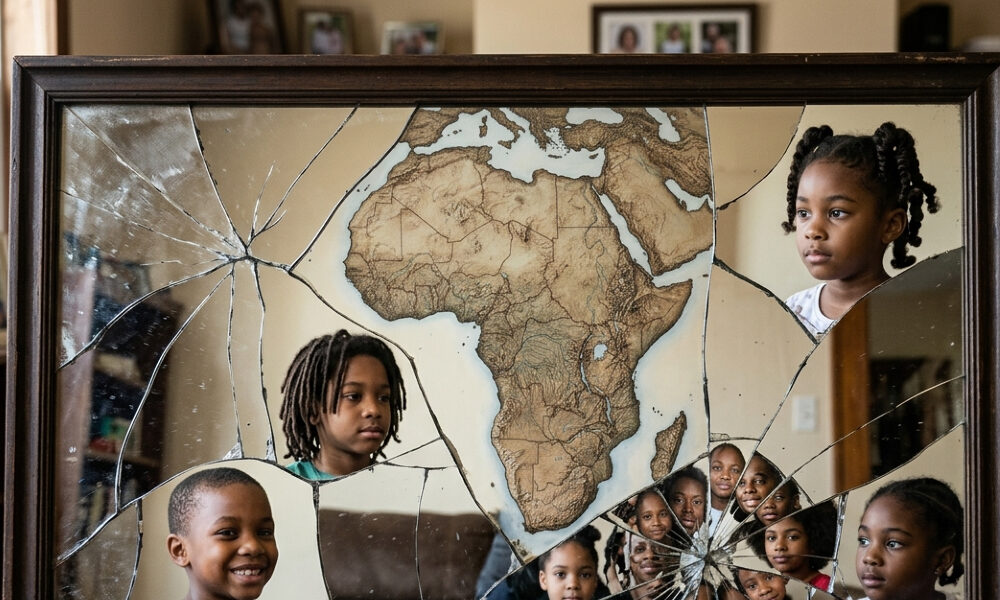
One People, Looking Through a Cracked Mirror
Africa and her diaspora are not two peoples who happen to share an ancestry. They are one people, split by history and now staring at each other through a cracked mirror. The world drew the lines that divided our land and fractured our memory. The work of this generation is to put both back together.
That reunification, however, will not happen by sentiment alone. It demands that Africa stop viewing the diaspora merely as outsiders bearing accents, money, and half-remembered dreams – and that the diaspora stop viewing Africa through the narrow lens of headlines: poverty, corruption, or, just as damagingly, fantasy. Both views are incomplete, and both have outlived their usefulness.
Africa is not a single wound, nor a single story. It is fifty-four nations, ancient civilizations, a youthful population, immense wealth, and a culture whose influence vastly outweighs its share of headlines. The diaspora, in turn, is not “lost,” whatever the old narrative suggests. It is Africa under pressure – Africa in exile, in translation, forced into unfamiliar names – yet still carrying the continent’s memory in body, voice, music, mind, and soul.
Reunion Is Not a Feeling. It Is a Strategy.
The separation of Africa from her diaspora was not an accident of history; it was a system, engineered and maintained. Reunion, therefore, cannot remain only an emotional gesture. It must become a system of its own – one built on recognition, trust, trade, ownership, and institutions.
The world weakened Africa, in part, by teaching her people not to recognize one another across an ocean. A people who fail to recognize each other cannot build power together. But a people who do recognize each other become something far more dangerous to the systems that profited from their separation: united, organized, and economically formidable.
This reunion asks something of both sides. The motherland must not reject her children for speaking a different language. The children must not shame their mother for carrying her wounds. Africa must learn to recognize the diaspora as family. The diaspora must learn to recognize Africa as a motherland – wounded, complicated, and powerful all at once.
What Each Side Brings to the Table
The complementary nature of this partnership is, in fact, its greatest strength. Africa offers roots; the diaspora offers reach. Africa offers land; the diaspora offers networks built over generations in foreign capitals. Africa offers memory; the diaspora offers movement, momentum, and global visibility.
When the two finally align, the result will not be a sentimental reunion but a formidable force: land paired with reach, memory paired with movement, culture paired with ownership. The next chapter of African power begins the moment that roots and reach pick up the same pen.
Building the Bridge
It is time to retire the tired, divisive question of who is “more African” and to replace it with a far more useful one: who is ready to build?
Africa is what we are responsible for – not as an abstraction, but as a shared inheritance and a shared obligation. The order of operations matters here. Recognition must come before return. Trust must come before trade. Respect must come before partnership. Learning must come before leadership. And building must always come before boasting.
We rise, ultimately, when memory becomes structure – and when structure becomes power. We build, deliberately and methodically, what generations past tried to prevent.
The bridge already has a name. It is recognition. It is trust. It is trade. It is institutions. It is power. All that remains is for us to walk across it, together.
Farhia Noor is a seasoned business consultant based in Dar es Salaam, Tanzania. With a proven track record in developing enterprises and executing turnkey projects across both government and private sectors, she brings deep expertise to the table. Farhia is also a committed advocate for community-led development and is passionate about advancing sustainable, intra-African growth.