Opinion
Afreximbank’s $1.75B Sonangol Deal Proves Africa Can Finance Itself. So Why Isn’t It?


By Ziad Hamoui
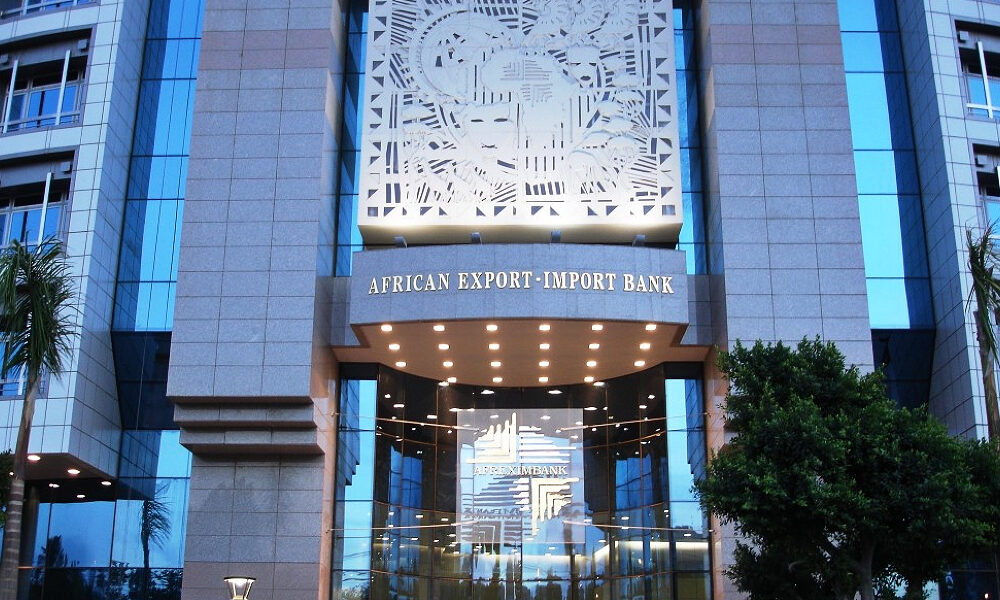
The African Export-Import Bank (Afreximbank) recently closed a US$1.75 billion receivables purchase facility for Angola’s Sonangol HR, serving as mandated lead arranger and bookrunner. The message is unmistakable: African financial institutions can now mobilize capital at globally competitive scale.
The transaction advances Afreximbank’s ambitious goal to double intra-African trade financing from US$20 billion in 2021 to US$40 billion by 2026. Combined with the bank’s US$1 billion commitment to the African Continental Free Trade Area (AfCFTA) Adjustment Fund and the expanding Pan-African Payment and Settlement System – now operational in 16 countries and projected to save the continent US$5 billion annually in transaction costs – Africa’s development finance infrastructure is maturing rapidly.
Yet this achievement exposes a troubling paradox: why does this demonstrated financing capacity flow overwhelmingly to extractive industries while value-added sectors struggle to secure capital at a fraction of this scale?
The Transformation Africa Needs
Consider the opportunities being overlooked. Ghana and Côte d’Ivoire (Ivory Coast) produce over 60 percent of global cocoa yet capture minimal value from processing.
A US$1.75 billion syndicated facility directed toward regional cocoa processing consortiums would fundamentally alter this equation, creating thousands of jobs and retaining billions in value within Africa.
The Nigeria-Ghana-Senegal pharmaceutical manufacturing corridor represents precisely the kind of integrated value chain the AfCFTA was designed to catalyze. Regional health security, technology transfer, and employment generation – all achievable with coordinated industrial financing.
Similarly, cashew and shea processing hubs across West Africa remain chronically undercapitalized despite clear market demand and established trade flows.
Afreximbank’s partnership with ARISE Integrated Industrial Platforms demonstrates that the model works for industrial parks, with US$450 million deployed across Gabon, Togo, Benin, and Malawi. The question is not capability but priority – scale and sectoral focus.
From Policy to Action
The Chairman of the Advisory Board of the African Trade Chamber, recently challenged African leaders at the 2026 Africa Trade Summit to move the AfCFTA “from policy to action.” He described the agreement as “our lifeline” – a stark reminder that continental integration remains incomplete without economic transformation.
From our perspective at Borderless Alliance, that transition requires more than protocol implementation and corridor infrastructure. It demands redirecting African capital toward the processing, manufacturing, and value-addition facilities that trade corridors should connect.
The financial architecture already exists. The receivables purchase structure and de-risking mechanisms that enabled the Sonangol facility – export-linked trade structures, flexible security arrangements, volatility mitigation – apply equally to cocoa, cashew, and pharmaceutical value chains.
A Historic Inflection Point
Afreximbank has proven the financing capacity exists. The institution’s US$40 billion intra-African trade financing target by 2026 represents a historic opportunity to realign African development finance from extraction toward industrialization.
The technical capability is no longer in question. What remains is a question of strategic will: whether Africa’s financial institutions will deploy their now-proven capacity to finance the structural transformation the continent requires, or whether billion-dollar facilities will continue flowing primarily to sectors that export Africa’s wealth rather than build it.
The Sonangol syndication should be celebrated as proof of concept. The real test is what comes next.
Ziad Hamoui is the Co-Founder and Past President of the Borderless Alliance, a leading private-sector advocacy group promoting economic integration and removing trade and transport barriers in West Africa. With extensive experience in Ghana’s road transport, logistics, and shipping sectors, he currently serves as Executive Director of Tarzan Enterprise Ltd., a long-established family business. He is a former Co-Chair of the Africa Food Trade Coalition, Co-Founder of the Trade Facilitation Coalition for Ghana, and serves on multiple high-level advisory committees on trade, transport, agriculture, and security. A Chartered Fellow of the Chartered Institute of Logistics and Transport (CILT) Ghana, he is also a former member of its Governing Council.